


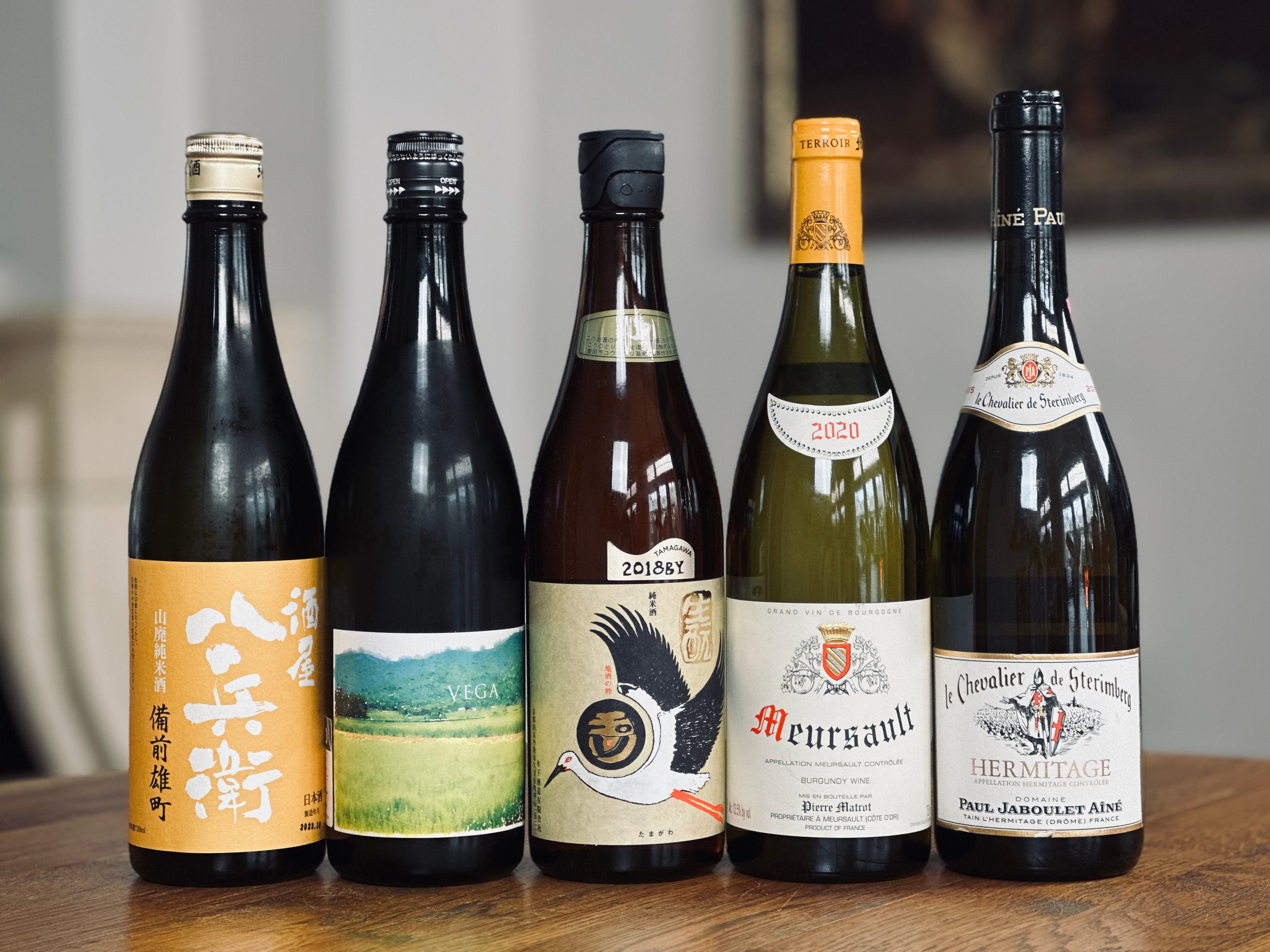
My first encounter with sake was unremarkable. As a university student in Japan, I drank cheap sake warmed in a small ceramic cup, felt sick afterward, and decided I would never drink sake again.
Around 30, I returned to sake. This time, I was genuinely impressed. The brilliance of ginjo aromatics, the fruit, flowers, and elegance, was a revelation. I was drawn to hard-to-find names like Jikon and Juyondai, the kind you had to search for. I also appreciated well-known brands: the clean precision of Hakkaisan, the dry structure of Kokuryu. Sake became part of my life again.
Then a sudden study opportunity took me to Los Angeles, and I started drinking wine. That changed everything. Wine shifted the center of my palate. I began paying attention to acidity, tannin, texture, and finish. These were elements I had never consciously looked for in sake. When I returned to sake afterward, I found myself listening for these same qualities. Now I enjoy both wine and sake in the same way, looking for the same structural elements in both.
This leads to a question I keep returning to: what do I really mean when I say “wine-like sake”?
In Europe, this phrase comes up sometimes. I use it often myself, especially when introducing sake to wine drinkers. But it can be vague, and I have been wanting to articulate what I actually mean.
1. Acidity as Structure
In wine, acidity is a key part of structure. Tartaric and malic are the principal grape acids, and together they account for the vast majority of wine’s total acidity. Other acids, such as lactic (from malolactic fermentation) or acetic (from fermentation and microbial activity), are formed during winemaking. Acidity makes wine refreshing and should be in balance with fruit concentration and, depending on style, any residual sugar, alcohol, or tannins. Too little acidity can make a wine feel flabby and unbalanced.
Sake also contains acid, though the composition is different. Lactic acid, produced or added during the fermentation starter stage, is the dominant acid in most sake. Succinic acid, produced during fermentation, is another key component, contributing a savory, umami-like character. Malic acid, produced by yeast metabolism, and citric acid, which appears in sake brewed with white koji (a technique borrowed from shochu production), add brightness that some brewers are now pursuing deliberately.
Traditional fermentation starters (kimoto, yamahai, and mizumoto) generate higher levels of lactic and succinic acid through slower, more microbially diverse fermentation, resulting in more complex acid profiles.
A growing number of brewers in Japan, influenced in part by exposure to wine and the export market, are actively seeking higher acidity in their sake.
When acidity in sake functions as structure, holding the sake together, creating tension, guiding the palate from beginning to finish, rather than simply as a flavor note, the sake starts to feel “wine-like.” This is especially true when malic or citric acid brings brightness and lift. It is not about having more acid. It is about acid playing an architectural role.
2. Intensity and Texture: Density Without Heaviness
Wine texture comes from several sources. Phenolic compounds extracted from grape skins and stems contribute body and grip. Tannin provides a tactile, drying sensation, particularly in red wine. Malolactic fermentation softens the mouthfeel, often lending creaminess on the palate. Lees contact adds body and can enhance umami-like sensations through the release of amino acids and mannoproteins. Ethanol contributes to perceived viscosity and weight. A great wine often has density, a sense of weight and substance, without feeling heavy.
Sake builds texture differently. Amino acid content is a primary driver. Higher amino acid levels create richness, umami, and a broader mouthfeel. Yet if amino acids are too high, the result can be unwanted heaviness or off-flavors.
Kimoto and yamahai fermentation tend to produce sake with greater textural depth. Aging smooths the palate through chemical changes such as the Maillard reaction, which builds richness and rounds out rough edges. Unfiltered styles (muroka) retain flavor compounds that charcoal filtration would remove. And umami itself, often discussed as a taste, also functions as a textural element. It creates a sense of fullness and persistence in the mouth.
Polishing ratio plays a role, but not in a simple way. Highly polished rice (say, 40% remaining) tends to produce more transparent, lighter sake. Less polished rice retains more protein and fat, which can contribute to texture and complexity. But this is not a scale from crude to refined. A sake polished to 80% (20% is polished off) with careful koji work and proper aging can be more sophisticated than a 35% daiginjo.
Brewing methods matter. At Akishika Brewery in Osaka, brewmaster Hiroaki Oku deliberately dissolves rice as completely as possible, keeping all the flavor in the sake rather than discarding it as pressed lees. The result is a dry, textured sake with remarkable finish, yet surprisingly lean and sophisticated.
The idea that “sophisticated” and “bold” sit at opposite ends of a spectrum is misleading. Some of the most sophisticated wines in the world, aged Barolo, mature Northern Rhône Syrah, are also among the most bold. They have density, grip, and power, but every element is integrated. The same principle applies in sake. A full-bodied yamahai genshu can be both bold and elegant if its components are well balanced. This is one of the elements I look for in “wine-like” sake: density with clarity, a sake that has something to say on the palate, not just on the nose.
3. Length: What Creates Finish
Finish emerges from the overlap of several elements: aromatic and taste persistence as well as mouthfeel.
After swallowing, volatile compounds continue to move retronasally, from the back of the throat up through the nasal passage. This is why you can still “taste” aromas seconds after the liquid is gone. Acidity, bitterness, and umami linger on the palate and fade gradually. Sweetness tends to disappear faster. Tannin, alcohol warmth, or even slight bitterness can extend the perceived duration. Several breweries I have spoken with deliberately preserve a touch of bitterness as a structural element. The interplay of these remaining sensations defines the character of the finish.
In sake, acidity still plays a role, but the tactile contribution of tannin is largely absent. Instead, amino acids and umami create a lingering savory presence. Alcohol, at 15 to 17%, also supports retronasal aroma persistence. Aged sake (koshu) adds complexity to the finish: caramel, soy sauce-like notes, and dried fruit that persist long after the sip.
An important point: length is not defined by sake’s classification. A highly polished, fruity ginjo can have beautiful aroma on the nose but disappear quickly once swallowed, while a ginjo with moderate aroma can leave a lasting impression of umami and acidity for twenty seconds or more. Some sake are made with an intentionally short finish, a quality called “kire,” where the flavor disappears cleanly, making it easy to return to the next sip or the next bite.
Length cannot be faked. It reflects what the sake is made of and how it was built. I look for it in sake, just as I do in wine.
4. Complexity: Layering Beyond Fruit
For someone who learned wine through WSET, the framework of three aroma categories should be familiar: primary aromas come from the grape itself, secondary aromas come from production methods, and tertiary aromas come from aging.
Sake follows a broadly similar logic, though the categories are less clearly delineated. Still, some aromas can be traced to certain ingredients or production stages.
Rice-derived character provides the base: rice flour, toasted cereal aromas, and a subtle sweetness ranging from cotton candy to brown sugar. Fermentation and production contribute another layer. Koji* brings its own character, including chestnut and mushroom notes. Traditional fermentation starters (kimoto, yamahai) or the use of wild yeast can add complexity through microbial diversity. A small amount of alcohol addition, commonly used to extract and enhance aromatic compounds, can also draw out lighter, herbal or bamboo-like notes. Aging adds yet another dimension: caramel, soy sauce, miso, dried fruit, honey.
Tracing what you smell back to the rice, the koji, or the brewery itself is part of the pleasure for an engaged drinker.
The biggest difference from wine, and often the source of confusion, is ginjo aroma. Ginjo aroma is often described as the pinnacle of sake craft, and with good reason. The esters produced during low-temperature fermentation with highly polished rice, such as isoamyl acetate (banana, pear) and ethyl caproate (apple, melon), create a distinctive aromatic clarity. This is genuinely beautiful. But it is one layer among several.
Imagine a mature Meursault Premier Cru, seven or eight years old. Fruit is present, citrus, white peach, but it has receded. In its place: hazelnut, butter, a faint earthiness, something almost saline. The wine has weight without heaviness, and a finish where acidity and savory elements meet and linger. The beauty is in the intersection, not in any single element.
Sake can reach a similar intersection. When acidity provides structure, when umami adds depth without heaviness, when aging or brewing choices introduce savory and earthy notes alongside whatever fruit remains. A well-aged kimoto with its lactic depth, or a yamahai genshu where microbial diversity has created layers that a single cultivated strain could not achieve: these are sake that engage the palate the way a complex wine does.
*Note: Koji is rice inoculated with koji mold (Aspergillus oryzae), the enzyme source that converts starch to sugar in sake brewing.
Conclusion: Why I Now Find It Beautiful
When I was younger, I chased aroma. The most fragrant ginjo, the most expressive bouquet. That was what impressed me. Aroma was the gateway, and I am grateful for it.
Now I look for structure.
Wine taught me to value architecture: the way acidity, tannin, body, and finish hold a wine together and give it direction. It taught me that the best drinks are not the most aromatic but the most balanced, layered, and persistent. When I returned to sake with that understanding, I began to find beauty in places I had previously overlooked: in a quiet kimoto with a long umami finish, in an aged yamahai with the complexity of a mature Burgundy, in a muroka genshu where density and clarity coexist. Even in ginjo sake, texture and sophistication can coexist. These are the sake that stay with me.
“Wine-like sake” is not imitation. It is not sake trying to be wine. It is sake with structure, where acidity, texture, complexity, and finish work together in the way that the best wines are built: with architecture. And it is, I believe, the direction in which international wine lovers are naturally heading.
Kanpai.
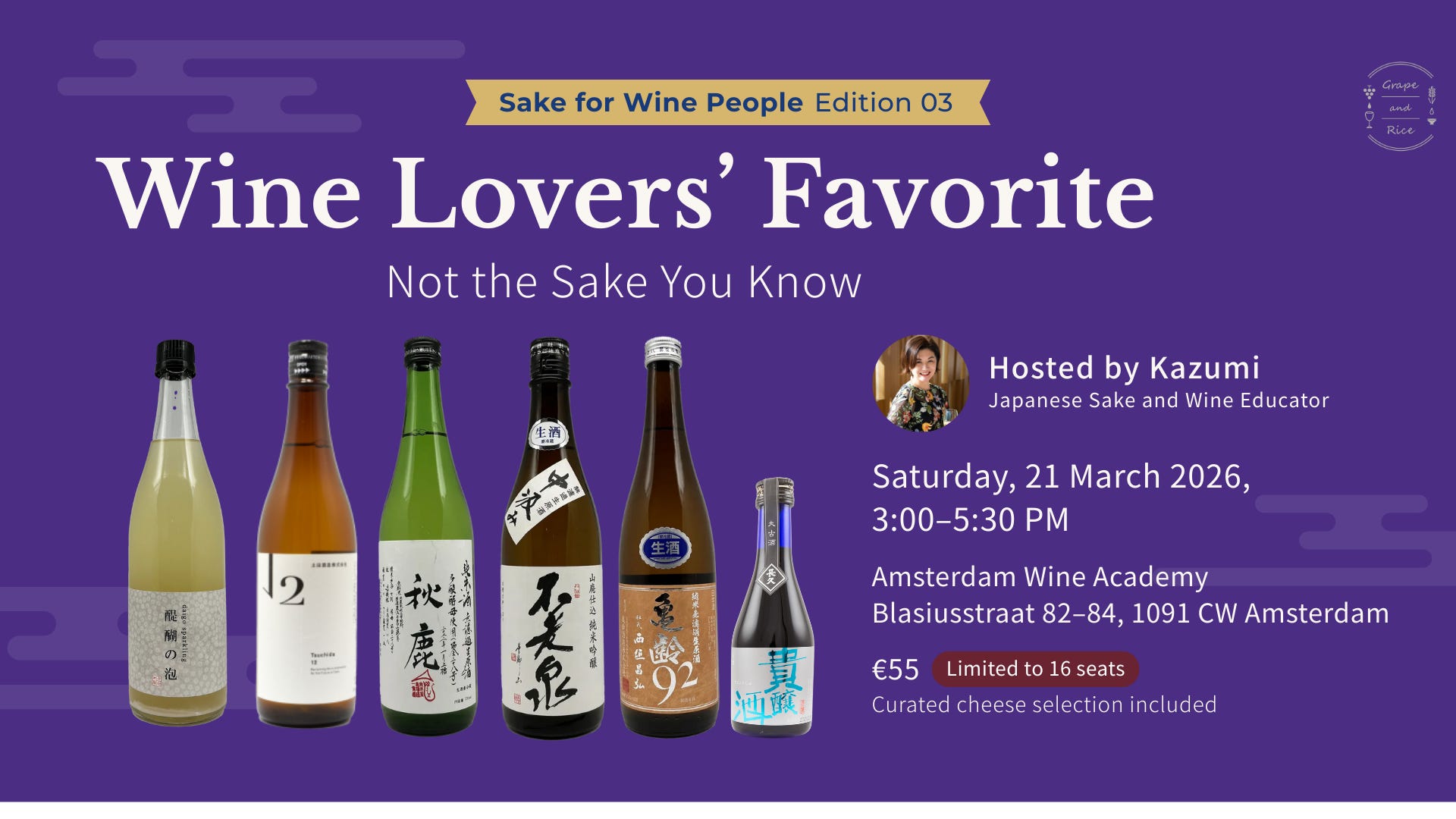
I am organizing a workshop in Amsterdam focused on sake that shows these structural qualities, where balance, length, intensity, and complexity are not just measurable but felt. If this way of thinking resonates with you, you are welcome to join.
Excellent post---it crystallizes the difficulties many wine drinker have with sake. Kudos.
This is a very informative piece Kazumi, thank you for sharing it! What I appreciate most is how you’ve clarified something I’ve been experiencing intuitively - coming from the world of wine - that trying to understand sake really challenges you to change your entire perception of a beverage and the approach to "tasting".
I find it especially interesting how umami goes beyond just being a flavor in sake, and it becomes part of the structure.