


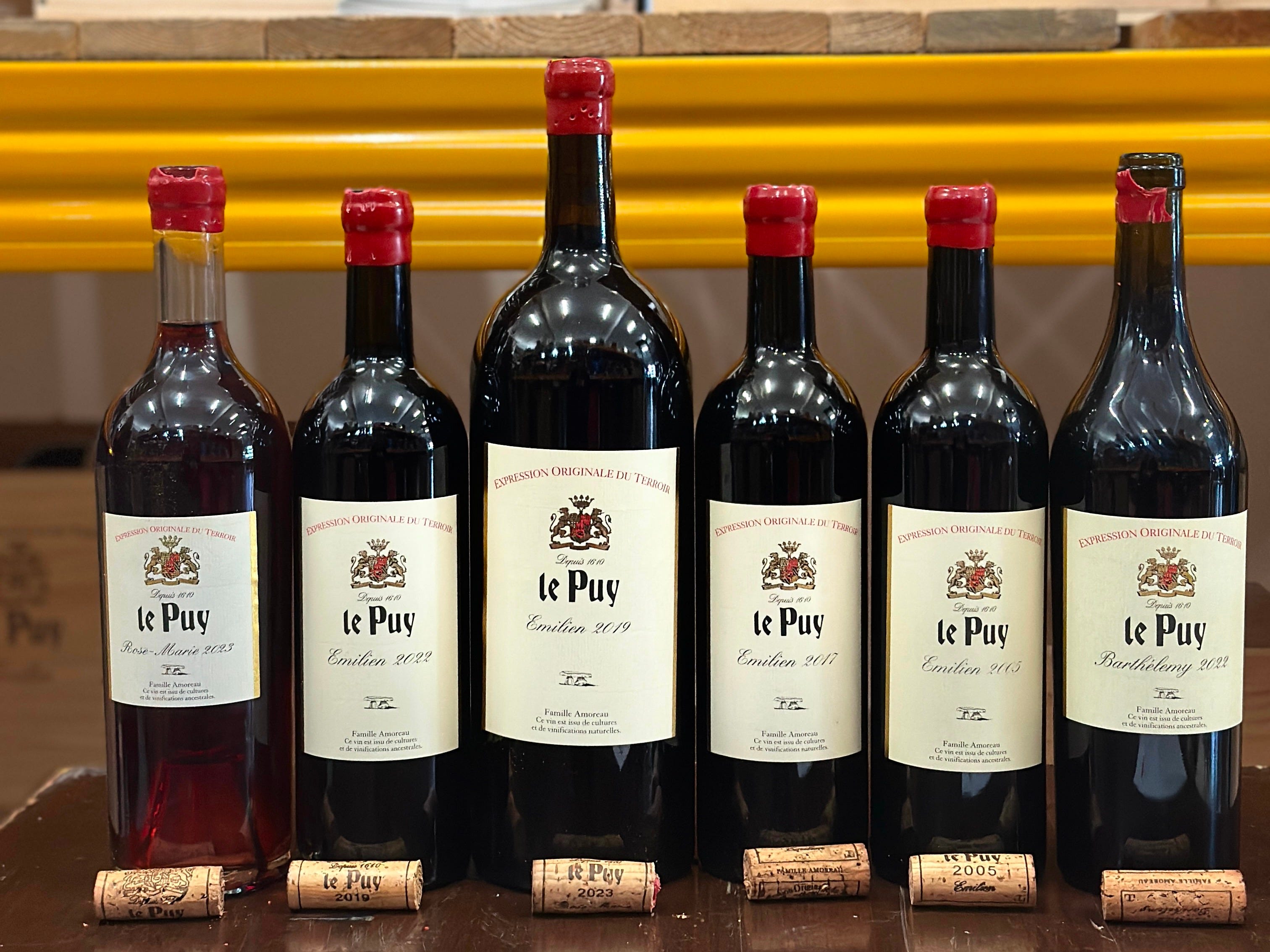
Among Bordeaux’s classified châteaux and investment-grade labels, Château Le Puy occupies a singular position. A family estate in Saint-Cibard since 1610, biodynamic even before the word existed, and classified not as Bordeaux but as Vin de France. No chemicals, no new oak, minimal sulphur. Le Puy has never followed the region’s prevailing direction—because it never changed course to begin with.
Often described as a benchmark of Biodynamic Bordeaux, Le Puy represents something rarer: continuity.
I first encountered Le Puy in Amsterdam, years ago. It tasted like Bordeaux, but I couldn’t say so with confidence. Gentler and more transparent, yet full of energy. Complex but pure. Visiting the estate confirmed that impression for me: a simplicity in the approach, and a directness in the wine that many Bordeaux producers seem to have left behind.
So when I learned that Emeline Callet, Sales at Famille Amoreau, would be in Amsterdam for a Daxivin portfolio tasting, I went without hesitation. Six wines, a generous conversation, and a renewed appreciation for what fine wine can mean when you strip away the spectacle.
The Estate and Its Names
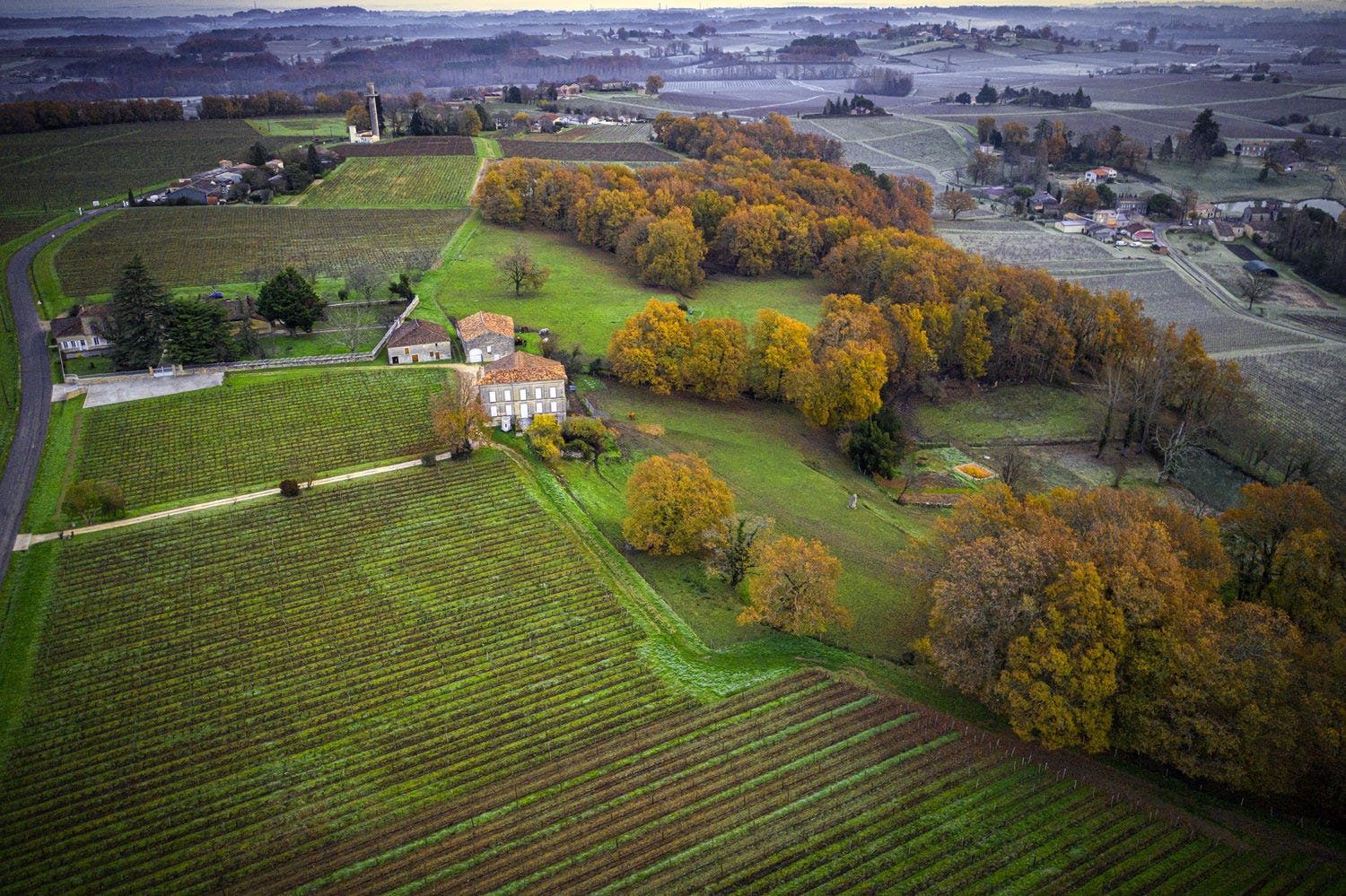
The estate sits in Saint-Cibard, on a clay-limestone plateau on the right bank, at 107 metres above sea level—one of the highest points in the Gironde. The Amoreau family has farmed here since 1610, now in its fifteenth generation under Jean-Pierre and his son Pascal.
Each wine carries the name of a family ancestor. Emilien was the third recorded winemaker in the family line. Barthélemy was the first to question the necessity of sulphur, back in the mid-nineteenth century. Rose-Marie, Marie-Cécile—these are not branding exercises. They are a form of memory, essential to the estate.
Until 2017, Le Puy’s wines carried the Francs Côtes de Bordeaux appellation. That year, the family chose to leave. The Vin de France designation, paradoxically, offered more freedom: to plant experimental varieties in response to climate change, to work without bureaucratic friction.
A Singular Path
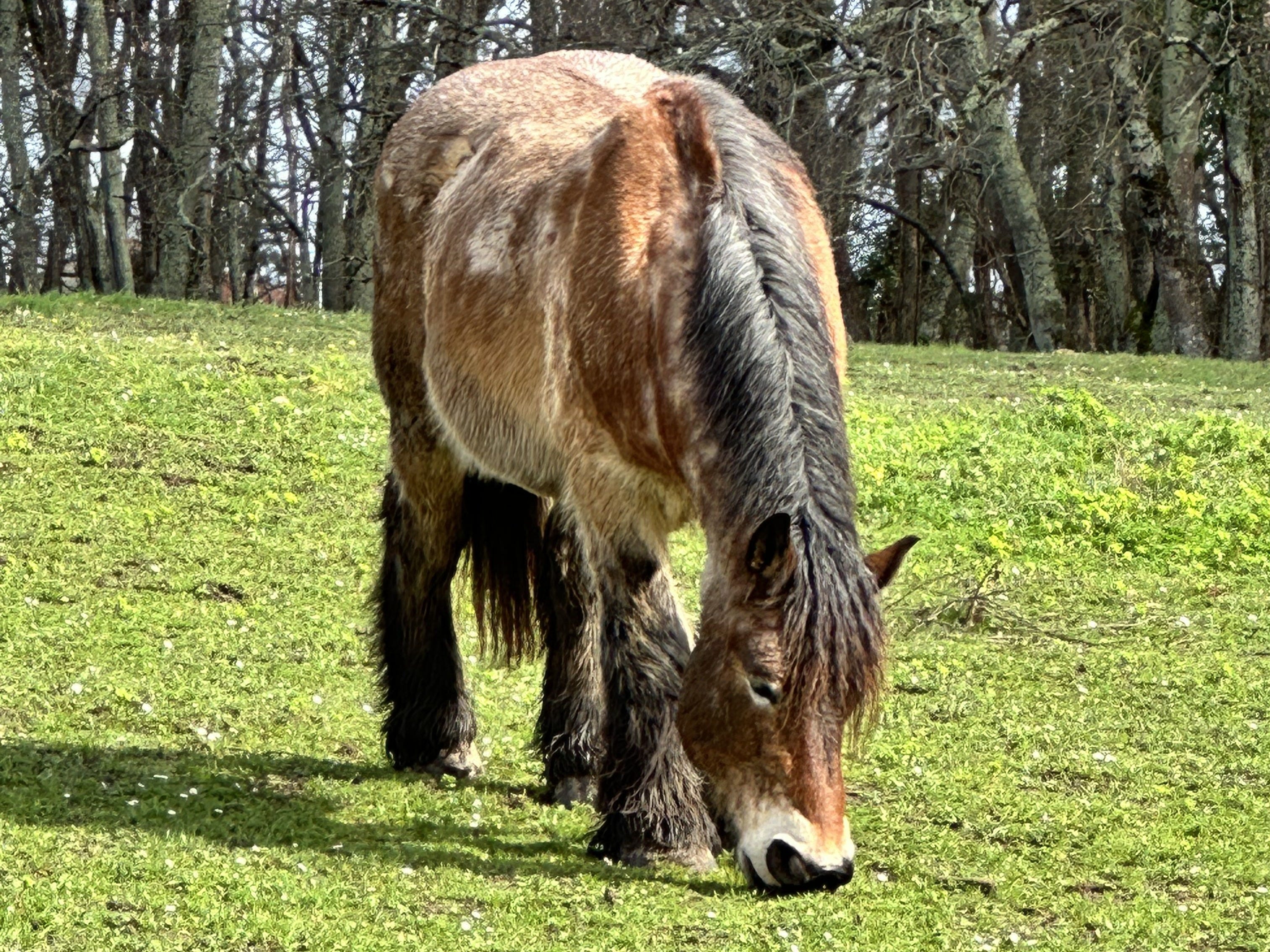
It would be easy to describe Le Puy simply as biodynamic. The vineyards are Demeter-certified, the farming follows lunar cycles, and horses work the soil. But the philosophy here is rooted not in ideology but in history. They farmed this way because that was how it was done in 1610, and simply continued while the world around them industrialised.
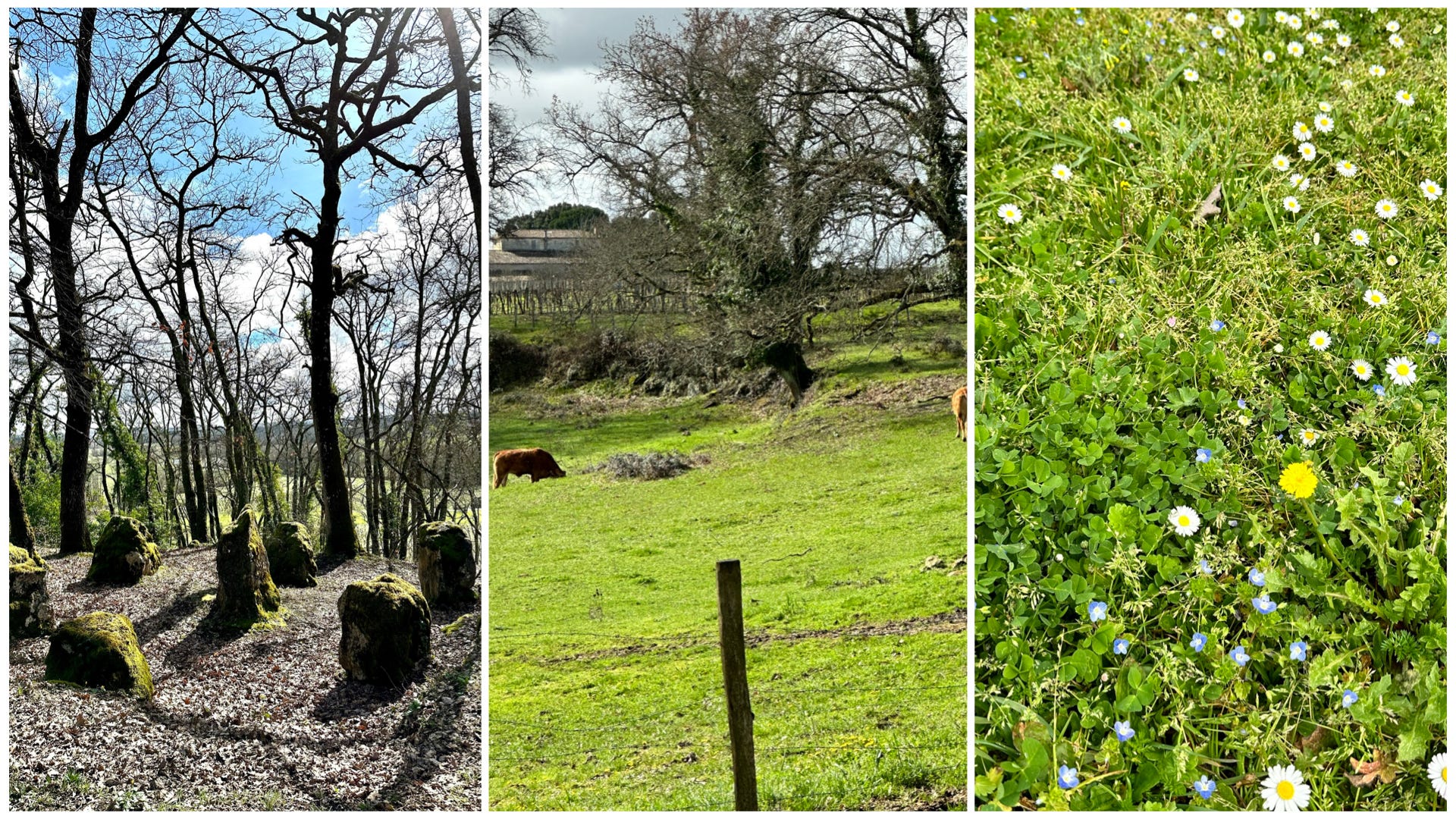
The estate’s approach is built on ecosystem, not intervention. Forest, meadows, and a pond account for roughly half the property—not remnants of neglect, but a deliberate buffer maintained to keep the vineyard in ecological balance. Five horses of different breeds work the soil, their varying walking patterns helping to avoid uniform compaction. Natural plants grow between the rows as indicators of soil condition—not seeded cover crops, but whatever the land produces on its own, read against generations of observation. Nature, in this context, is the most reliable textbook.
In the cellar, observation and low intervention remain guiding principles. Fermentation begins spontaneously in concrete vats, using what Le Puy calls “infusion”—allowing gentle diffusion and integration of tannins rather than forced extraction. Ageing takes place over two years in old barrels and large foudres. No new oak.
Le Puy’s approach is the result of four centuries of learning what works, and what does not need to be done. It is simple. And yet, the estate takes full responsibility for the quality of its wines, maintaining its own analysis laboratory with results published on its website.
The Amsterdam Tasting
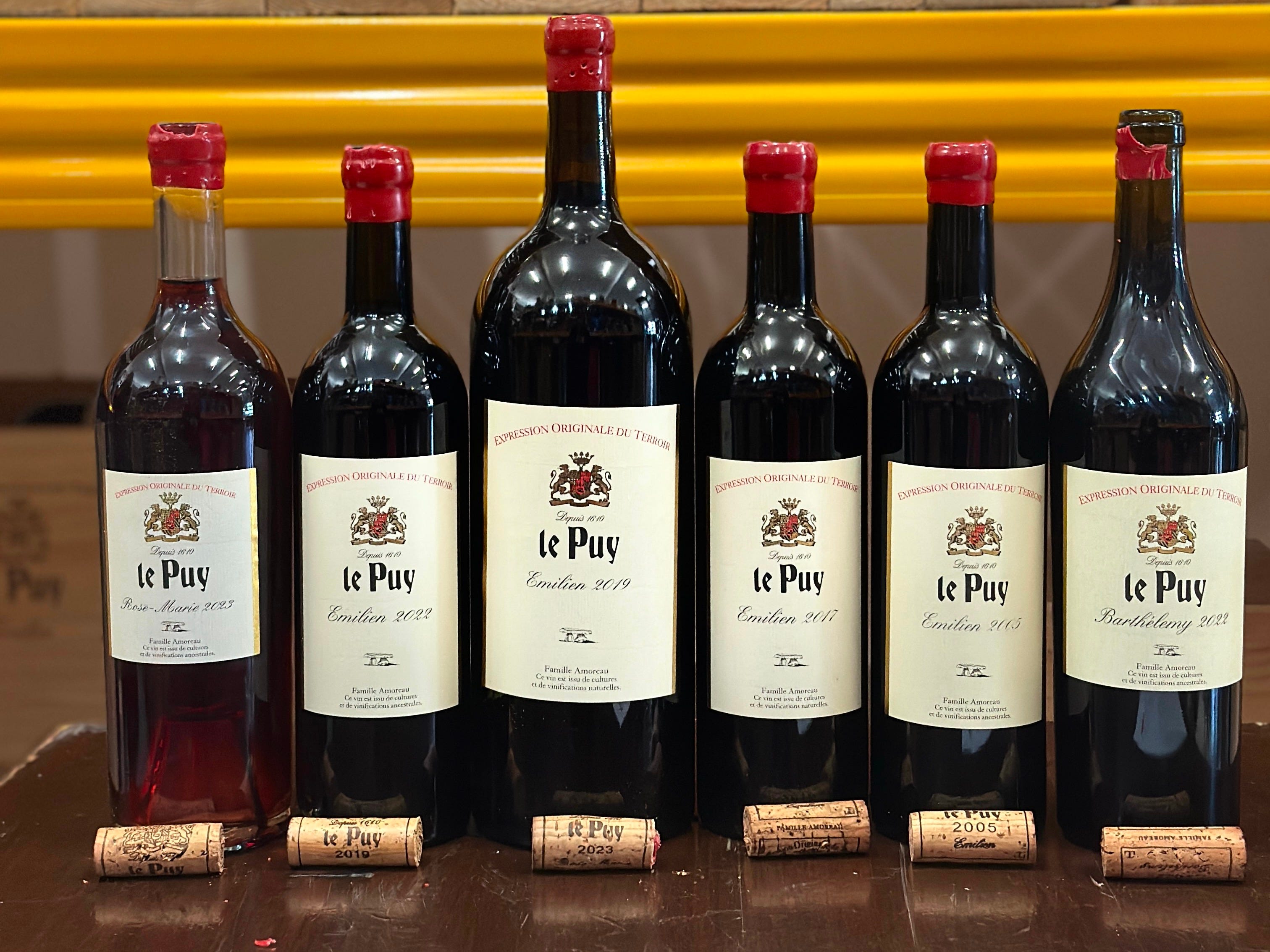
They prepared a rosé, four vintages of Emilien spanning nearly two decades, and the no-sulphur Barthélemy.
Rose-Marie 2023 | 100% Merlot
A cooler vintage, and the wine showed it: restrained, precise, fresh. There was transparency to the fruit, presented without amplification. Strawberry, raspberry, peony, a hint of elderflower. Structured by smooth tannins and vibrant acidity. A serious gastronomic rosé.
Emilien 2022 | 85% Merlot, 7% Cabernet Sauvignon, 6% Cabernet Franc, 1% Malbec, 1% Carmenère
A generous and perfumed vintage. Ripe berry fruit with an unexpected citrus note—mandarin zest—alongside juniper and nutmeg. Carried by refreshing acidity and smooth, present tannins. Balanced, with a long finish.
Emilien 2019 (Magnum)
Earthier and more inward-looking, with ruby-toned fruit and a gamy, spicy character. The nose remains complex and unfolding. Where the 2022 offers immediate pleasure, the 2019 asks for patience.
Emilien 2017
Green bell pepper, liquorice, black cherry, blackberry, dried leaves, an earthy finish. Quiet and restrained. The structure is tight, the flavours precise rather than generous. A reminder that Le Puy does not chase ripeness.
Emilien 2005
The colour has shifted toward deep garnet with tawny edges. The nose is layered: red and black currant, plum, cherry, blueberry, dried fruit, tea leaves, mushroom, hay, toasted almond, balsamic. Beneath it all, a savoury soy-sauce nuance and the umeboshi note I have come to recognise as a Le Puy signature. On the palate, silky tannins and lifted acidity carry a long, memorable finish.
Barthélemy 2022 | Mainly Merlot
Aged two years in old oak. Deep and concentrated, with a clarity that no-sulphur wines achieve at their best. The fruit speaks clearly through fine tannin and mineral tension.
What Fine Wine Means
Le Puy does not need to be positioned as an alternative to Bordeaux. It is Bordeaux—one of its oldest and most honest expressions. A family that has farmed the same plateau for over four hundred years, making wine with the same respect for the land, without interruption.
Climate change presents a growing challenge. At 107 metres above sea level—the second highest geodesic point in the Gironde—the estate is not immune to rising alcohol levels and shifting growing conditions. Since 2019, the family has been planting ancient grape varieties, seeking cultivars that may preserve freshness and acidity in future blends. They are also collaborating with the University of Geneva on research into reducing copper-based treatments in organic viticulture. The response is long-term; some of these plantings may take a generation to prove their worth.
The wines are not loud. They do not demand attention. But they reward it deeply for those willing to take the time.
In a market that increasingly values authenticity, the irony is that Le Puy has never tried to be authentic. It simply never stopped being itself.
My sincere thanks to Emeline Callet for a generous and illuminating tasting, and to Daxivin for bringing these wines to the Netherlands.