


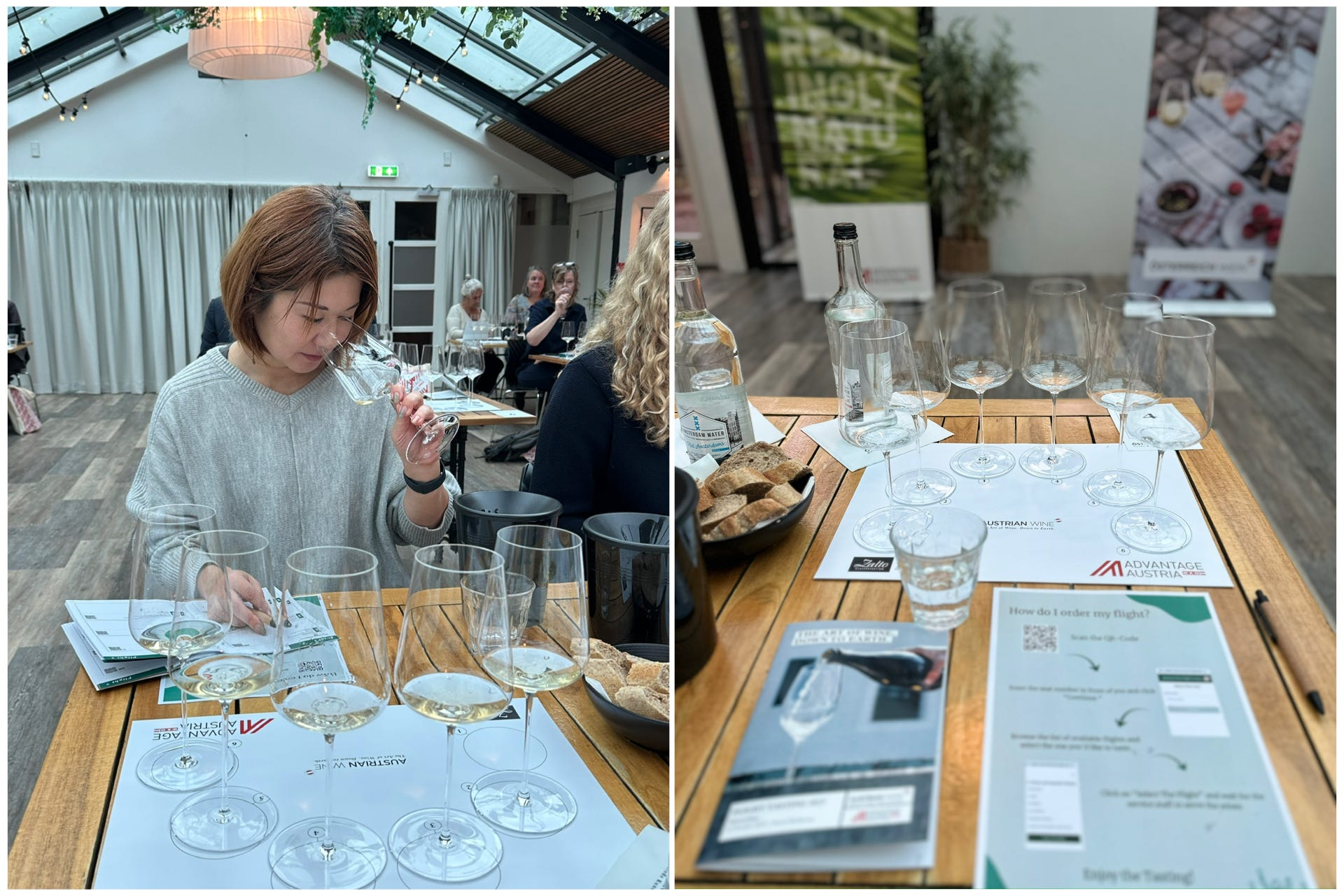
It was late October, and the light along the Amstel had that particular quality—clear, soft, unhurried. Austrian wine waited at the Amstel Boathouse.
The tasting was structured unlike any I had attended. Thirteen flights, six wines each, organised by category: sparkling, village whites, single-vineyard Grüner Veltliner and Riesling, orange wines, reds across three weight classes, a dedicated flight for Blaufränkisch, and so on.
Participants could start anywhere. There was no presenter moving the room through a sequence—only the wines in front of you, each carrying a QR code linking to its basic details. The system trusted you to find your own path.
I wished I could have stayed a couple more hours to digest everything on the spot. But then I realised: the format itself invites you to continue elsewhere. The Austrian Wine Marketing Board provides remarkably thorough resources as well as two books on Austrian cuisine and history. The Board was established in 1986 in the aftermath of an adulteration scandal that collapsed exports overnight. The recovery that followed was built entirely on quality. One proof of this commitment: where 'Austria' is written on the outside, Austria must be inside.
In this post, alongside some impressions of the beautiful wines, I will focus on three areas that struck me most—with a bit of research drawn from the Austrian Wine Marketing Board website. Seriously, a great website. For those studying WSET (particularly Level 3 or higher) or planning to travel to Austria, the website is worth checking.
A Quick Geography of Austrian Wine
This may read like a geography lesson, but bear with me: understanding the framework helps make sense of the diversity encountered in any serious Austrian wine tasting.
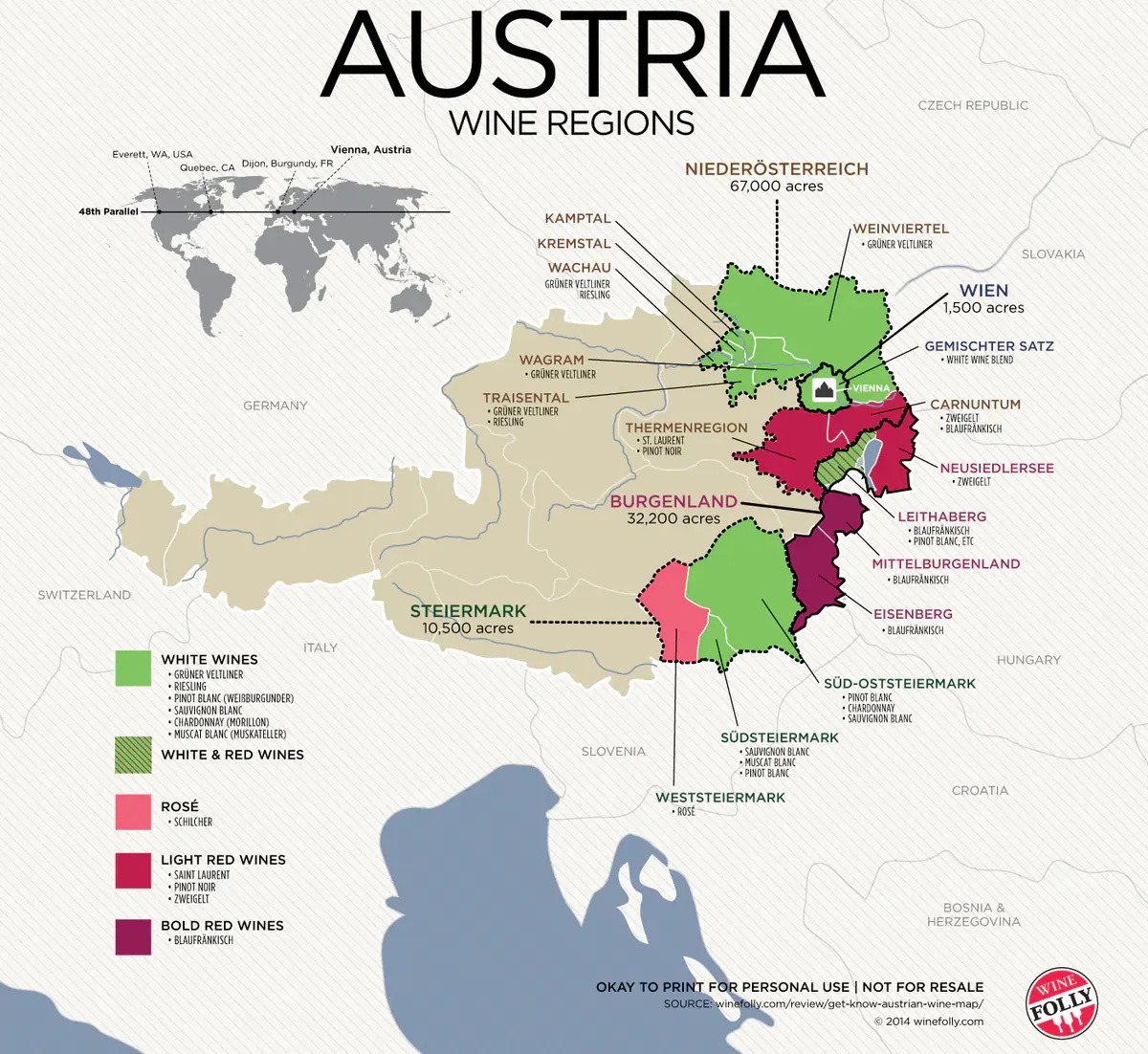
Austria sits at the heart of Central Europe, bordered by Germany, the Czech Republic, Hungary, Slovenia, and Italy. The western half of the country is dominated by the Alps, whose mountainous terrain is largely unsuitable for grape growing. Viticulture becomes possible only where the mountains give way to lower elevations, particularly as the landscape flattens toward the east and the Pannonian Plain around Hungary.
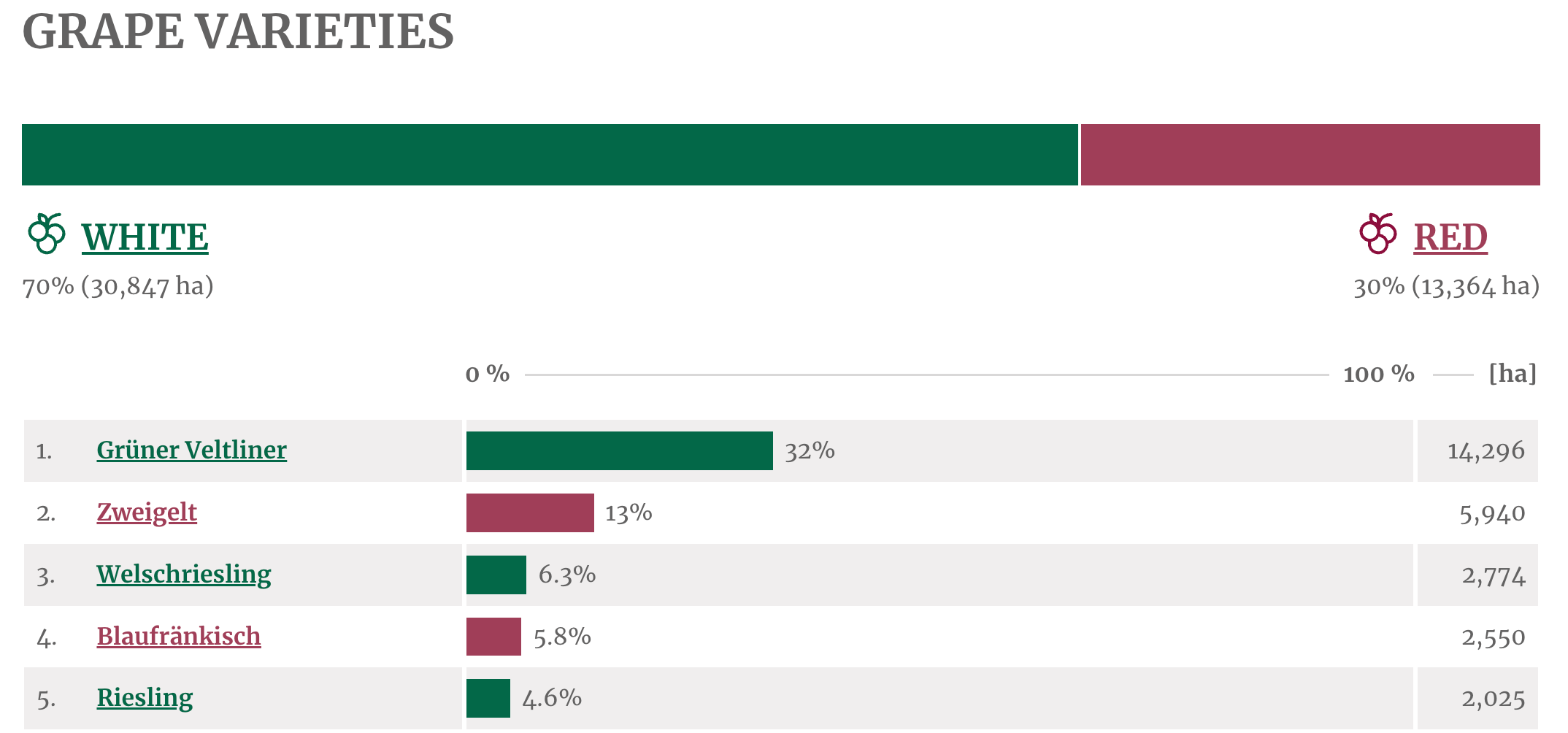
Austria’s northern wine regions lie along the Danube River. Along its corridor lie Wachau, Kremstal, Kamptal, and further east, Weinviertel, and Vienna, too, sits within this zone. These northern areas focus predominantly on white wines. Grüner Veltliner is the flagship grape, accounting for roughly one-third of all plantings nationwide. Riesling, though planted on a smaller scale, produces some of Austria’s most prized whites, particularly from steep terraced vineyards in the Wachau.
The two grapes have distinct soil preferences. Grüner Veltliner thrives in moisture-retentive soils such as loess and clay, while Riesling favours drier, well-drained soils—limestone, gneiss, and schist.
Moving south and east, into Burgenland and Steiermark, the climate becomes warmer thanks to their proximity to the Pannonian Plain. Here, red grape varieties find their footing. Blaufränkisch is the most important red grape in Austria, capable of producing wines with firm tannins and notable aging potential.
Lake Neusiedl plays a distinctive role in Austrian viticulture. In autumn, mists rising from the lake create conditions ideal for the development of Botrytis cinerea—noble rot. Welschriesling, a grape otherwise used for simple dry whites, becomes the foundation for Austria’s botrytised sweet wines, particularly around the town of Rust.
In Austria, rainfall is considerably lower, and the Pannonian influence brings drier, sunnier conditions during the growing season. This reduced humidity means lower disease pressure in the vineyard, making organic and sustainable farming more achievable although drought is an increasing concern. That said, Austrian wine law permits irrigation where necessary—a pragmatic response to shifting conditions.
Let's begin with Austrian Sekt.
Austrian Sekt
The sparkling flight delivered consistent quality, with the zero-dosage and brut nature styles (0–3 g/L) proving particularly convincing. The true standout was Harkamp’s Brut Nature “Zero Dosage” NV from Südsteiermark, a blend of Pinot Noir, Pinot Blanc, and Chardonnay with at least 24 months on the lees.
Serious sparkling, authentic Champagne style. Ripe apple, raspberry, strawberry, a hint of fruit spice, brioche, hazelnuts. Wet stone minerality. Lean on the palate, with vibrant acidity.
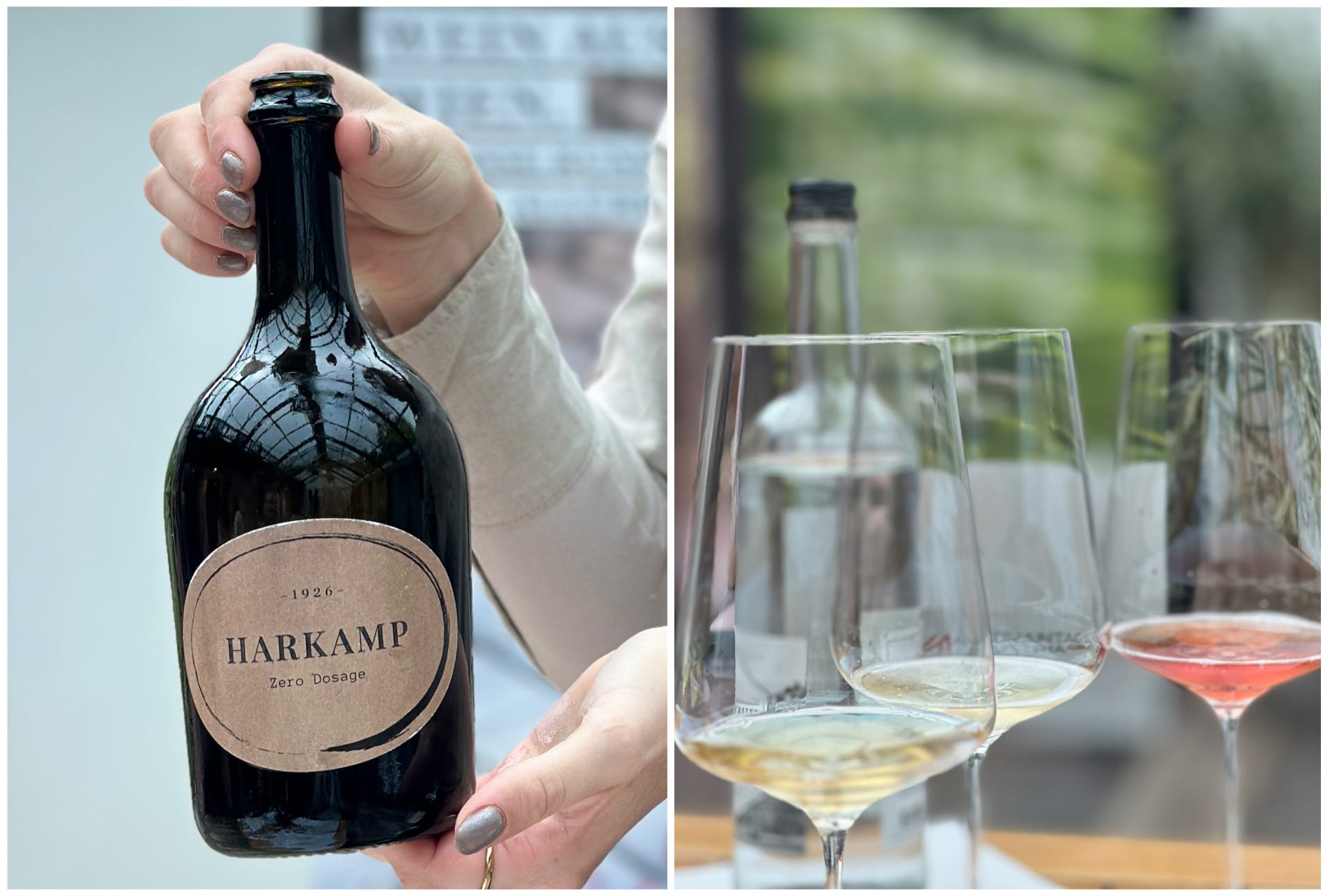
One thing caught my attention: if I was not mistaken, none of the six Sekts carried a PDO designation. Reading through the history section of The Wine in Austria, a book gifted at the event, offered some clues.
Austrian Sekt was born in 1842, when Robert Alwin Schlumberger, a cellarmaster trained at Ruinart in Champagne, followed his love Sophie Kirchner to Vienna and founded his own sparkling wine house. Yet for over a century, only dedicated Sektkellereien were permitted to produce sparkling wine. It was not until 1976, when winegrower Gerald Malat won a court case, that individual estates gained the right to make their own Sekt. Small-scale production is barely fifty years old and still only around 114 wineries produce sparkling wine in Austria.
However, quality remains the priority, as noted at the beginning. Several bottles displayed Demeter or organic certification more prominently than any regional indication, suggesting where producers place their emphasis.
That said, the PDO system itself is rigorous and internationally competitive. Sekt Austria (PDO) requires grapes from a single federal state. Sekt Austria Reserve mandates stricter regulations, exceeding non-vintage Champagne requirements. Sekt Austria Große Reserve is comparable to vintage Champagne.
However, the current naming convention was formalised only in 2022, and the sector may still be in transition. The prevalence of non-PDO bottles likely reflects all of these factors, including a classification system still settling into its new identity.
Austrian Sekt once relied primarily on Grüner Veltliner and Welschriesling as base wines, but aromatic varieties like Riesling and Champagne grapes are gaining ground. Considering the quality already on display and the trajectory ahead, this is a genuinely exciting category to watch.
Single-Vineyard Wines: The Transparency of Classification
The single-vineyard flight demonstrated what happens when a wine region commits to making its knowledge visible. Five out of six carried the “1ÖTW” designation on their labels. This mark indicates wines classified as Erste Lage (Premier Cru) by the Österreichische Traditionsweingüter, an association of traditional wine estates founded in 1992. The 1ÖTW, first applied to 52 sites in 2010 and now encompassing over 100 vineyards, evaluates sites based on historical significance, geological homogeneity, and decades of quality track record.
As I mentioned above, Riesling prefers well-drained soils: primary rock (Urgestein) such as gneiss, mica schist, and amphibolite, or limestone. The single-vineyard selections that followed illustrated this principle precisely, each label revealing not just a name but a soil type, an altitude, a slope orientation.
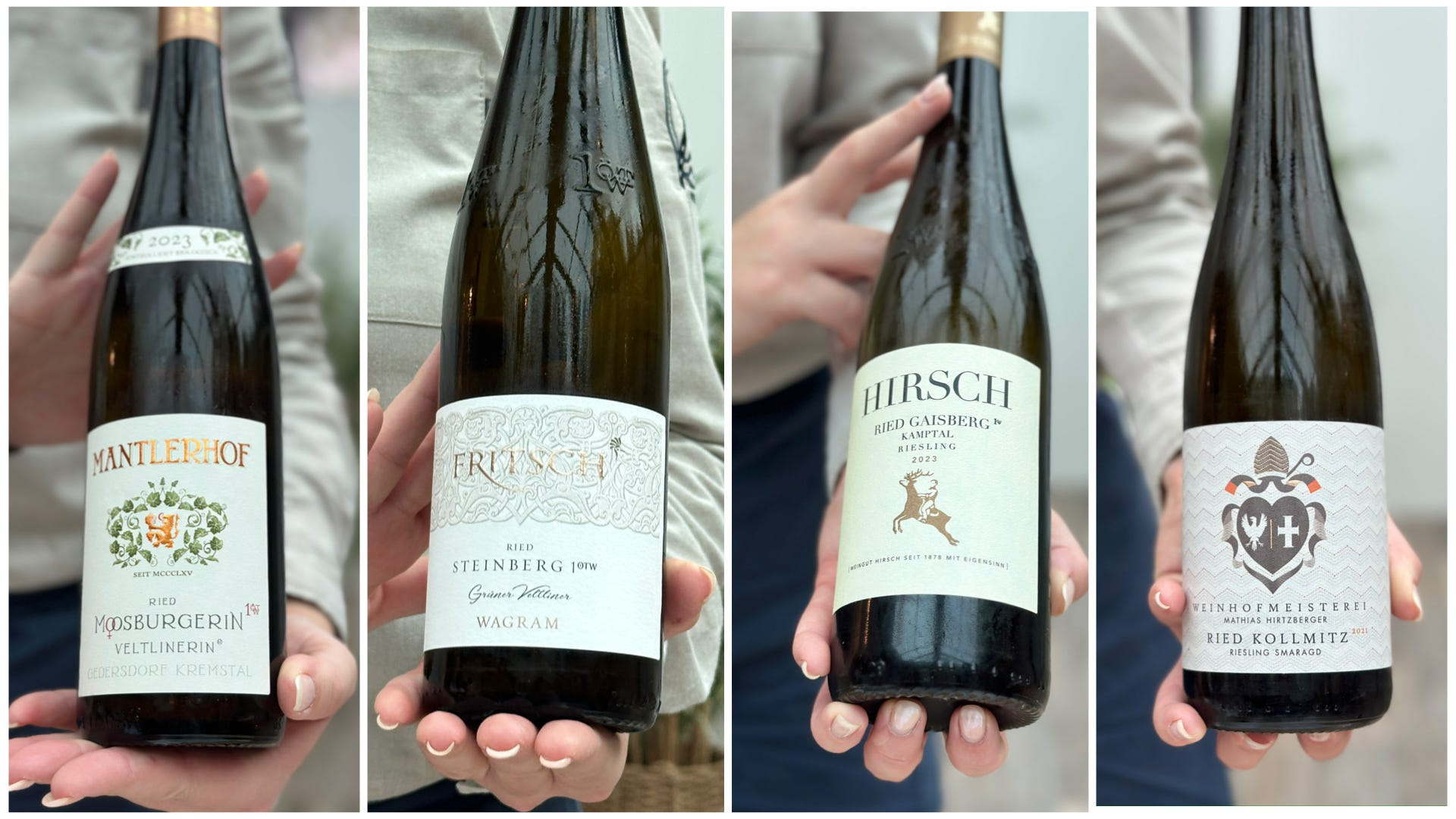
Mantlerhof, Grüner Veltliner Ried Gedersdorfer Moosburgerin 1ÖTW 2023 (Kremstal DAC) Ripe apricot, marmalade, pink grapefruit. Textured and yeasty.
Sepp Mantler’s estate occupies steep loess terraces in Kremstal. Ried Moosburgerin is unusual, where pure loess meets conglomerate rock. The vineyard curves steeply, capturing sun while channeling western winds for ventilation. Mantlerhof was among the founding estates of the Österreichische Traditionsweingüter. The wine shows the full-bodied, persistent character that loess delivers.
Fritsch, Grüner Veltliner Ried Steinberg Ruppersthal 1ÖTW 2024 (Wagram DAC) White pepper, ripe apricot. Long finish with tension and texture.
Karl Fritsch farms biodynamically in Wagram, a region defined by its massive loess terrace, yet Ried Steinberg breaks the pattern. The steep southeast-facing slope at 240 metres consists of slate and granite, yielding a Grüner Veltliner with unusual mineral tension. The 15- to 65-year-old vines undergo spontaneous fermentation in stainless steel. Fritsch was a founding member of Respekt-Biodyn, Austria’s premier biodynamic growers’ association. This wine combines the varietal’s characteristic pepper spice with the site’s crystalline edge. Outstanding.
Hirsch, Riesling Ried Zöbinger Gaisberg 1ÖTW 2023 (Kamptal DAC) Apricot, yellow peach, quince, citrus pith. Gorgeous, balanced, focused finish.
Johannes Hirsch works 31 hectares in Kamptal, with 85% of his vineyards on slopes. The Gaisberg lies in classic Urgestein territory, which is primary rock, exposed by erosion, into which vine roots must penetrate millimetre by millimetre through cracks and crevices. Hirsch, a founding member of Respekt-Biodyn, employs soft pruning to minimize vine wounds. The result is Riesling of crystalline purity—lean, precise, with the mineral salinity that primary rock delivers.
Weinhofmeisterei Mathias Hirtzberger, Riesling Ried Kollmitz Smaragd 2021 (Wachau DAC) Honey, marmalade, spice (anise). Long-lasting finish.
Mathias Hirtzberger, son of the renowned Franz Hirtzberger of Spitz, established his own estate in Wösendorf. Ried Kollmitz is one of the highest-elevation sites in their portfolio, benefiting from long hours of sunshine on the southeast- to west-facing terraces. The resulting Riesling, harvested at Smaragd ripeness (minimum 12.5% alcohol under Vinea Wachau’s classification), shows the interplay of power and precision. The 2021 vintage, with its 7.9 g/L acidity against 3 g/L residual sugar, demonstrates why Wachau Smaragd ages: structure rather than sweetness defines the wine’s architecture.
Blaufränkisch: Austria’s Answer to Structure
The final flight turned to red, and specifically to Blaufränkisch. It is Austria’s most important indigenous red variety and the flagship variety in four distinct regions: Eisenberg, Mittelburgenland (colloquially called “Blaufränkischland”), Leithaberg, and Carnuntum. Each now produces DAC wines with typicity of origin.
The variety’s signature is structure. Typical Blaufränkisch displays wild berry and cherry notes underscored by powerful acidity and prominent tannins. Wines can be impetuous in youth—sometimes challengingly so—but develop velvety facets with sufficient bottle age. Dense examples have serious cellaring potential.
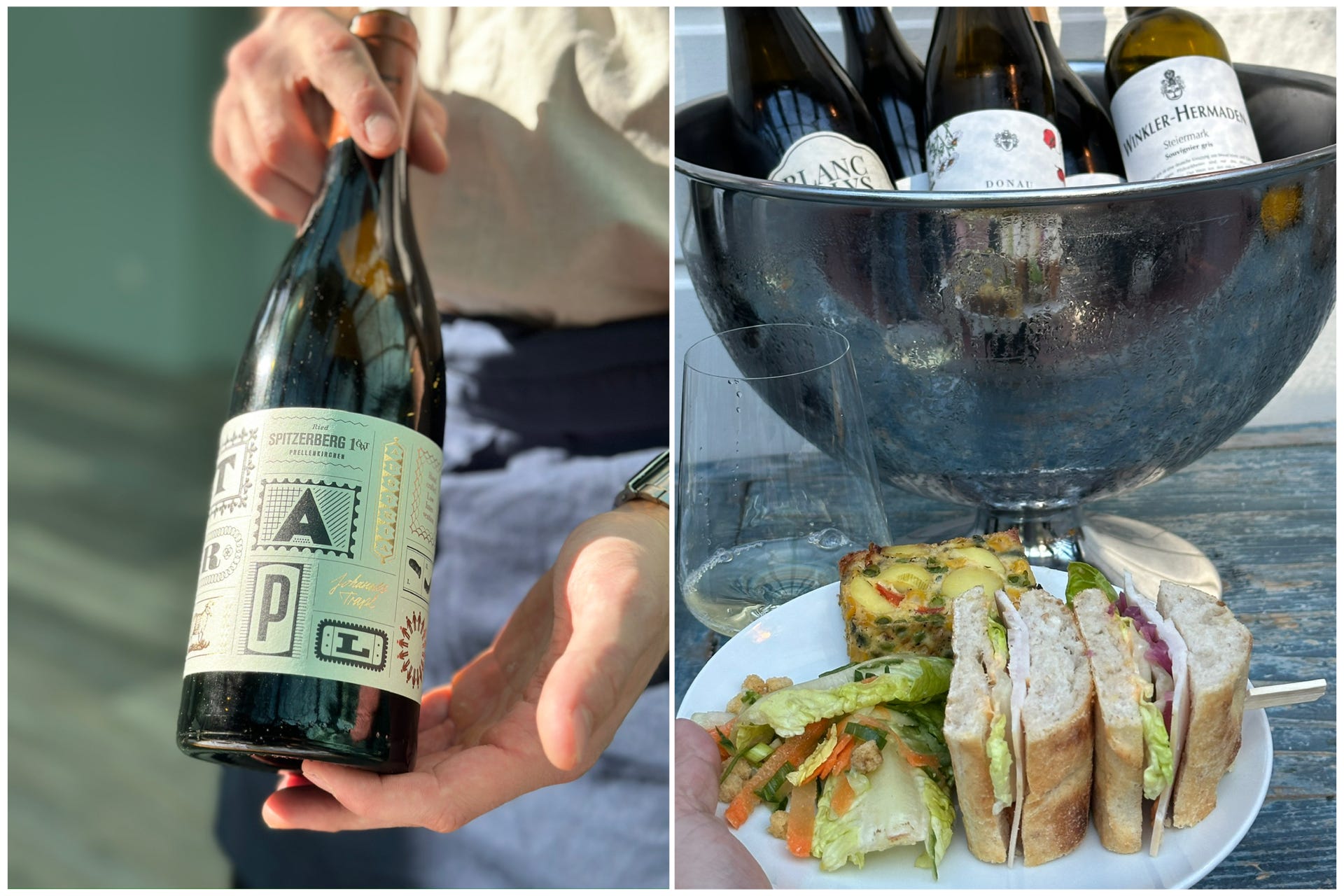
Trapl Johannes, Blaufränkisch Ried Spitzerberg 1ÖTW 2021 (Carnuntum DAC) Wild cherry, dark berries, a hint of confected fruit. Mineral, fine-grained tannins. Elegant structure with a stony finish.
Johannes Trapl farms biodynamically in Carnuntum, certified organic since 2010 and now Demeter-certified. The Spitzerberg vineyard consists of meagre schist rock—a soil type that imparts mineral tension and restraint to Blaufränkisch rather than the fuller fruit profile found on warmer sites.
At 13% alcohol with 5.4 g/L acidity, it demonstrated the freshness and lift that distinguishes site-driven Austrian Blaufränkisch from richer international styles. For drinkers accustomed to Blaufränkisch’s reputation for robustness, Spitzerberg offers a different conversation.
Conclusion: The Rewards of Preparation
The format of Flight Tasting Amsterdam invited a particular approach: taste with focus, and continue learning afterward. It demands more homework than a guided tasting—but the rewards scale accordingly.
In the weeks that followed, I found myself returning to the Austrian Wine Marketing Board’s resources, cross-referencing soil maps with tasting notes, tracing the history of a classification system back to its founding debates. Connecting what I had tasted with what I later read became its own quiet pleasure.
This, perhaps, is what wine education looks like when it works: not a lecture absorbed passively, but a conversation that continues after the glasses are cleared.
Many thanks to the Austrian Wine Marketing Board for making such thorough resources freely available, and to Simon J Woolf for curating an event that trusts its participants to find their own path.
Great review. If you plan to be in Paris for RAW Wine or Paris Wine Expo, I am hosting an Austrian pop-up wine bar from 1-21 February with 49 different wines -- and the tastings are free. The details are here - https://www.kapitelzwei.wine/popup-wine-bar