


🇯🇵 日本語版は記事の下部にあります / Japanese version available below

Philip Harper, the first non-Japanese master brewer to win gold at Japan’s National New Sake Competition, has been brewing Tamagawa sake at Kinoshita Shuzo in northern Kyoto Prefecture for the past 19 years. This interview explores the thinking behind one of Japan’s most unconventional breweries.
There’s an enormous distance between “speaking” a foreign language and “delivering professional results” in that language. Living in the Netherlands, finding my way in English and Dutch, I feel that distance every day. That’s why I couldn’t help but feel awe when I learned that Philip Harper, originally from Britain, passed one of Japan’s most challenging brewing exams—the Nanbu Toji certification, administered by the country’s largest toji guild—and has led a Kyoto brewery for nineteen years.
Before visiting, my impression of Tamagawa was a robust, flavorful sake that reveals its true character at room temperature or warmed. But this brewery visit showed me the philosophy behind that impression: an uncompromising approach to rice preparation, a genetically unique indigenous yeast—rare in today’s sake industry—and sake that only gets better with time. “Even two or three years after opening, it still holds,” Harper told me. That’s extraordinary.
Founded in 1842, Saved from Closure
Kinoshita Shuzo was founded in 1842 in Kumihama, in northern Kyoto Prefecture. The Kawakami-dani River runs right beside the brewery—its bed once lined with pebbles so fine and lustrous it resembled a stream of jewels. “A river like gems”—that’s the origin of the brand name Tamagawa.
In 2007, the brewery was on the brink of closing. The toji who had led the brewery for forty-six years had passed away, and Yoshito Kinoshita, the eleventh-generation owner, was preparing to shut down. That was when Philip Harper entered the picture.
Harper had come to Japan in 1988 through the JET Programme as an English teacher. Joining a sake club with friends, he became captivated by brewing, eventually quit his job, and became a brewery worker. After training under tojis from three of Japan’s great traditional guilds and earning Nanbu Toji certification, he joined Kinoshita Shuzo. In his very first year, he began brewing with traditional natural fermentation methods (kimoto and yamahai) without adding commercial yeast. In 2008 and 2012, he won gold at the National New Sake Competition—the first non-Japanese toji ever to do so.
Yet in other interviews, Harper credits his mentors rather than his foreignness: “My brewing style isn’t about being a foreigner—it’s the result of learning from veteran Japanese toji.” Behind those words lies years of training under tojis from three of the greatest traditional guilds.
Precision Soaking for All Rice
Rice absorption determines sake quality. How much water rice absorbs affects steaming texture, koji development, and ultimately flavor. “Precision soaking” means controlling absorption time down to the second. Tamagawa does this for all its rice—not just the portion used for koji, but everything.
What surprised me first was the new in-house rice polishing machine. For a brewery this size (about 850 koku), in-house polishing is extremely rare. The new machine, installed four years ago, handles smaller batches (from 600 kg) that the old one would have cracked, and cuts electricity costs in half.
Most breweries just start with white rice, and never see the year-by-year and variety-by-variety,farmer-to-farmer differences to the brown rice during the polishing process. However, rice from different fields absorbs water differently. Because Tamagawa polishes in-house and knows each lot’s characteristics, precision soaking becomes meaningful.
Absorption begins with washing. Wash 500 kg of rice in one large vat, and loading time alone creates a twenty-minute gap between the first and last grains. “You can ignore that gap, or not. We won’t.” Tamagawa uses a labour-intensive system where all rice is washed in individual 15 kg batches.
A Genetically Distinct Indigenous Yeast
Another defining feature of Tamagawa is its use of indigenous yeast for kimoto and yamahai brewing. In wine, yeast on grape skins drives natural fermentation. Polished white rice has no yeast. So “natural yeast” in sake means yeast living in the brewery’s air and on its tools—”indigenous yeast.”
Before modern methods were established, all sake used indigenous yeast. Starting in the early 1900s, superior strains were isolated, managed, and distributed as Brewing Society yeast. Today, nearly every brewery uses them.
But here’s my question: in breweries that have added Brewing Society yeast for decades, those strains have likely colonized the environment. When such breweries claim to use “indigenous yeast,” isn’t it really just old Brewing Society yeast?
“We had our yeast genetically analyzed,” Harper said. “Ours belongs to a completely different group from Brewing Society yeast.”
When Harper arrived, Kinoshita Shuzo used Brewing Society #7. In the first two or three years of no-additive brewing, #7 naturally drifted in. Eventually, the brewery’s original yeast reasserted itself.
Aging and Shipping at Room Temperature
Sake consumption in Japan has fallen to less than a quarter of its 1973 peak. Meanwhile, exports have more than tripled over the past decade. This shift opens two perspectives worth noting.
First, the opportunity in aged sake. In Japan, the prevailing view is “drink new sake while it’s fresh.” From wine cultures, though, aging is a key factor in building value. As I noted in my Kenbishi article, aged sake holds possibilities beyond Japan’s shrinking domestic market.
Kinoshita Shuzo values aging—especially room-temperature aging. Most pasteurized Tamagawa releases spend at least three years maturing before shipping. The Junmai Ginjo Omachi is six years old; the Tokubetsu Junmai, four. Ask anyone at the brewery, and they’ll tell you room-temperature aging produces better results than refrigeration.
What’s fascinating is that room-temperature aging creates regional variation. Refrigerate sake, and it ages the same whether stored in Japan or the Netherlands. At room temperature, it becomes entirely different sake. You might call it “terroir of aging.”
Second, Harper emphasizes the importance of room-temperature shipping.
“Back when sake was booming, everything shipped at room temperature. Now it’s all ‘refrigerate this, drink that quickly.’ Too many rules. That limits your audience.”
Of course, this only works if the sake can handle it. Tamagawa offers refrigerated shipping on request, but year-round—even for the summer-only “Ice Breaker” unpasteurized genshu—the sake is shipped without refrigeration.
In the brewery’s attic, sake brewed nineteen years ago sleeps at room temperature. Even when summer heat pushes past 40°C, it doesn’t break down. Remarkable.
Tasting Time – Four Notable Bottles
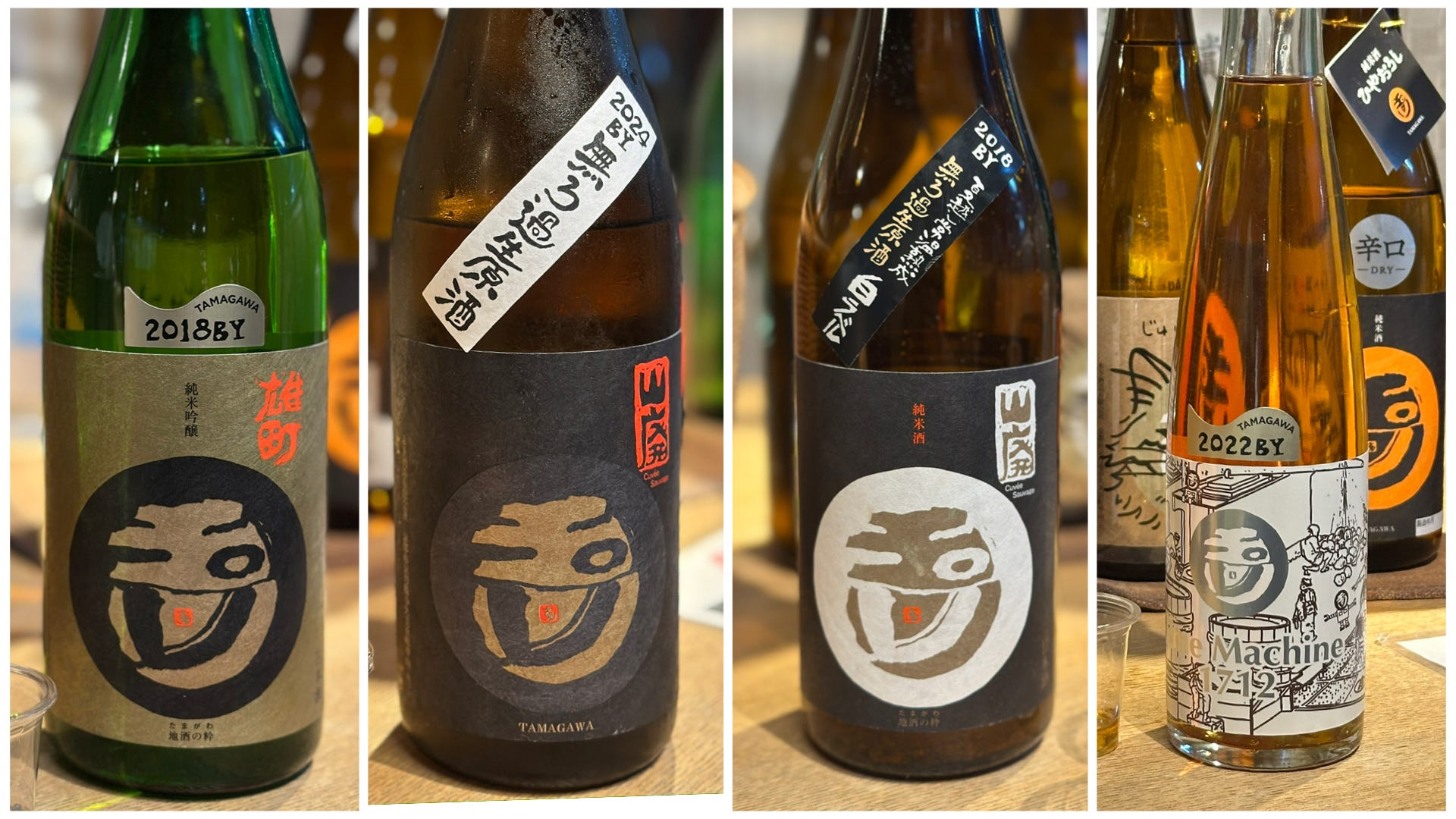
Tamagawa Junmai Ginjo Omachi BY2018
Alcohol 15–16%. Akaiwa Omachi is a premium designation within Omachi rice. Entry-level style—water added, pasteurized—but aging before release gives it a soft mouthfeel. The pandemic extended aging, so current bottles have six years instead of the usual four. A bargain. “ Once 2018 stock runs out, we’ll switch to 2019 then 2020, so the sake will get a year or two younger,” Harper said. Rich umami with Omachi’s distinctive texture. Labeled ginjo, but think herbal aromas rather than fruit or flowers, plus caramel and soy sauce from aging. Full presence, clean finish. Best at room temperature (20–25°C) or nurukan (warm, around 40°C).
Tamagawa Yamahai Junmai Muroka Nama Genshu BY2024
Alcohol 19–20%. Hyogo-grown Kitanishiki and HYOGO SAKE 85 rice. Tamagawa’s flagship, naturally fermented with indigenous yeast. Rich in acid and amino acids. The powerful yeast keeps going until the sake hits high alcohol and dryness. Layers unfold in the mouth. The yamahai genshu exported to the Netherlands is this type, aged one year at room temperature before shipping. Works from on-the-rocks to jo-kan (hot, 45°C)—different charms at each temperature.
Tamagawa Yamahai Junmai Muroka Nama Genshu White Label BY2018 (Summer Room-Temperature Aged)
Alcohol 21–22%. 100% Kitanishiki, naturally fermented with indigenous yeast. The color approaches tawny port. Caramel nuts, soy sauce, dried fruit, rich mature rice umami. Room-temperature aging builds layers of acidity, sweetness, and umami—warm aged aromas and a long finish. “This is amazing,” I said out loud. I wanted to buy some, but already sold out. I’ll wait for the next vintage.
Tamagawa Time Machine 1712 BY2022
Alcohol 14–14.9%. A recreation of old-style brewing methods. “1712” refers to the year the historical text Harper referenced was completed. Gentle sweetness with faint soy sauce aromas. Extremely sweet, yet abundant acid and amino acids cut through. Delicious over ice cream, and pairs surprisingly well with blue cheese or local salt-fermented mackerel.
“Ultimately, sake flavor is not determined by polishing ratio,” Harper said. Anyone serious about sake reaches this conclusion eventually.
Epilogue – “Take Your Time”
A conversation in the tasting room stayed with me.
Tamagawa sake is strong. It handles room-temperature aging. Moreover, open a bottle, and two or three years later, the flavor hasn’t faded—it’s even improved. Harper is captivated by aged sake’s potential. Each year he experiments with different styles and conditions, including temperatures and durations, and the breadth of his aged sake lineup reflects that dedication.
Wine and sake typically decline after opening—wine loses acidity, refrigerated quick-drinking sake loses aroma. Tamagawa is different. Harper calls it oxidative aging rather than oxidation. The last glass from a bottle tastes better than the first—restaurant customers say so unanimously.
That’s why Tamagawa doesn’t say “drink quickly after opening.”
Instead, it says “take your time.”
From a brewery that treats time as an ally, Tamagawa now introduces a new Reserved series shaped entirely by slow, careful ageing — and I already can’t wait for the day it finally reaches the Netherlands.

After more than thirty years in Japan, earning Nanbu Toji certification, winning gold at the National New Sake Competition, Harper is still learning. All the brewing team work seasonally. Several live in the brewery with Harper, sharing dinner and drinks each night. Some have worked alongside him for nineteen years.
“Take your time”—perhaps this applies not just to drinking sake, but to life itself.

About Kinoshita Shuzo
Founded: 1842
Location: Kumihama, Kyotango City, Kyoto Prefecture
Main brand: Tamagawa
Production: About 850 koku (153 kiloliters)
Features: Precision soaking for all rice, genetically distinct indigenous yeast, room-temperature aging and shipping, in-house rice polishing, traditional kimoto and yamahai fermentation
Where to Find Tamagawa Sake
In Japan: Authorized retailers nationwide (distributed from Hokkaido to Okinawa)
In the Netherlands: Through Yoigokochi
Acknowledgments
My sincere thanks to Philip Harper for welcoming this visit, and to Dick at Yoigokochi, the Dutch importer who made it possible.
Thank you for reading! Likes, comments, subscriptions, and shares with sake-loving friends are always appreciated.
酒蔵インタビュー#11: 玉川:「ゆっくりお飲みください」という革命
イギリス人杜氏が証明した、日本酒の新しい時間軸
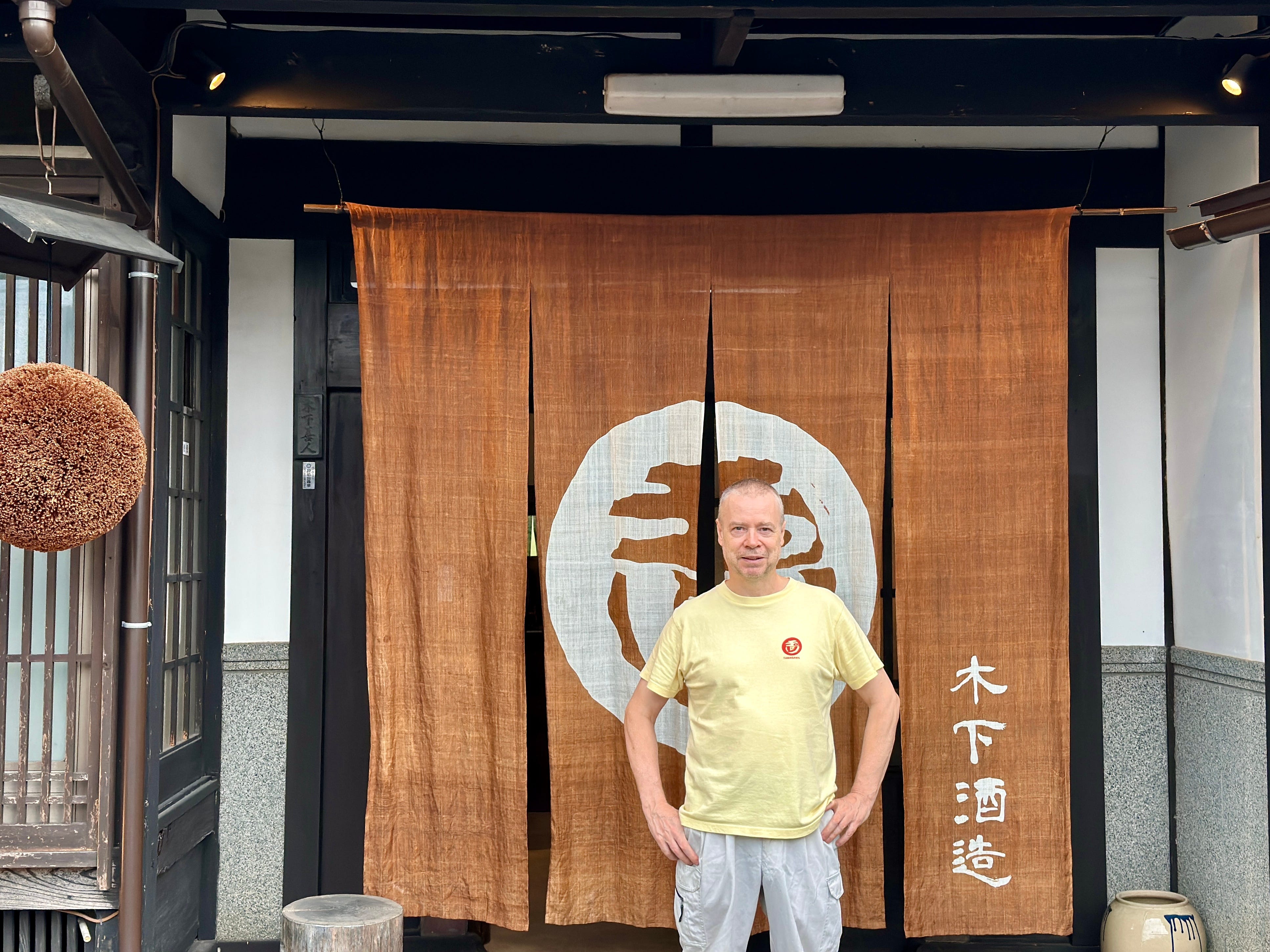
外国語を「話せる」ことと、その言語で「専門家として結果を残す」ことの間には、途方もない距離がある。オランダに住み、英語とオランダ語と格闘する私は、その距離を毎日痛感している。だからこそ、イギリス出身のフィリップ・ハーパーさんが難易度の高い専門試験──日本最大の杜氏集団である南部杜氏の試験──に合格し、19年にわたって京都・丹後の酒蔵を率いていると知ったとき、畏敬の念を抱かずにはいられなかった。
訪問前の玉川の印象は、常温や燗酒で真価を発揮する、骨太で味わい深い日本酒だった。しかし今回の蔵訪問で、その印象の背後にある哲学──全量限定吸水という妥協のない米洗い、協会酵母とは別系統の蔵付き酵母、そして「開けてから2、3年経っても持つ」という驚異的な酒質──を目の当たりにした。
天保13年創業、廃業寸前からの再生
木下酒造は天保13年(1842年)、京都府北部・京丹後市久美浜で創業した。蔵のすぐ隣を流れる川上谷川は、玉砂利を敷き詰めたような清流だったという。「玉(とても美しい)のような川」——銘柄「玉川」の由来である。
2007年、この蔵は存亡の危機にあった。46年間蔵を支えた杜氏が亡くなり、11代目蔵元の木下善人社長は廃業を覚悟したという。そんな折、知人を通じて紹介されたのがフィリップ・ハーパーさんだった。
1988年にJETプログラムで来日したハーパーさんは、友人と日本酒クラブに参加するうち酒造りに魅せられ、気づけば仕事を辞めて蔵人になっていた。各地の蔵で経験を積み、南部杜氏の資格を取得。木下酒造では就任1年目から、酵母無添加の生酛・山廃仕込みに着手した。2008年と2012年には全国新酒鑑評会で金賞を受賞——外国人杜氏として史上初の快挙である。
他のインタビュー記事を読むと、ハーパーさんは「私の造りは”外国人だから”というより、日本のベテラン杜氏から学んだ結果です」と語っている。但馬、南部、能登、日本四大杜氏のうち3つもの杜氏の下で研鑽を積んだ経験が、その言葉の背景にあるのだろう。
全量限定吸水──20分のズレを許さない
米の吸水は酒質を左右する。米がどれだけ水を吸うかで蒸し上がりの硬さが変わり、麹の出来が変わり、酒の味わいが決まる。「限定吸水」とは秒単位で吸水時間を管理する技法で、玉川はこれをすべての米に行う。
蔵を案内されて最初に驚いたのは自社精米機だった。この規模(約850石)の蔵で自家精米を行うのは極めて稀だ。4年前に導入した新型機は、旧型では割れてしまうことがあった少量(600キロ〜)にも対応でき、電気代も半分に下がった。
「普通の蔵では「加工用米」は、精米された白米でごちゃ混ぜに入ってくるので、何が入っているかわからない。品種が変わると水の吸い方も変わる。ごちゃ混ぜだと、適当にやるしかない」
米は品種や天候によってコンディションが異なり、吸水率に直結する。自家精米で品種ごとの特性を把握しているからこそ、全量限定吸水が意味を持つ。
また、吸水はその前のフェーズ洗米から始まっている。500キロの米を大きな桶で一度に洗うと、米の送り込みに時間がかかるため、最初と最後の米で吸水時間が20分もずれてしまう。「それを見て見ぬふりするか、しないか。うちはしない」
給水時間をより正確にコントロールするために、玉川では毎日700〜800キロの米を、15キロずつ洗っている。
蔵付き酵母という「別系統」
玉川のもう一つの特徴は、生酛・山廃仕込みにおける酵母無添加だ。ワインでは葡萄の皮に付着した酵母が自然発酵を担うが、精米された白米には酵母がいない。だから日本酒における「自然酵母」とは、蔵の空気中や道具に棲みついた「蔵付き酵母」を指す。
近代的製法が確立する以前は全て「蔵付き酵母」だったが、1900年代初頭から優良な酵母が「協会酵母」として管理・頒布され、今ではほとんどの蔵がこれを使う。
長年協会酵母を添加してきた蔵では、それが蔵に定着しているはずだ。つまり「蔵付き酵母」といっても、実態は昔使っていた協会酵母なのではないか?——私はそう問いかけた。
「遺伝子を調べてもらったんですが、うちの酵母は協会酵母とは別グループなんですよ」と、ハーパーさんは言う。
ハーパーさんが就任した当初、蔵では7号酵母を使っていたため、酵母無添加を決めた最初の2、3年も7号が自然に入り込んでいたそうだが、やがて協会酵母使用以前の蔵本来の酵母が顔を出し始めたそうだ。
この独自の酵母が、玉川の酒に驚異的な耐久性をもたらしている。屋根裏には19年前に仕込んだ酒が常温で眠っている。真夏には40度を超える環境でも、へたらないというから驚きだ。
熟成と常温流通
日本酒の国内消費量は、ピーク時(1973年)から4分の1以下に縮小した。一方で輸出は過去10年で3倍以上に伸びている。この状況から2つの視点を注目したい。
まず熟成酒という機会。日本では「新酒は新鮮なうちに」という考え方が主流だが、ワイン文化圏から見ると、熟成は酒の価値を高める重要な要素だ。剣菱の記事でも触れたように、熟成酒は縮小する国内市場とは別の可能性を持っている。
木下酒造でも、熟成、特に常温熟成を大切にされている。玉川では火入れタイプのほとんどが3年以上の熟成を経て出荷される。純米吟醸雄町は6年もの、特別純米は4年もの。蔵の中でも冷蔵管理よりも常温管理した方が美味しいという意見が圧倒的だそうだ。
また、興味深いのは、常温熟成だと土地によって酒が変わるということ。冷蔵保管なら日本で熟成してもオランダで熟成しても同じ酒になるが、常温だと全く違う酒になる点だ。「熟成のテロワール」とも言えるだろうか。
そしてもう一つ、ハーパーさんが強調するのは「常温流通」の重要性だ。
「日本酒業界が一番栄えていた時は、全部常温流通だったんですよ。今は冷蔵庫に入れなきゃとか、早く飲まなきゃとか、注文が多すぎる。それじゃ窓口が狭まる」
顧客の要望によっては冷蔵流通もしているが、玉川は夏限定の「Ice Breaker」(無濾過生原酒)も含め、年間を通じてクール便を使わなくて済む酒質だそうだ。
常温熟成で深みを増した日本酒が常温流通で届けられる強さのある酒、海外市場での評価につながっている。
時間を味わう──テイスティングノート

試飲した中から、印象的だった4本を紹介する。
玉川 純米吟醸 雄町 BY 2018
赤磐雄町100% アルコール15〜16%。赤磐雄町は雄町の中でも高品質のブランド米だ。加水・火入れのエントリースタイルだが、蔵内で熟成させてから出荷するため口当たりが柔らかい。コロナ禍で熟成期間が延び、通常より長い6年熟成で販売されている今がお買い得だという。「2018年の在庫がなくなり次第2019や2020年の若いビンテージに入れ替わる予定」とハーパーさん。豊かな旨味に雄町らしい独特のテクスチャ。吟醸とはいえ、果実や花の香りよりは草やハーブを思わせる香りに、熟成によるカラメルや醤油のニュアンスが加わる。存在感がありつつもキレ味が良い。常温(20〜25度)かぬる燗(40度)がおすすめ。
玉川 山廃 純米 無濾過生原酒 BY 2024
アルコール19〜20%。兵庫県但馬産北錦とHYOGO SAKE 85を使用した玉川の定番シリーズ。蔵付き酵母による自然仕込みで、酸とアミノ酸が豊富。蔵付き酵母の力が強く、アルコール度数が高く辛口になるまで発酵し続ける。口中で展開するレイヤーの厚みが印象的だ。オランダで扱っているのもこのタイプの山廃原酒で、蔵で1年常温管理してから送っているそうだ。オンザロックから上燗(45度)まで、温度帯によって異なる魅力を見せる。
玉川 山廃白ラベル 純米 無濾過生原酒 BY 2018 夏越し常温熟成
アルコール21〜22%。北錦100%、蔵付き酵母による自然仕込み。色はもう紹興酒だ。キャラメルナッツ、醤油、ドライフルーツ、熟れた米の旨味。常温熟成由来の酸・甘味・旨味が層になり、温かみのある熟成香と長い余韻を残す。「超おいしい」と思わず声が出た。買って帰りたかったが、残念ながらすでに売り切れとのこと。次のヴィンテージを楽しみに待ちたい。
Time Machine 1712 2022BY
兵庫県産北錦 アルコール14〜14.9%。江戸時代の製法を再現した酒だ。商品名の「1712」は、ハーパーさんが参考にした古文書『和漢三才図会』が完成した年である。優しい甘みと、ほのかに醤油のような香り。超甘口だが、豊富な酸とアミノ酸が濃厚な甘さをすっと切らせる。アイスクリームにかけても美味しいし、ブルーチーズや丹後名物のへしことも合うとのことで、驚きの相性だ。
「結局、酒の味は精米歩合で決まるものではない」とハーパーさんは言う。真剣に酒を飲んでいく人は、結局その結論にたどり着くのだと。
エピローグ──「ゆっくりお飲みください」
試飲室での会話が印象的だ。
玉川の酒は強い。常温保管で熟成させても、開栓後2、3年経っても味がへたることはなく、むしろ向上するという。熟成酒の可能性に魅せられているハーパーさんは、毎年温度や期間等の条件を変えながら実験を続けており、熟成酒の商品ラインナップの幅がその姿勢を物語っている。
ワインも日本酒も、通常は開栓後に劣化していく——ワインは酸が落ち、冷蔵・早飲み想定の日本酒は香りが落ちる。しかし玉川の酒は違う。酸化ではなく酸化熟成とハーパーさんは言う。瓶を開けた最初の一杯より、最後の一杯のほうが美味しい——飲食店の客は皆、口を揃えてそう言うという。
だから玉川は「開栓後は早くお飲みください」とは言わない。
「ゆっくりお飲みください」。
そんなふうに「時間を味方につける」玉川から、ゆっくりと育てた熟成の魅力を凝縮した “Tamagawa Reserved” シリーズが登場した。オランダで手に入れられる日が、今から本当に待ち遠しい。

30年以上日本に暮らし、南部杜氏の資格を取り、全国新酒鑑評会で金賞を獲得しても、彼は今なお学び続けている。蔵のメンバー全員が季節雇用だ。住み込みで、毎晩一緒に食事をして晩酌をする蔵人も多く、19年間一緒に働くメンバーもいるという。
「ゆっくりお飲みください」という言葉は、日本酒への向き合い方だけでなく、人生への姿勢を示しているのかもしれない。
木下酒造について
創業: 1842年
所在地: 京都府京丹後市久美浜
銘柄: 玉川
生産量: 約850石(153キロリットル)
特徴: 全量限定吸水、協会酵母とは別系統の蔵付き酵母、常温熟成・常温流通、自社精米、生酛・山廃仕込み
玉川の日本酒を味わうには
日本国内:全国の特約店(北海道から沖縄まで流通)
オランダ: 酔い心地(Yoigokochi)経由
謝辞
今回の訪問を快く受け入れてくださったフィリップ・ハーパーさん、この機会を実現させてくれたオランダのインポーター「酔い心地」のディックさんに心から感謝いたします。
お読みいただき、ありがとうございます!いいね、コメント、購読、お友達の日本酒好きへのシェアでサポートよろしくお願いします。