


🇯🇵 日本語版は記事の下部にあります / Japanese version available below
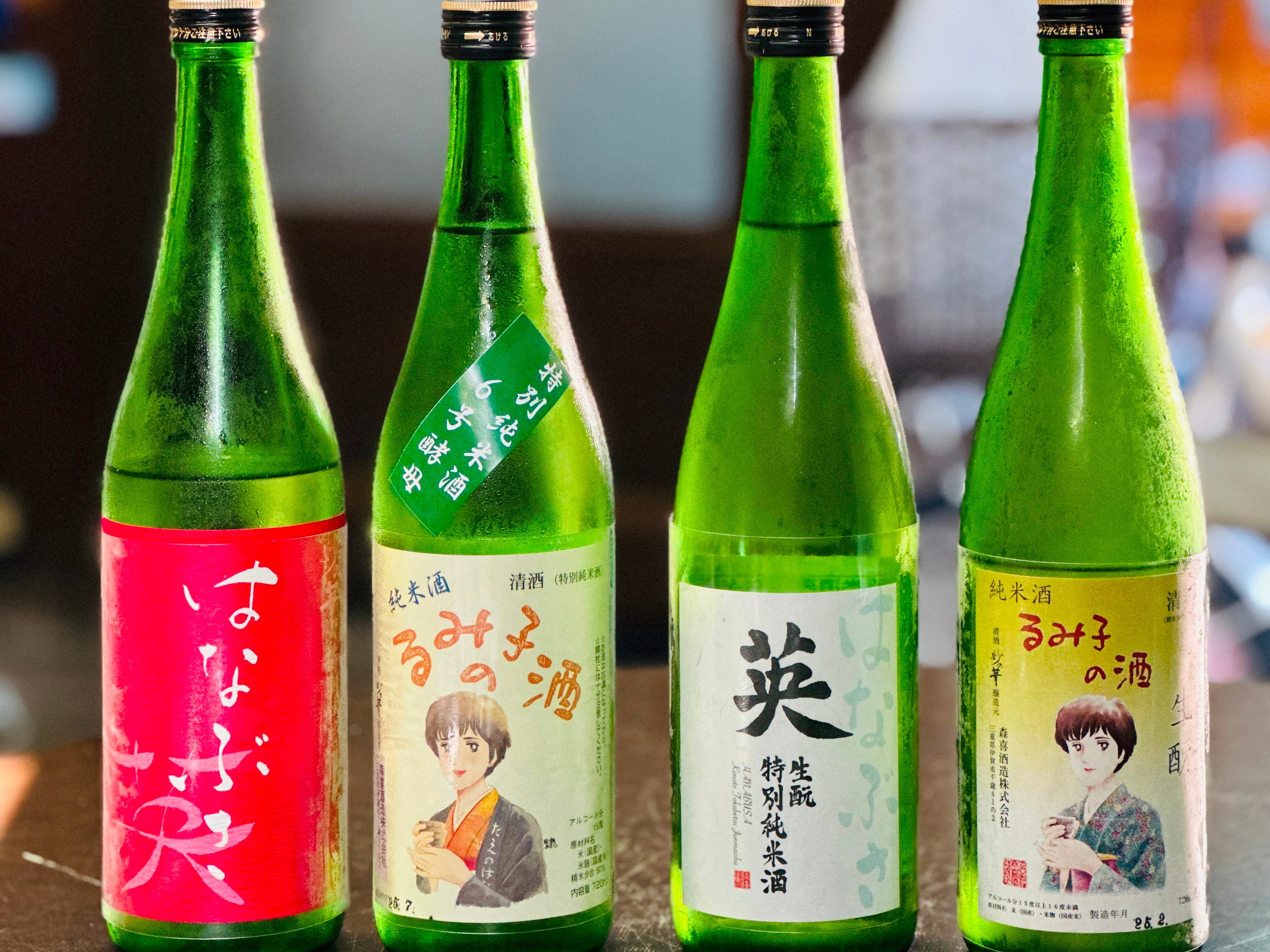
Most sake labels feature calligraphy, mountain scenery, or abstract brushwork. So when I first came across a bottle with a woman’s manga on the front, I was a little surprised. She is Rumiko Moriki, a master brewer at Moriki Shuzo. The illustration was drawn by manga artist Oze Akira, whose work had changed the course of her life decades earlier.
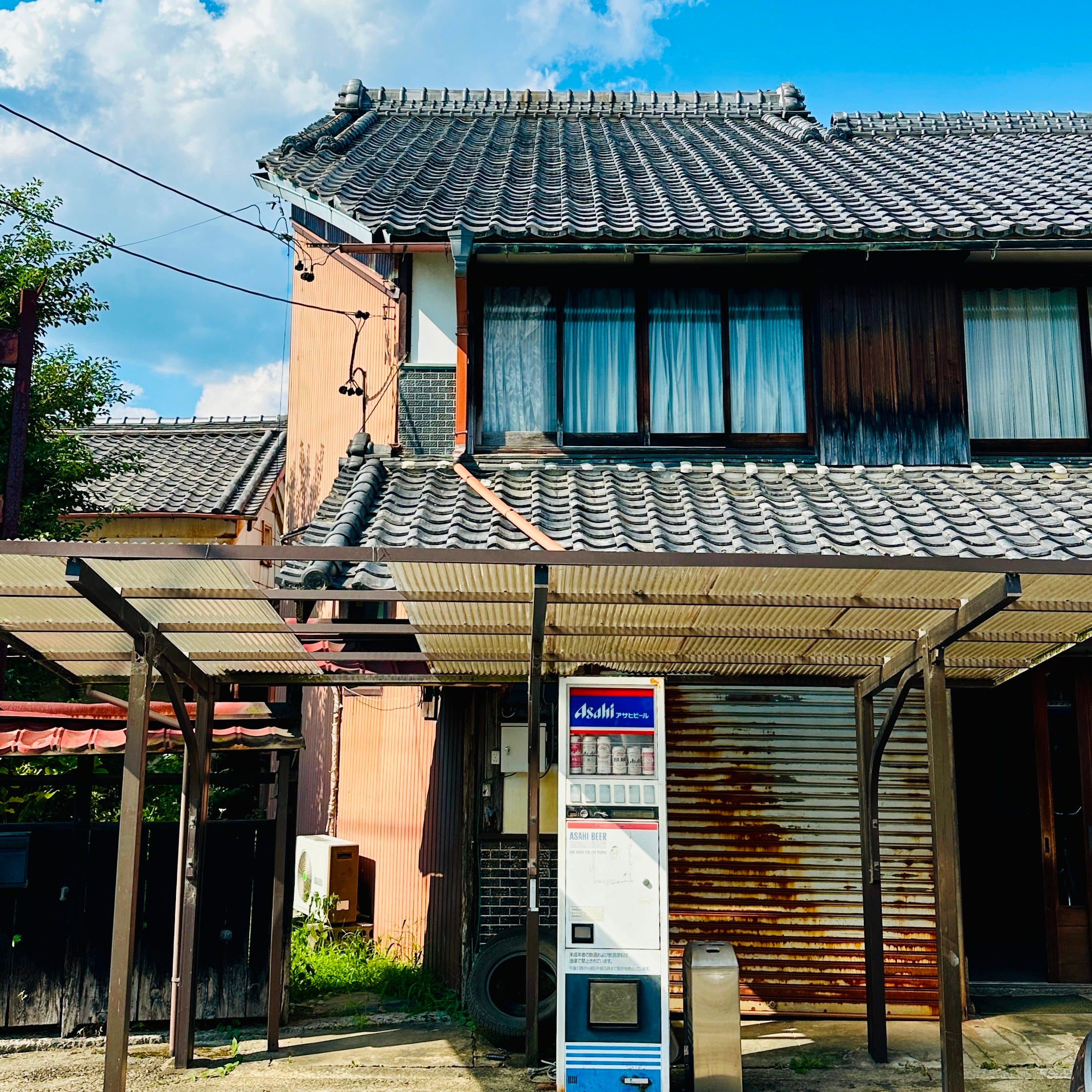
Last summer, visiting Japan from the Netherlands. The brewery was quiet and small. Nothing about the exterior hints at the story inside. It had the feel of a grandparent’s house — familiar, unhurried.
A Brewery Committed to One Thing
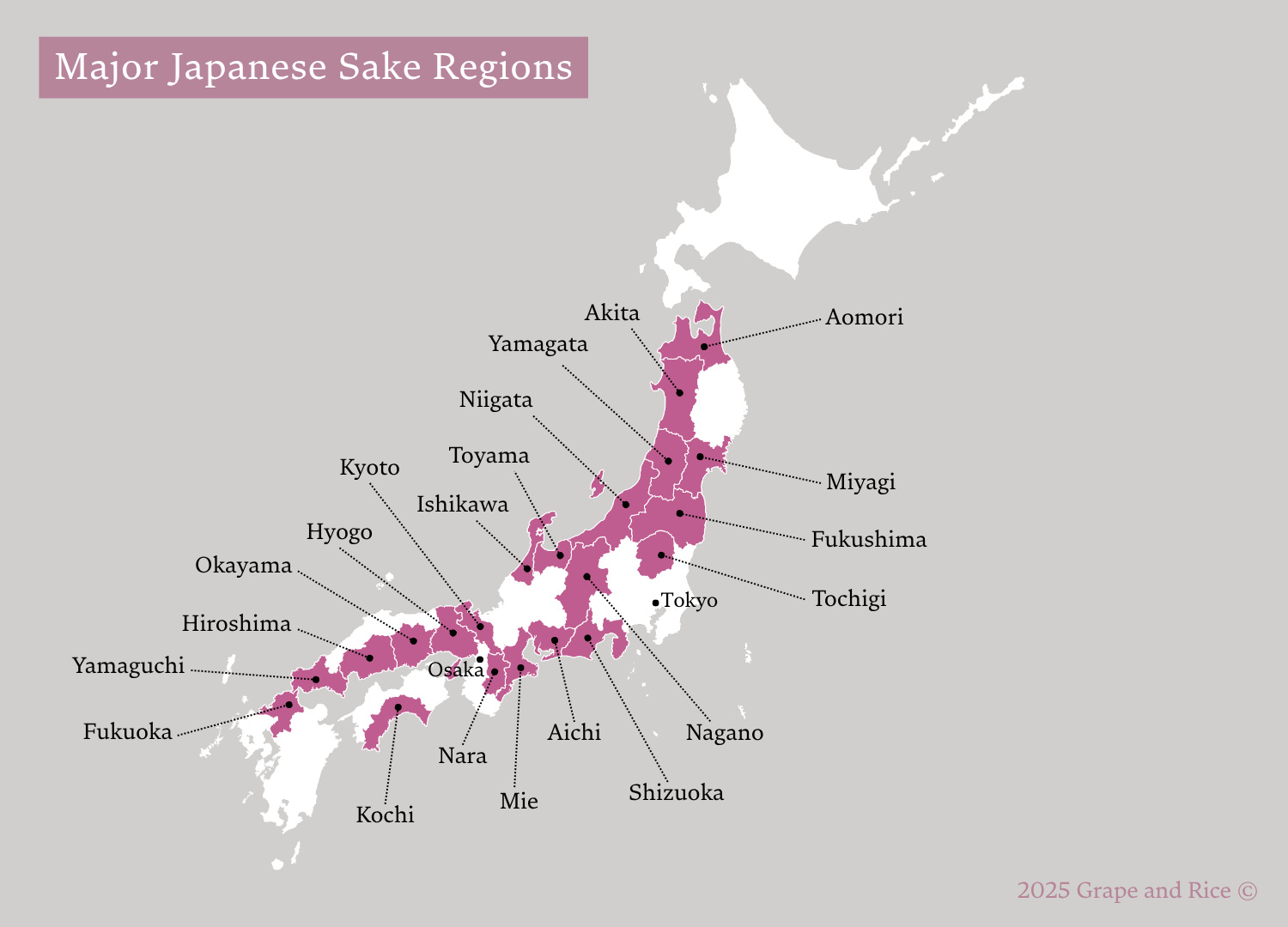
Moriki Shuzo is a fifth-generation family brewery in Iga City, Mie Prefecture, located roughly midway between Osaka and Nagoya (Aichi Prefecture) on Japan’s main island. This is a landlocked basin known internationally as the birthplace of ninja. Annual production in this brewery is around 300 koku (one koku equals 180 litres, so roughly 45,000 kilograms of rice). Very small, and small enough that every step of the process can be done by hand.
The brewery was founded in the 1890s by Moriki Keiichiro, who asked a local Buddhist priest to divine a water source on the site. A well was dug, and the brewery was built around it. The founding label, Tae no Hana (meaning “wondrous flower”), takes its name from the Lotus Sutra and is still used as sacramental sake at a local shrine today.
The current lineup has four labels: Tae no Hana, Rumiko no Sake, Hanabusa — made with organic Yamadanishiki (the most prized variety of sake rice, grown predominantly in Hyogo Prefecture) — and RIE STYLE, named after current toji (master brewer) Rie Toyomoto.
Every bottle is junmaishu, brewed from rice, koji, and water alone, without any added distilled alcohol. The brewery completed its transition to an all-junmai production in 1998.
The flavour direction is consistent: depth over brightness, palate over aroma, texture over fragrance. The sake opens up with food, and improves when warmed. “Junmaishu is what we, as brewers, want to drink ourselves”.
The choices made to achieve that sake follow from there.
All koji (the mould-cultivated rice that converts starch to sugar and drives fermentation) is made using the tray method (futakoji-ho), handling small quantities carefully rather than in bulk — the quality of the koji, in their view, demands it. Rice is steamed in an old-fashioned iron cauldron over a fuel-oil burner, a method that gives precise control over steam quality and produces rice that is dry and firm on the outside, soft within.
Since 2016, Moriki Shuzo has been relying entirely on the ambient yeast living in the brewery for their kimoto and yamahai brews — traditional methods of developing the fermentation base using naturally occurring lactic acid bacteria, rather than adding cultured lactic acid. This roughly doubles the time required, but produces a complexity and depth that commercial yeast cannot replicate, they say.
The Midnight Manga and the Seven-Page Letter
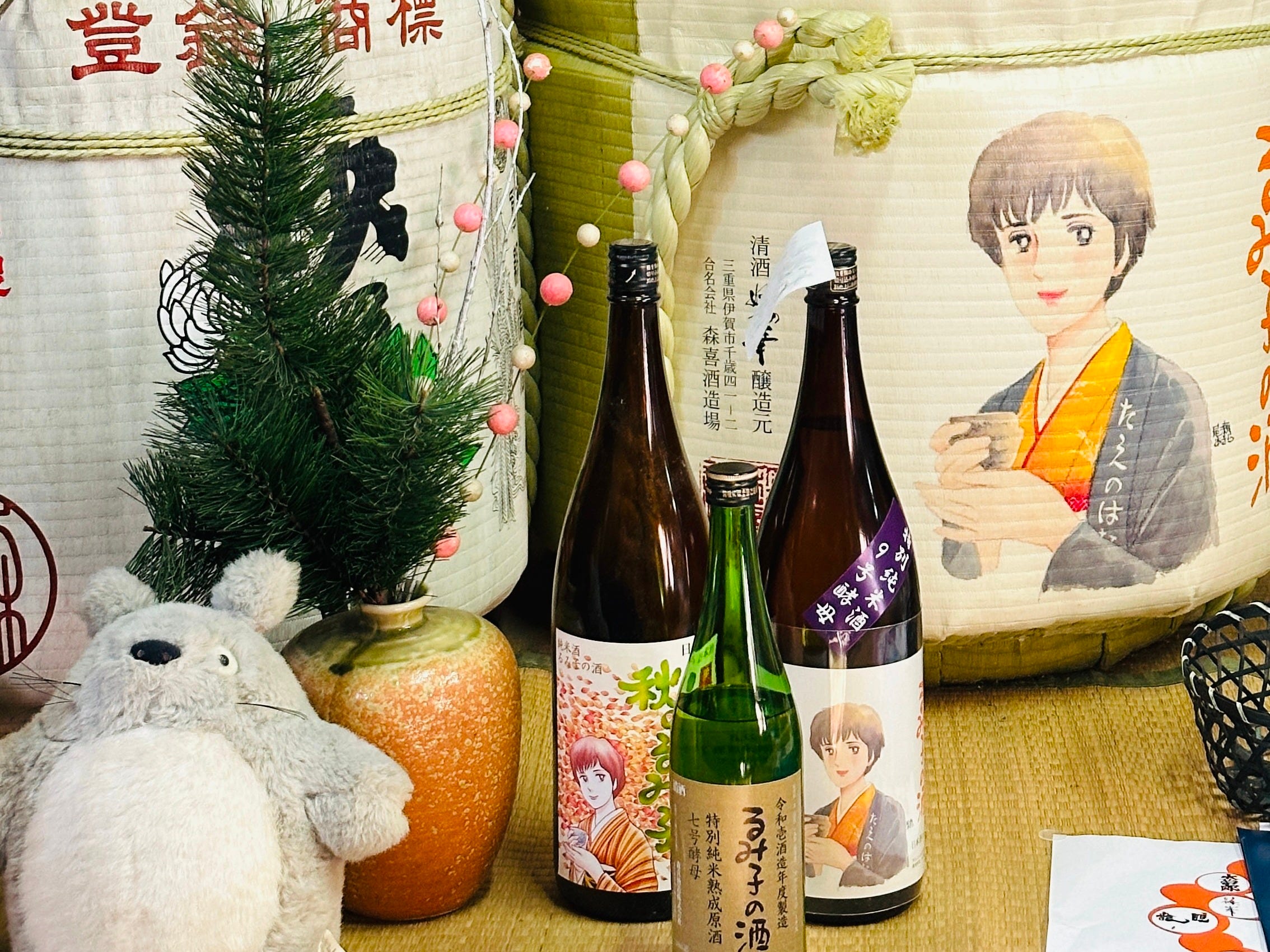
Step inside the brewery and manga illustrations appear everywhere. Ask about them, and you are told a story.
Rumiko Moriki was born in 1960, the eldest daughter of the brewery. After university in Osaka, she took a job at a pharmaceutical company. Then her father had a stroke. She left her job, married her fiancé Hideki Moriki, and the two of them joined the brewery together in 1988.
Almost immediately, a larger crisis arrived. The brewery’s main income came from supplying sake by the tank to a large producer, who would bottle and sell it under their own brand. In 1990, that buyer pulled out. The choice, as described by the brewery, was binary: close, or pivot to premium junmaishu and build a market from scratch.
It was during this period that a friend recommended a manga series called Natsuko no Sake. Written by Oze Akira and serialised from 1988, it was later adapted for national television — a story that resonated across Japan. The parallels with Rumiko’s own situation were apparently too many to count, and she read the entire series in a single night. By the time she finished, she sat down and wrote Oze a seven-page letter. He replied and promised to draw her label when she made the switch to junmaishu, and introduced her to a brewery that was already doing it.
In 1992, Moriki Shuzo brewed two tanks of junmaishu. Both sold out. Oze named the sake Rumiko no Sake and drew the label himself. Knowing this before you open the bottle makes the sake look a little different.
Women and the Brewery
When Rumiko joined Moriki Shuzo in 1988, there was almost no precedent for a woman on the brewing floor. The first female toji in modern Japan had taken up the role at Hakubotan Shuzo in Hiroshima in 1985 — just three years earlier.
Sake was originally a women’s craft: the word toji may derive from an older term, meaning lady or mistress of the household. Shrine maidens brewed sake as an offering to the gods over two thousand years ago.
The shift happened around the 17th–19th century. Sake production scaled up commercially and brewers began living together inside the brewery through the winter months.
The combination of heavy physical work and communal dormitory life became a structural barrier — something Hideki Moriki spoke about directly during my visit.
After stabilising the brewery, Rumiko founded the Women in Breweries Summit — an organisation for women working in sake breweries across Japan. The first gathering was held in June 2014, bringing together women from twenty-two breweries. It now meets twice a year, combining visits to each other’s workplaces with technical exchange.
As of December 2024, an Associated Press report put the number of women registered as toji with Japan’s Toji Guild Association at thirty-three, out of more than a thousand active breweries. The number is slowly growing.
At Moriki Shuzo today, three women are involved in the brewing: Rumiko, toji Rie Toyomoto, and brewery worker Nozomi Moriki, Rumiko’s daughter. The next generation is brewing in the space that Rumiko helped open up.
Growing the Rice
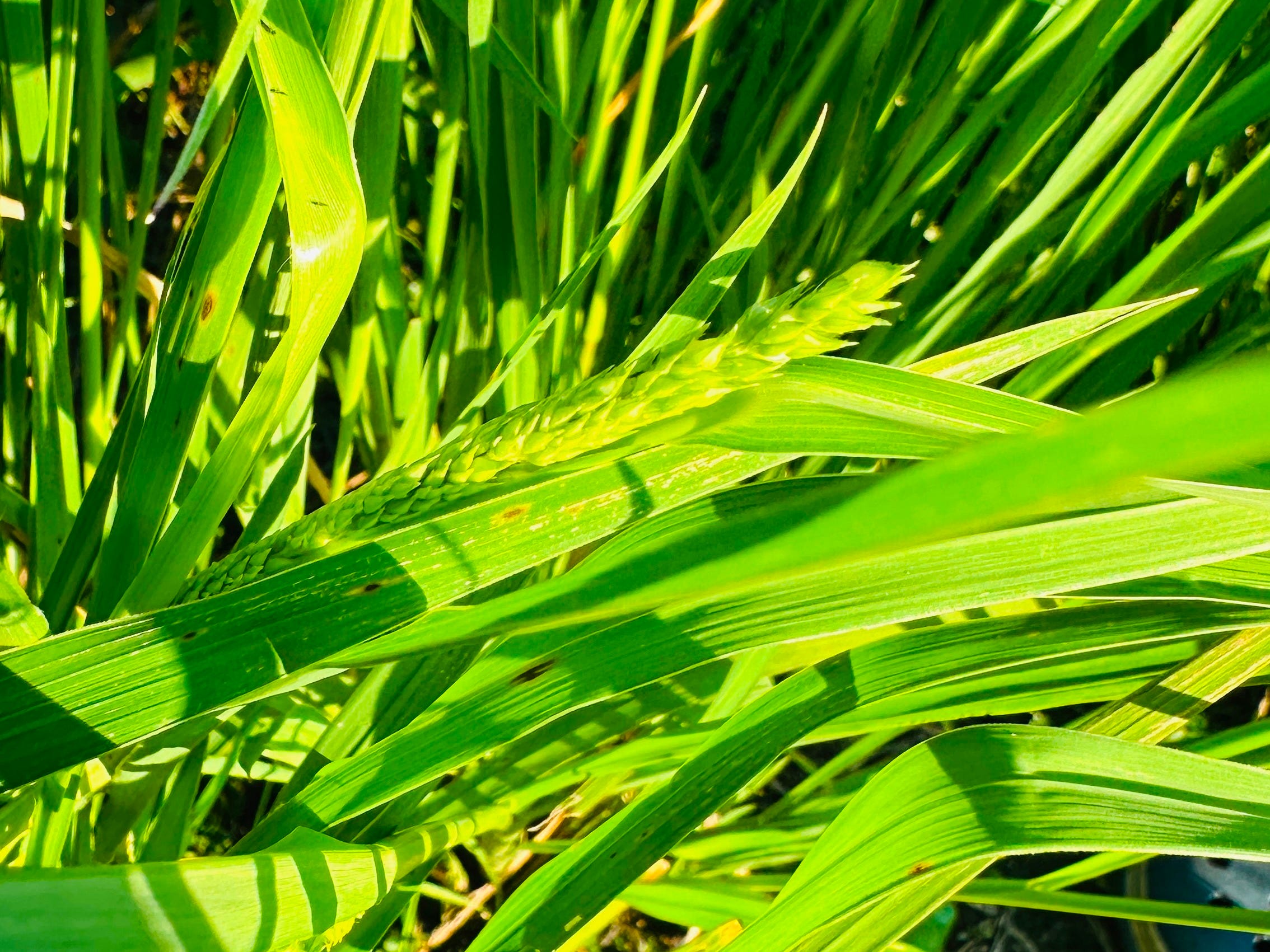
During the visit, Hideki drove me out of the brewery to their rice field — the brewery’s own plot, where they grow Yamadanishiki. It accounts for around five percent of the rice they use in a year. Small, but grown with a specific intention: they want the people who drink the sake to taste what rice actually tastes like.
Sake breweries growing their own rice is, historically, rare. In the premium wine world, growers cultivating their own grapes is standard practice — known as the domaine model. In sake, it has long been standard practice to source rice from farmers or agricultural cooperatives — rice is easy to dry and transport, so there was little pressure to keep it close.
In recent years, some breweries have begun farming their own rice, but they remain a small minority nationally.
No pesticides, no herbicides. The only fertiliser is sake lees (the pressed solids left after sake is filtered) from the previous year’s pressing, spread across the fields every November. Farming without herbicides is genuinely difficult. Unlike grapes, which grow on the same vines year after year, rice is replanted annually — which means the fight against weeds starts from scratch every season. There are years when weeds win outright in parts of the field, and a section produces nothing.
But without any inputs, the rice drives its roots deep and grows on its own terms. “It’s not just for marketing,” Rumiko has said. “Rice grown without pesticides is simply stronger.”
The Yamadanishiki from this field, together with rice grown by local contract farmers under the same approach, is the basis for Hanabusa — the brewery’s label that most directly expresses this philosophy of growing and brewing as a single practice.
In the Glass
Two sakes from the visit stood out.
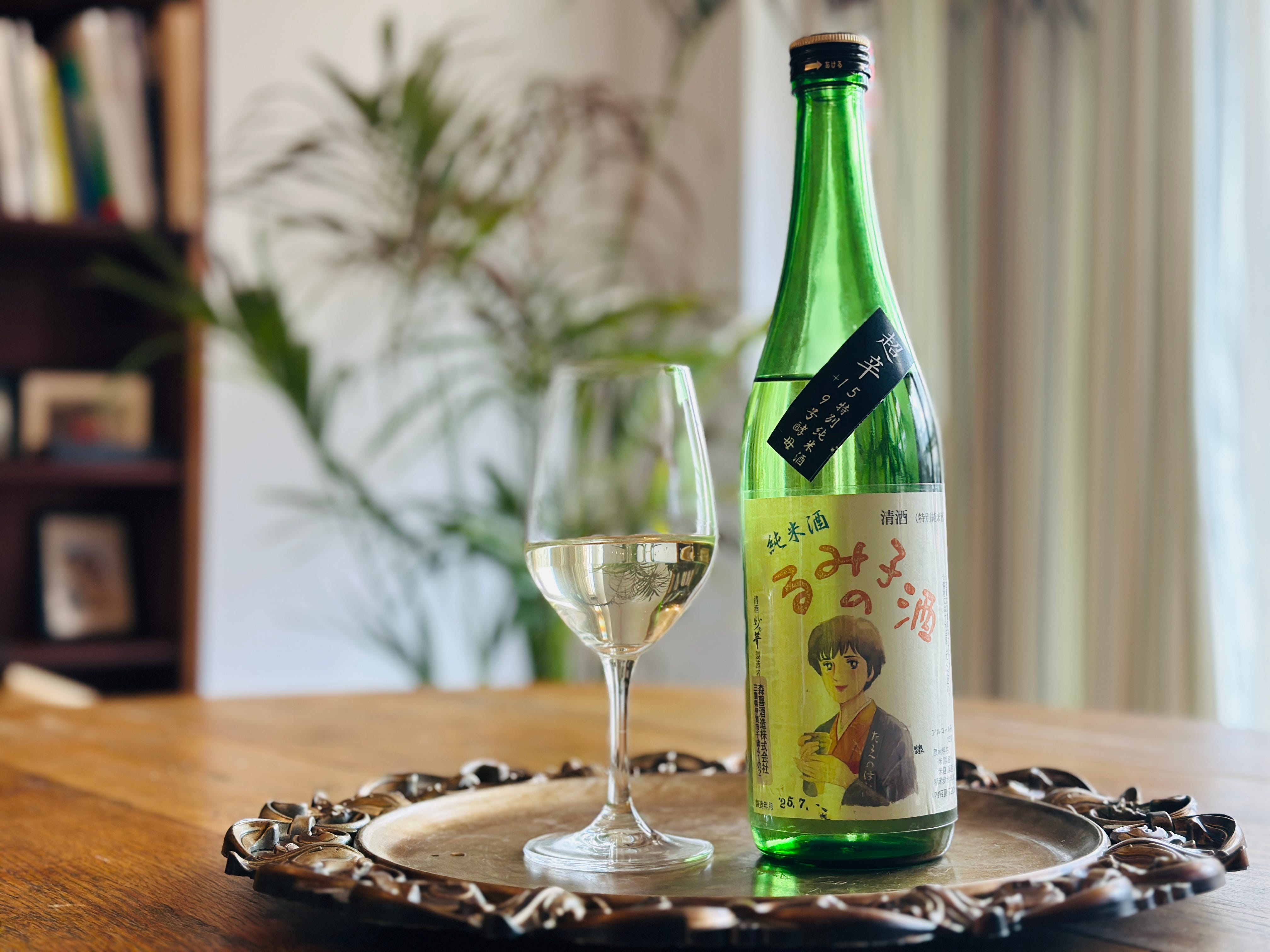
Rumiko no Sake No.9 Yeast Super Dry Tokubetsu Junmai (tokubetsu junmai: a premium class of pure rice sake)
Rice: Hattan Nishiki 75% (a sake rice variety from Hiroshima), Yamadanishiki 25% | Seimaibuai (rice polishing ratio): 60% | Yeast: Kyokai No.9 | ABV: 15% | SMV: +15 (Sake Meter Value; positive numbers indicate dryness) | Acidity: 1.5
Super dry, with clean finish, restrained aromas and gentle umami in balanced palate. Versatile for any kinds of dishes.
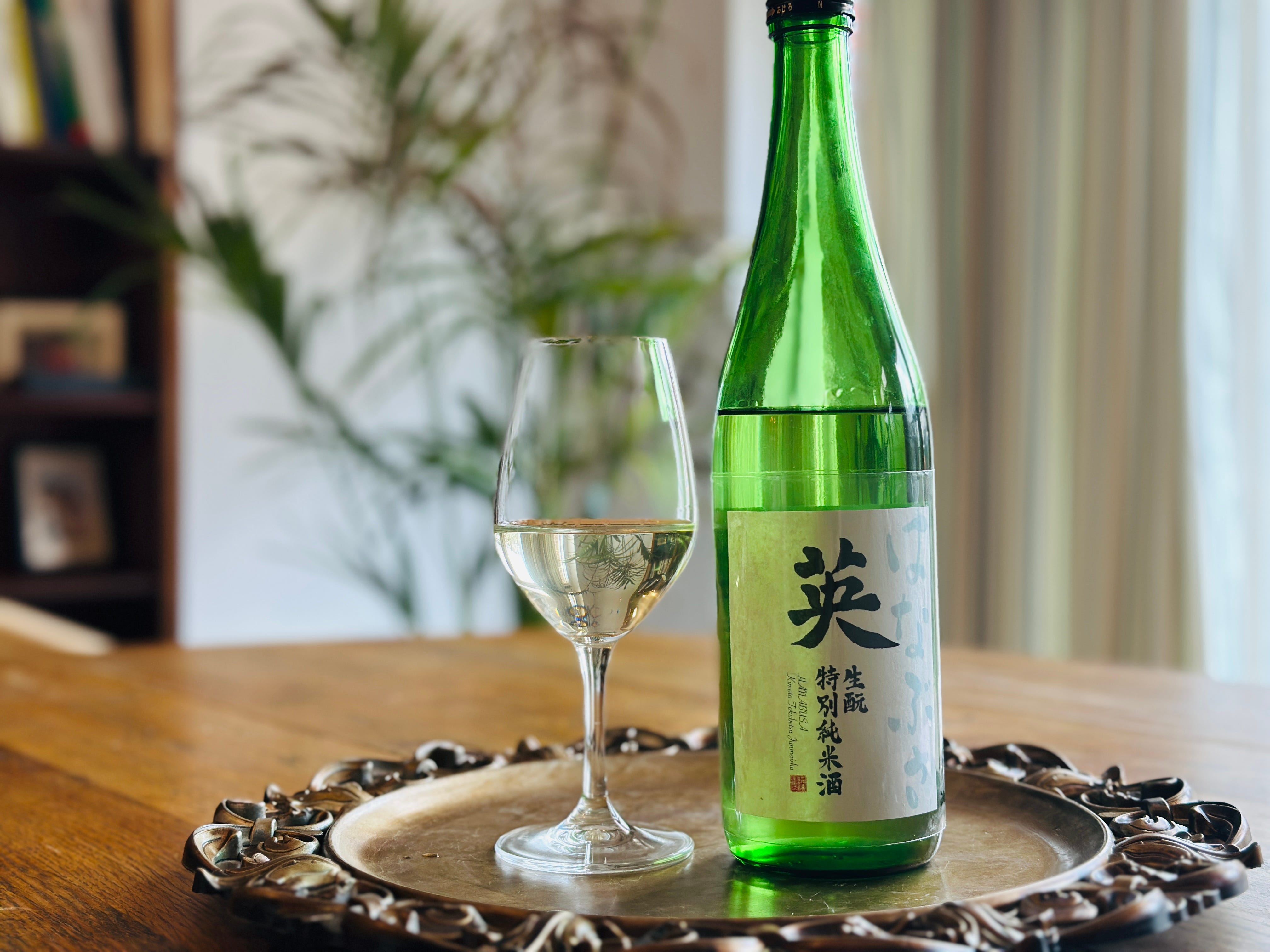
Hanabusa Tokubetsu Junmai Kimoto Hiire (hiire: pasteurised)
Rice: Yamadanishiki 100% (Mie Prefecture) | Seimaibuai (rice polishing ratio): 60% | Yeast: Kuratsuki (indigenous yeast native to the brewery) | Method: Kimoto | ABV: 15% | SMV: +7.5 | Acidity: 1.6
A gentle lactic presence from the kimoto fermentation. On the nose, banana, milk, and a faint honey note. The palate is dry with good umami, full-bodied with a slight viscosity, and the finish is long and clean. Warm it slightly and it rounds out further, becoming even more at ease alongside food. The kimoto starter takes around forty days to develop; fermentation runs for a further thirty — roughly double the time of conventional methods. The extra patience is audible in the glass.
An Unhurried Approach
Moriki Shuzo’s sake is not flashy. There is no pronounced aroma, no obvious sweetness, no complexity that announces itself immediately. What is there is balance, and an easy relationship with food. The umami holds its own without overriding what is on the plate.
I brought bottles back to the Netherlands and tried them with sole meunière and pasta as well as Japanese food. The harmony was there in each case. The kind of sake you want to keep in the refrigerator as a matter of course.
Getting here took a long time. This is a small brewery, working with labour-intensive methods, taking more time than the alternatives. The sake is not made for competition awards — it is made for the table. Knowing the background makes it taste a little different.
My thanks to Rumiko, Hideki, and Rie at Moriki Shuzo for welcoming me to the brewery, and to Dick at Yoigokochi, the Dutch importer, for making the visit possible.
Moriki Shuzo
Senzai 41-2, Iga City, Mie Prefecture 518-0002
Official website: https://morikishuzo.co.jp/en/index.html
Visited: August 2024. References: SAKETIMES (2021); Associated Press (December 2024).
酒蔵インタビュー#14 : 森喜酒造場:名前を背負う酒
深夜のマンガ、7枚の手紙、そして一本のラベルが生まれるまで
日本酒のラベルは、筆文字や山水画が多い。そこに一人の女性の顔が描かれた瓶を初めて見たとき、少し驚いた。神様でも歴史上の人物でもない。三重県伊賀市の酒蔵、森喜酒造場の杜氏・森喜るみ子さんだ。ラベルを手がけたのは漫画家・尾瀬あきら氏。彼の作品が、何十年も前にるみ子さんの人生を変えた。
昨夏、オランダから一時帰国した折に、伊賀市を訪れた。蔵は静かで小ぶりだった。外観には、中に宿る物語を予感させるものはない。祖父母の家をおとづれた時のような、どこか懐かしい佇まいだ。話を聞いていくうちに、その静けさの奥に、かなり長い時間が積み重なっていることがわかってきた。
純米酒だけを造る蔵
森喜酒造場は三重県伊賀市に蔵を構える、五代続く家族経営の酒蔵だ。忍者の里として知られるこの土地の内陸盆地に位置し、年間生産量は約300石(約45,000kg)。大手が数十万石を誇る世界では、これは徹底して小さな規模だ。だからこそ、工程のすべてを手で完結できる。
蔵の創業は1890年代、初代・森喜啓一郎の時代に遡る。地元の住職に水脈を占ってもらい、その場所に井戸を掘って蔵を開いた。創業当時からの銘柄「妙の華」は、妙法蓮華経からとられた名前で、今も地元の神社の御神酒として使われている。
現在の主な銘柄は4つ。「妙の華」「るみ子の酒」、有機山田錦を使った「英(はなぶさ)」、そしてもう一人の杜氏・豊本理恵の名を冠した「RIE STYLE」。全品、米と麹と水だけで造る純米酒だ。1998年に全量純米蔵へ移行した。
目指す酒質は、香りより味わい、明るさより深み。食事と合わせたとき、燗にしたとき、じわりと存在感が増す酒だ。「私たちが本当に飲みたいと思う酒が純米酒だった」という言葉が、そのまま蔵の輪郭になっている。その酒を造るための選択が、いくつかある。
麹はすべて麹作りを少量ずつ管理する蓋麹法だ。小規模だからこそ、大量処理に向く方法を選ばず、手をかけてこそ、求める品質の麹になると考えている。米の蒸し上げも昔ながらの釜と燃料油バーナーだ。蒸気の質を細かく制御できるこの方法で、外は乾いて硬く、内は柔らかい蒸し米に仕上げる。
発酵においても、急がない選択をしている。2016年から、生酛と山廃の仕込みは酵母無添加とした。培養酵母を添加せず、蔵に棲む酵母と自然の乳酸菌だけに委ねる。通常の倍近い時間がかかるが、それによって生まれる複雑さと深みは、添加酵母では出せないものだという。
深夜のマンガと、7枚の手紙
蔵を訪れると、あちこちに漫画のイラストが目に入る。ラベルだけでなく、同じスタイルの漫画もある。訊けば、こんな話があるそうだ。
るみ子さんは1960年、この蔵の長女として生まれた。大阪の大学を卒業後、製薬会社に就職したが、父親が脳梗塞で倒れたことをきっかけに、婚約者の英樹さんと入籍して、1988年に二人で蔵に入ったそうだ。
しかしその直後、大きな危機が訪れた。当時の収入の柱は、造った酒をタンクごと大手に納める桶売りだったが、1990年、その大手が買い付けを打ち切る。選択肢は二つだった。廃業か、品質と個性で勝負する純米専業化か。
その苦境の中で、知人に勧められたのが漫画「夏子の酒」だった。尾瀬あきら氏原作で、1988年から連載され、後にテレビドラマ化もされた国民的な作品だ。るみ子さんの境遇と重なる部分があまりにも多かったため、夜通し最後まで読み通したという。読み終わったその晩、尾瀬先生に便箋7枚の手紙を書いた。一週間後に返事が届き、「純米に切り換えたらラベルを描く」という約束を取り付け、純米酒造りで先を行く蔵を紹介してもらったという。
1992年、森喜酒造場は純米酒の醸造を2タンクで始め、その酒は完売した。尾瀬先生が「るみ子の酒」と名付け、ラベルも描いてくれたという。こんな話を知ってからボトルを開けると、その酒がまた少し違って見える気がした。
女性と蔵、その長い歴史
るみ子さんが蔵に入った1988年、女性が醸造の現場に立つことは、業界でほぼ前例がなかった。近代の酒造りにおける最初の女性杜氏が広島・白牡丹酒造に誕生したのは1985年のことで、るみ子さんが入蔵したのはその3年後だ。
しかしもともと、酒造りは女性の仕事だった。「杜氏」という言葉は、古語で主婦や女主人を意味する「刀自(とうじ)」に由来するという説がある。弥生時代には、神への供え物として巫女が口噛み酒を醸していた記録も残っている。女性が蔵から遠ざけられるようになったのは、江戸時代に酒造りが大規模化・商業化してからのことだ。冬場に杜氏と蔵人が蔵に住み込む慣習が生まれ、重労働と共同生活が、女性の参入を阻む構造的なハードルになっていった。英樹さんは訪問時、そのことを率直に話してくれた。
蔵女性サミットを立ち上げたのは、るみ子さんだ。蔵の危機を乗り越えたあと、同じ立場の女性たちを支援する活動を始める。2014年6月、東京・椿山荘に全国22蔵の女性蔵人が集まる場を設け、現在は年2回の開催で、蔵の相互見学や技術交流の場として機能している。「同じ重荷を持つ人と話せると、少し楽になる」と、るみ子さんは言う。
2024年12月のAP通信の報道によれば、全国の杜氏組合に登録する女性杜氏は33名(稼働蔵は1,000以上)。数は少しずつ増えている。
現在の森喜酒造場では、るみ子さん、杜氏の豊本理恵さん、そして蔵人の望さん(るみ子さんの娘)と、3人の女性が酒造りに携わっている。るみ子さんが切り開いた場所で、次の世代が醸している。
米を、蔵から育てる
訪問の途中、英樹さんの運転で蔵を出た。車で5分もかからない場所に、田んぼがある。山田錦を育てている自社田だ。この自社田の米は、使用原料米全体の約5パーセントにあたる。少ないが、「米本来の味わいを感じてほしい」という思いで育てているそうだ。
酒蔵が自ら田んぼを持つことは、歴史的な経緯もあって非常に少ない。プレミアムワインでは造り手が自らブドウを育てることが当然とされているが、日本酒は長らく米を農家や農協から購入するのが一般的で、蔵と米の間には距離があった。また、米が乾燥させた状態で運搬しやすいことも一因の一つだ。近年、ワインのテロワールの概念に影響を受けて自家栽培に乗り出す蔵も出てきているが、それでも全国ではごく少数にとどまる。
農薬も除草剤も使わない。肥料は、前年の酒を搾った後の酒粕だけだ。毎年11月、田んぼに酒粕を撒く。除草剤なしの米作りは並大抵ではない。ブドウと違って稲は毎年植え替えるため、雑草との戦いを毎年一から始めることになる。雑草に負けて、一定範囲に全く育たないこともある。しかし何も与えられない分、米は根を深く張り、自力で育つという実体験があるそうだ。「マーケティングのためだけではない」と、るみ子さんは語っている。
この自社田の山田錦と、地元・伊賀の契約農家が同じ方針で育てた米を原料に使うのが、「英(はなぶさ)」だ。蔵元が米の栽培から関わる、この蔵を象徴するシリーズだ。
グラスの中へ
訪問時に試飲した中で、特に印象に残る2本を紹介する。
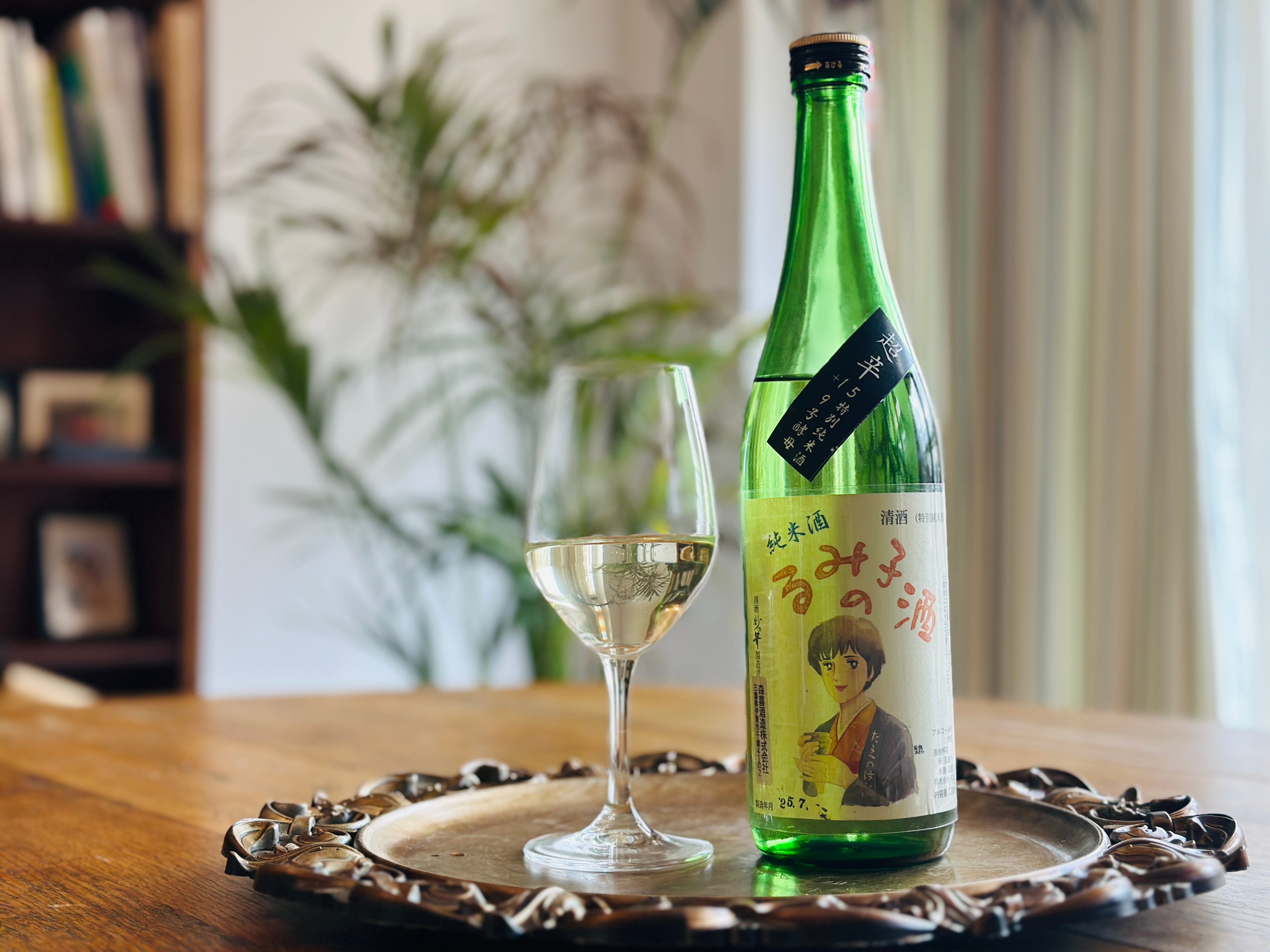
るみ子の酒 No.9酵母 超辛口 特別純米
使用米:八反錦75%・山田錦25% 精米歩合:60% 酵母:協会9号 アルコール度数:15% 日本酒度:+15 酸度:1.5
「超辛口」香りは穀物、栗、果実の香は控えめで清潔感がある。口に含むと確かに辛口だが、旨みがきちんとあってするすると盃が進む。余韻は短めでキレが良く、合わせる料理を選ばない。懐の深い食中酒だ。
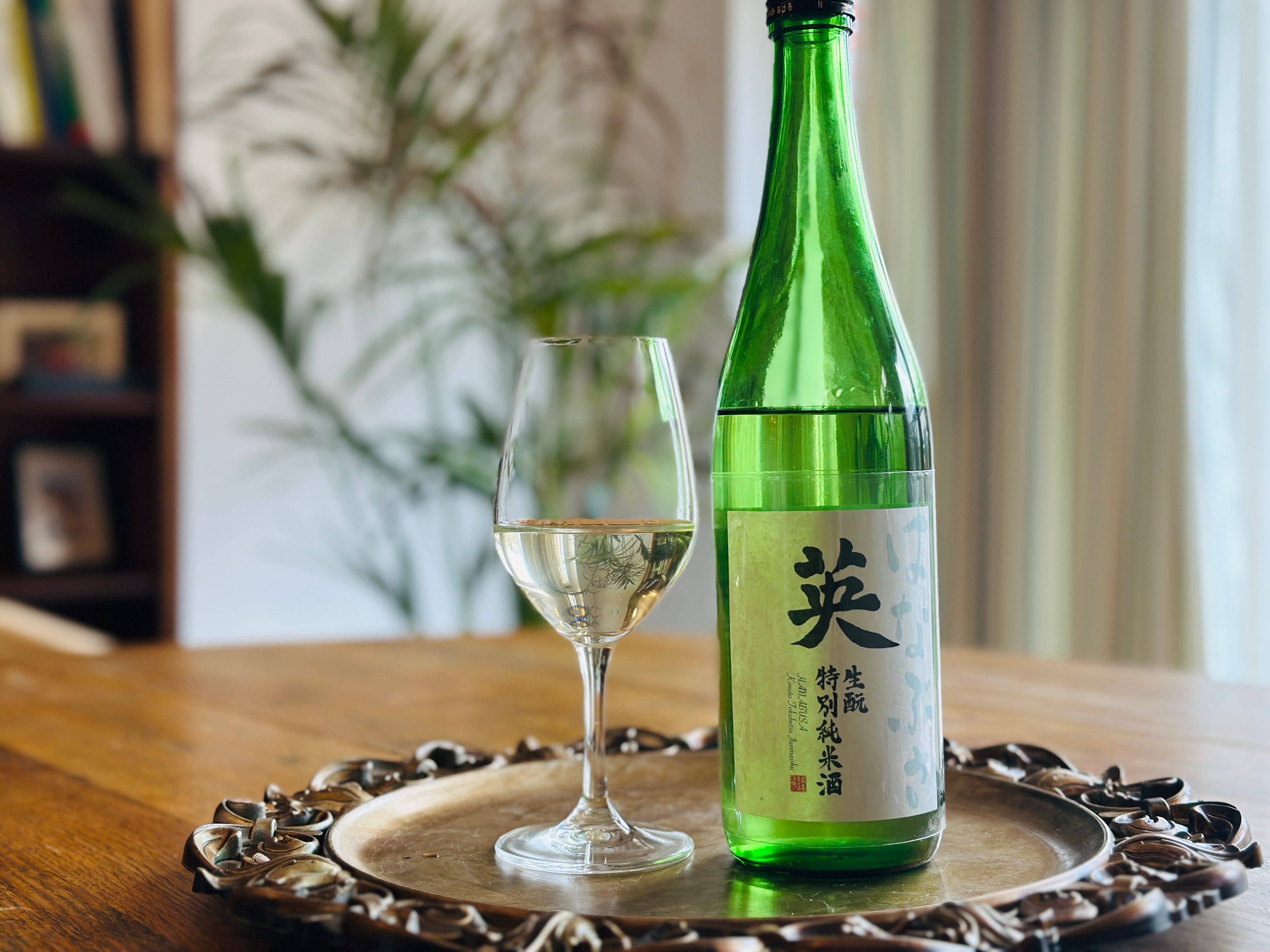
英(はなぶさ) 特別純米 生酛 火入れ
使用米:山田錦100%(三重県産) 精米歩合:60% 酵母:蔵付酵母 製法:生酛 アルコール度数:15% 日本酒度:+7.5 酸度:1.6
生酛由来の乳酸の気配が穏やかに漂う。口に含むとバナナ、ミルク、ほのかなはちみつ。辛口で旨みがあり、濃醇でわずかにとろみがあり、余韻は長めでクリーン。温度を上げると丸みが増し、食事との相性がさらによくなる。この酒は生酛作りに40日、さらに発酵に30日と通常よりかなり長い時間をかけゆっくり発酵させている。
選ばれた、不便な道
森喜酒造場の酒は、決して派手ではない。華やかな香りや、わかりやすい甘さ、一目でわかる複雑味があるわけではない。しかしバランスが良く、食事に寄り添う。旨みがあって、食べ物に負けない。
オランダに持ち帰って、和食だけでなく、舌平目のムニエルやパスタと合わせてみた。ハーモニーがあり、非常に心地よかった。冷蔵庫に常備しておきたい日本酒だ、と思った。
この酒が届くまでの道のりは長い。小さな蔵で、手間のかかる方法で、時間をかけて造られる。鑑評会の金賞を狙うための酒ではなく、食卓に置くための酒だ。その背景を知ってから飲むと、またひと味違う。
今回の訪問を快く受け入れてくださった森喜酒造場のるみ子さん、英樹さん、理恵さん、この機会を実現させてくれたオランダのインポーター「酔い心地」のディックさんに心から感謝いたします。
森喜酒造場(合名会社)
三重県伊賀市千歳41-2 TEL 0595-23-3040
公式サイト:https://morikishuzo.co.jp