


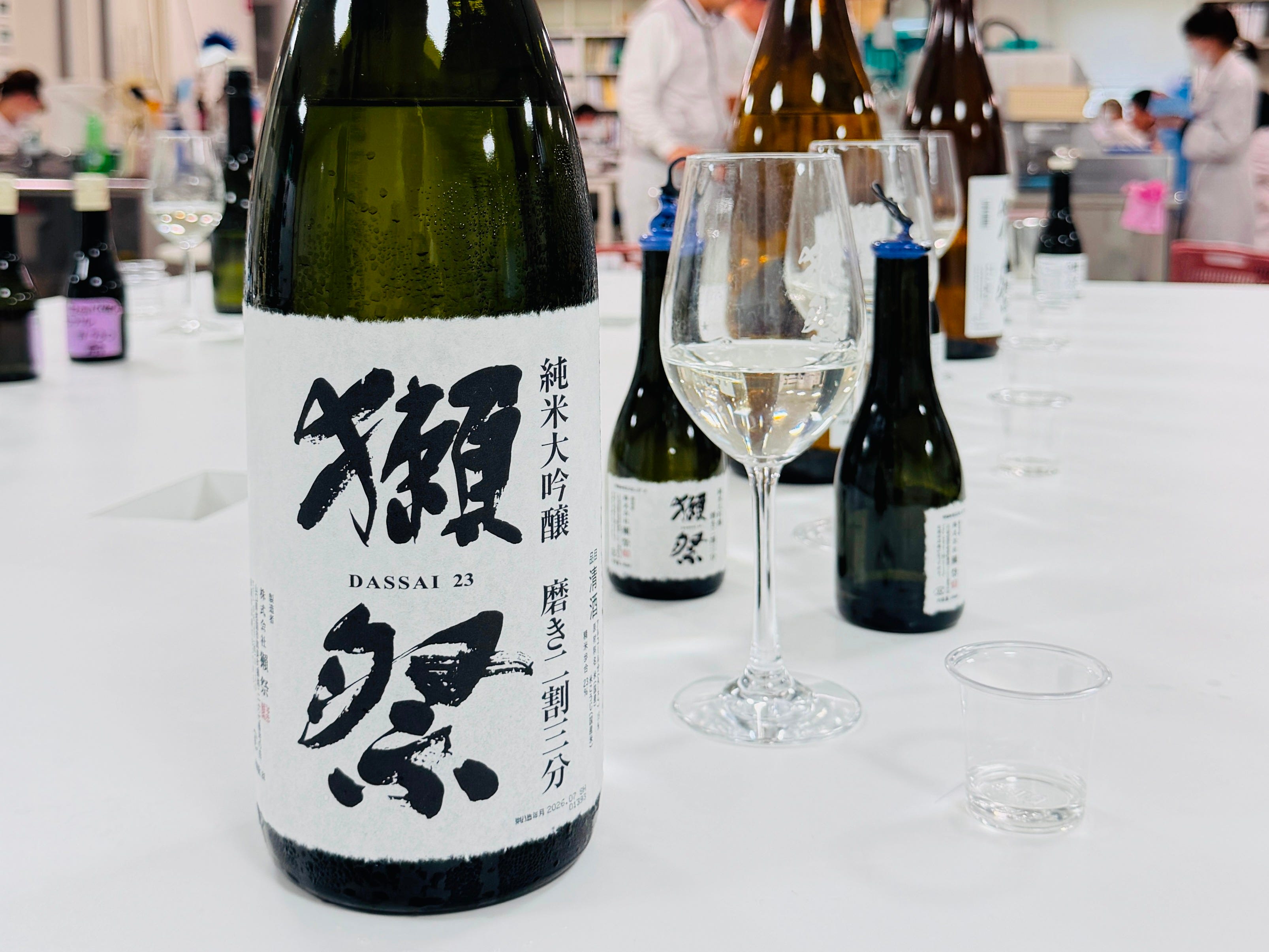
There is a sentence that attaches itself to Dassai almost automatically, in Japan and abroad: no tōji, brews on data. Both halves are true. The brewery has had no master brewer since 1999, and every one of its roughly three thousand batches a year is measured twice a day, all year round.
From those two facts most people arrive at a third — that the sake is made by machines, in a factory, and that whatever it is, it is not craft.
That third one is worth examining, because it tells you more about how we define craft than about how Dassai makes sake.
What I found at Osogoe, up in the mountains of Yamaguchi, was rice washed ten kilos at a time, seven hundred times over. A room of people breaking steamed rice apart with their fingers, after a machine built for that job was brought from the United States, tried, and sent away. A meeting at nine every morning where the entire line is tasted, and the morning’s flavour is set beside the record of each batch to work out why.
Measurement did not replace any of that. It made it answerable.
The full interview is on the Grape and Rice journal — including why a brewery that makes nothing but junmai daiginjō, the top designation in sake, now sells a bottle that cannot legally carry that name, and what choosing that says about the place.