


🇯🇵 日本語版は記事の下部にあります / Japanese version available below
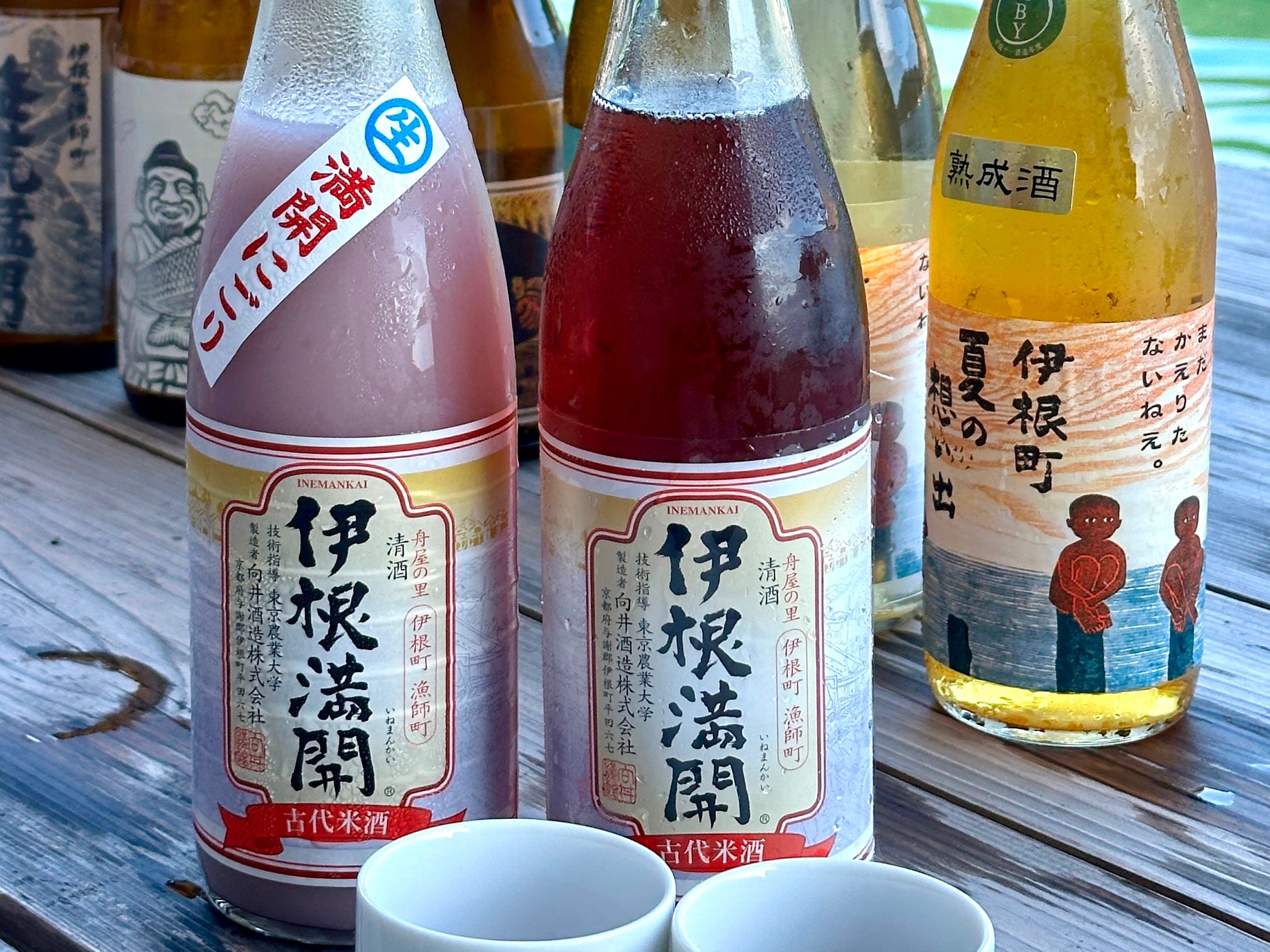
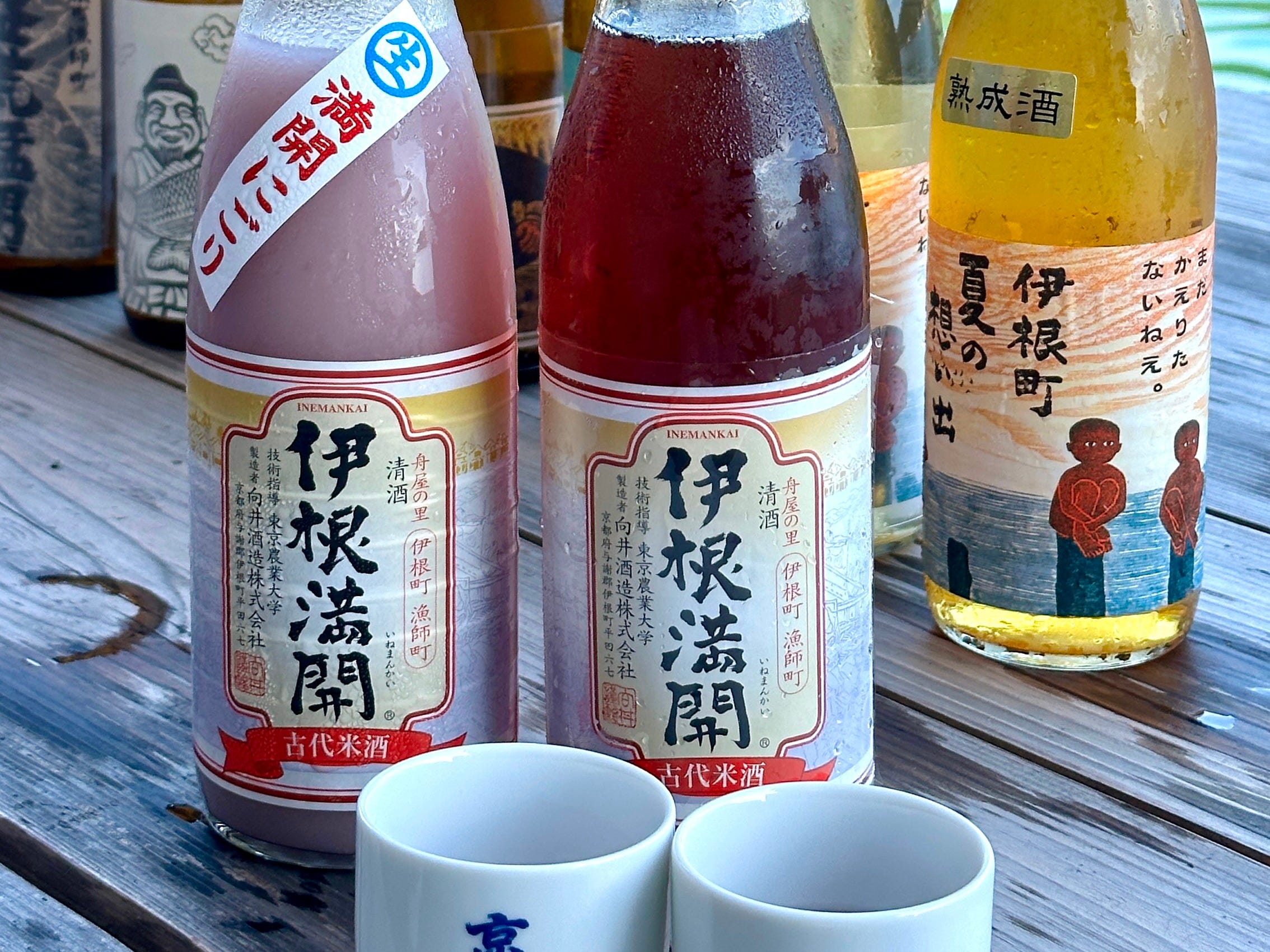
Ine Mankai stopped me in my tracks—a vibrant pink sake made from ancient red rice at Japan’s most seaside brewery. Unlike traditional clear sake, this vibrant rose-colored nihonshu showcases how female toji (master brewer) Kuniko Mukai revolutionized sake brewing using kodaimai (ancient rice varieties) in Japan’s most seaside brewery.
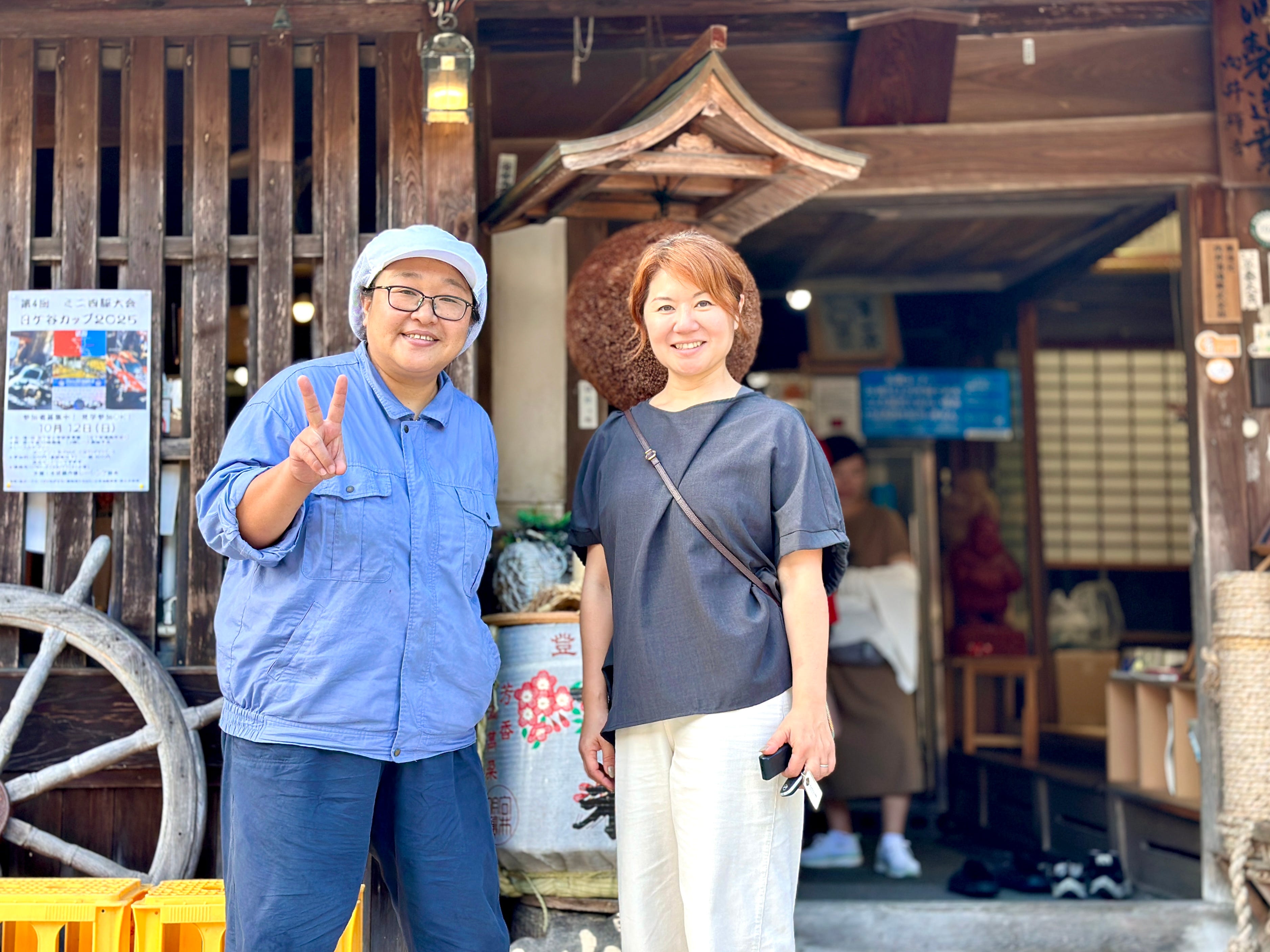
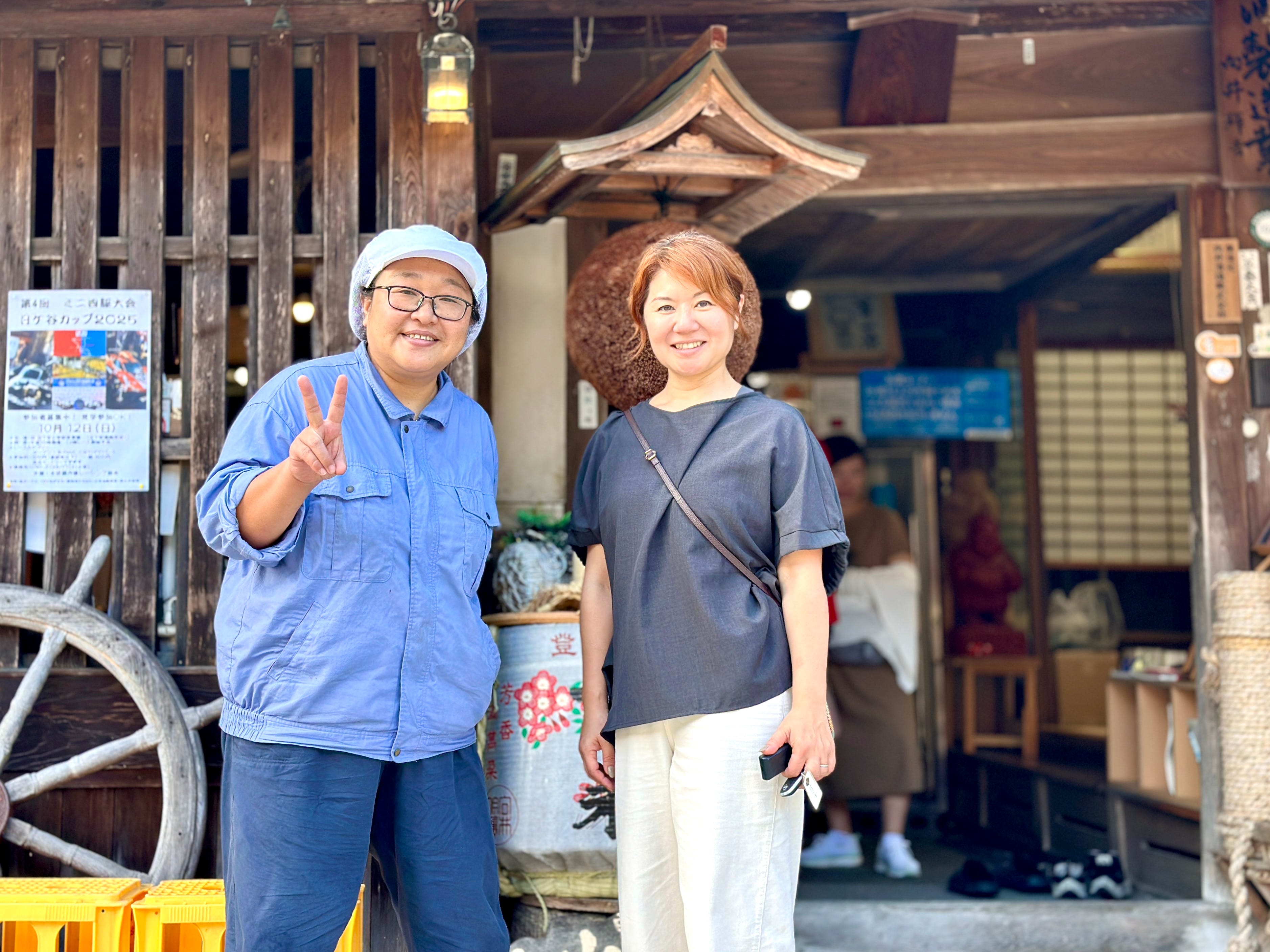
I visited Mukai Brewery on a warm October day, driving through winding mountain roads to reach this inlet where traditional boat houses line the water’s edge. Master brewer Kuniko Mukai welcomed me to the vertical brewery—a three-story structure squeezed onto a narrow strip of land.
📍 Who This Article Is For
Sake enthusiasts (beginner to intermediate) wanting to discover unique regional styles and stories.
Wine lovers curious about how terroir influences sake character
Those interested in female leadership in traditional Japanese industries
Travelers seeking authentic, off-the-beaten-path destinations in Japan
I’m Kazumi, a DipWSET, an educator based in Amsterdam. With a background in wine and sake, I translate sake through a wine-savvy lens.
The Journey North: From Urban Kyoto to Coastal Ine
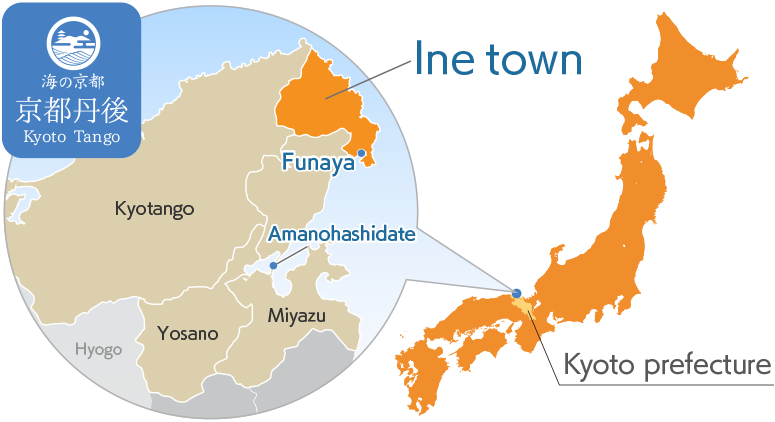
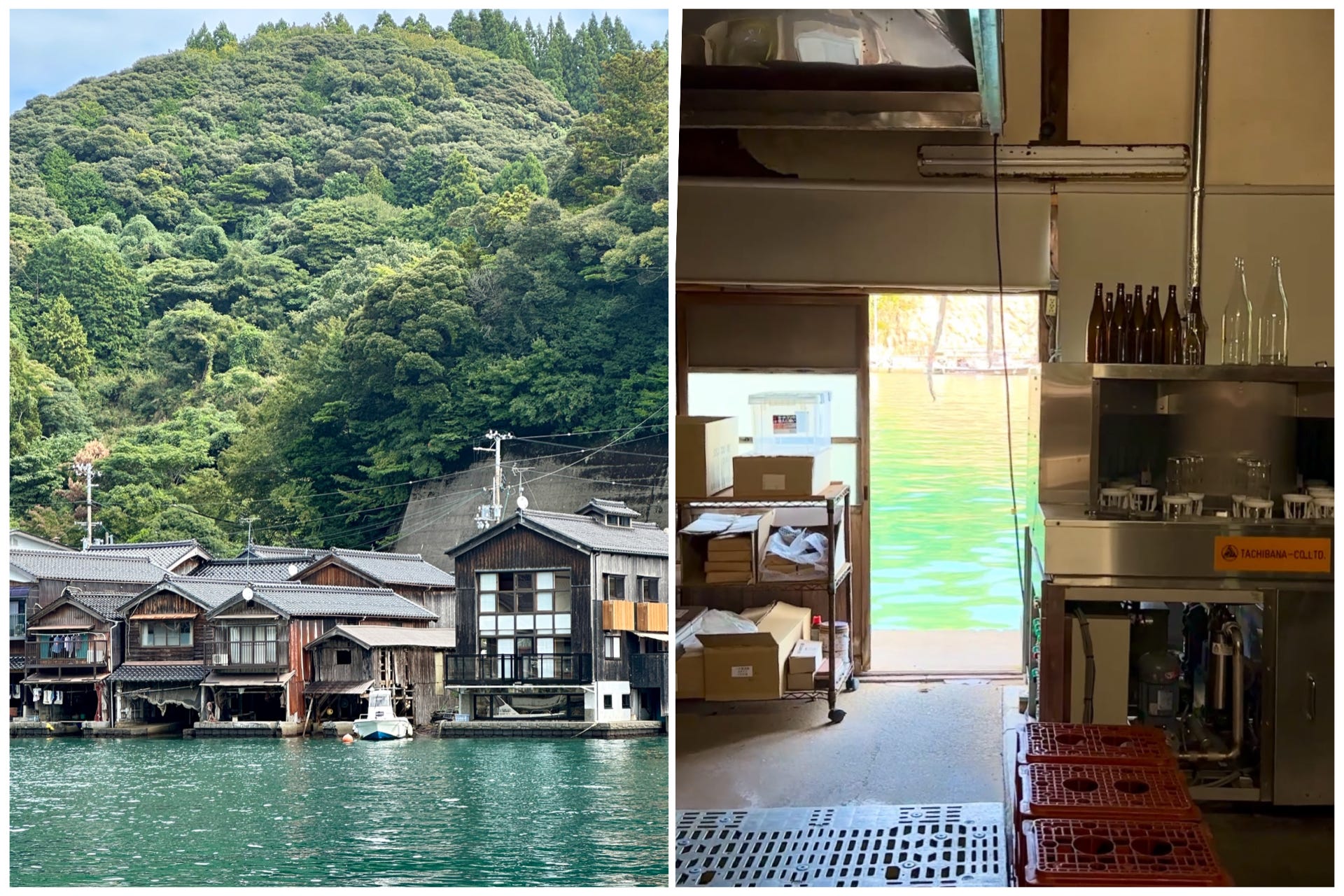
When you think of Kyoto, you might imagine a traditional Japanese city filled with temples and tourists. However, if you drive to the north for two and a half hours, or take a four-hour train ride to the Sea of Japan side, you will find a completely different face of Kyoto. Ine Town has rows of funaya (boat houses with docks on the first floor and living spaces on the second floor) - this inlet town received two stars in the Michelin Green Guide. Here stands Mukai Brewery, known for its bright red sake called “Ine Mankai.”
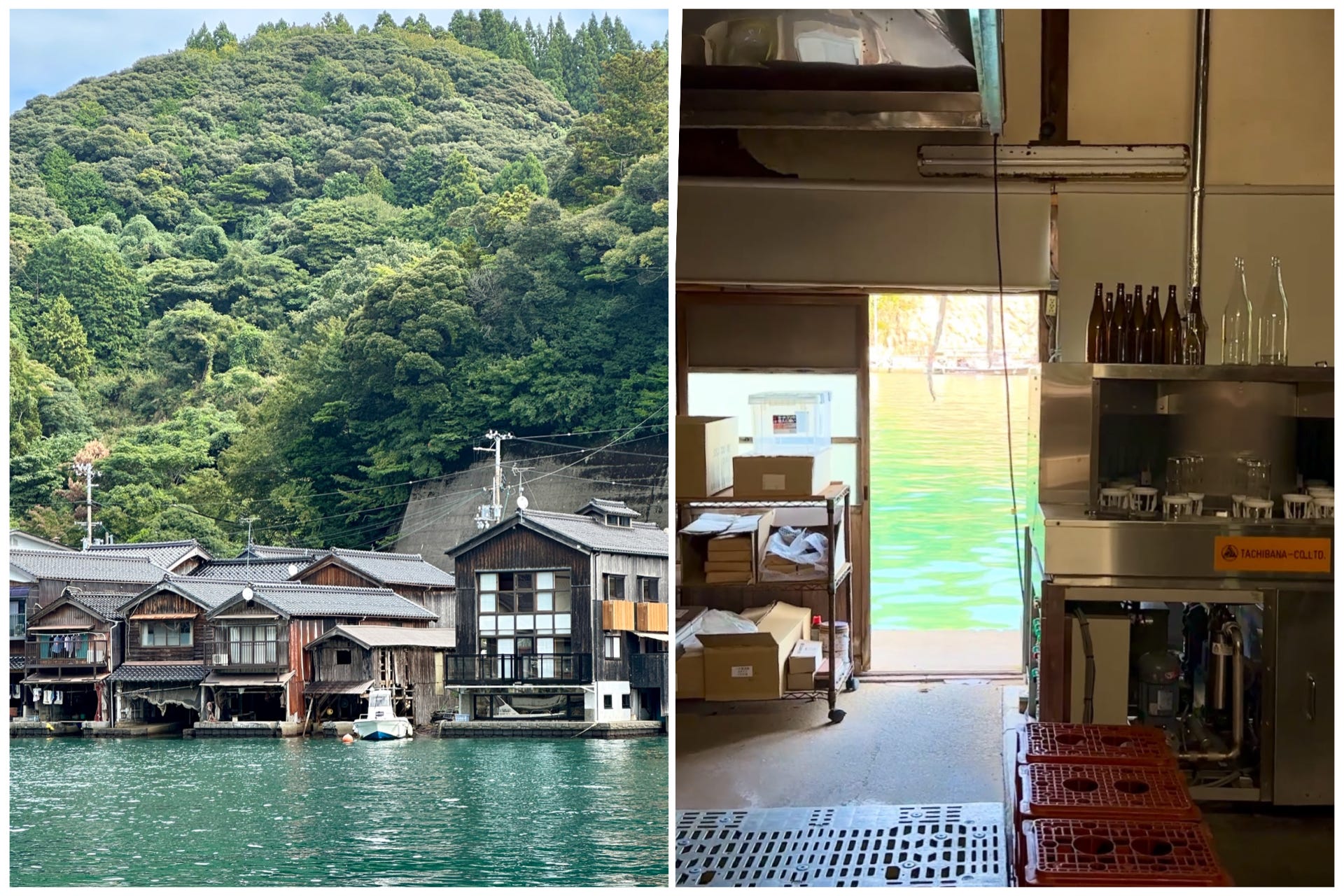
Founded in 1754, this brewery with 270 years of history sits on a narrow strip of land between rock cliffs and the sea. The brewery stretches upward, making efficient use of the limited land. The inlet’s unique geography protected the calm sea surface from the strong winds typical of the Sea of Japan side, and the water sparkled in the sun. The view of Ine Bay through the bottling machine windows took my breath away. You probably cannot find another sake brewery in Japan where workers can see the ocean from their workplace windows.
Birth of a 23-Year-Old Female Master Brewer
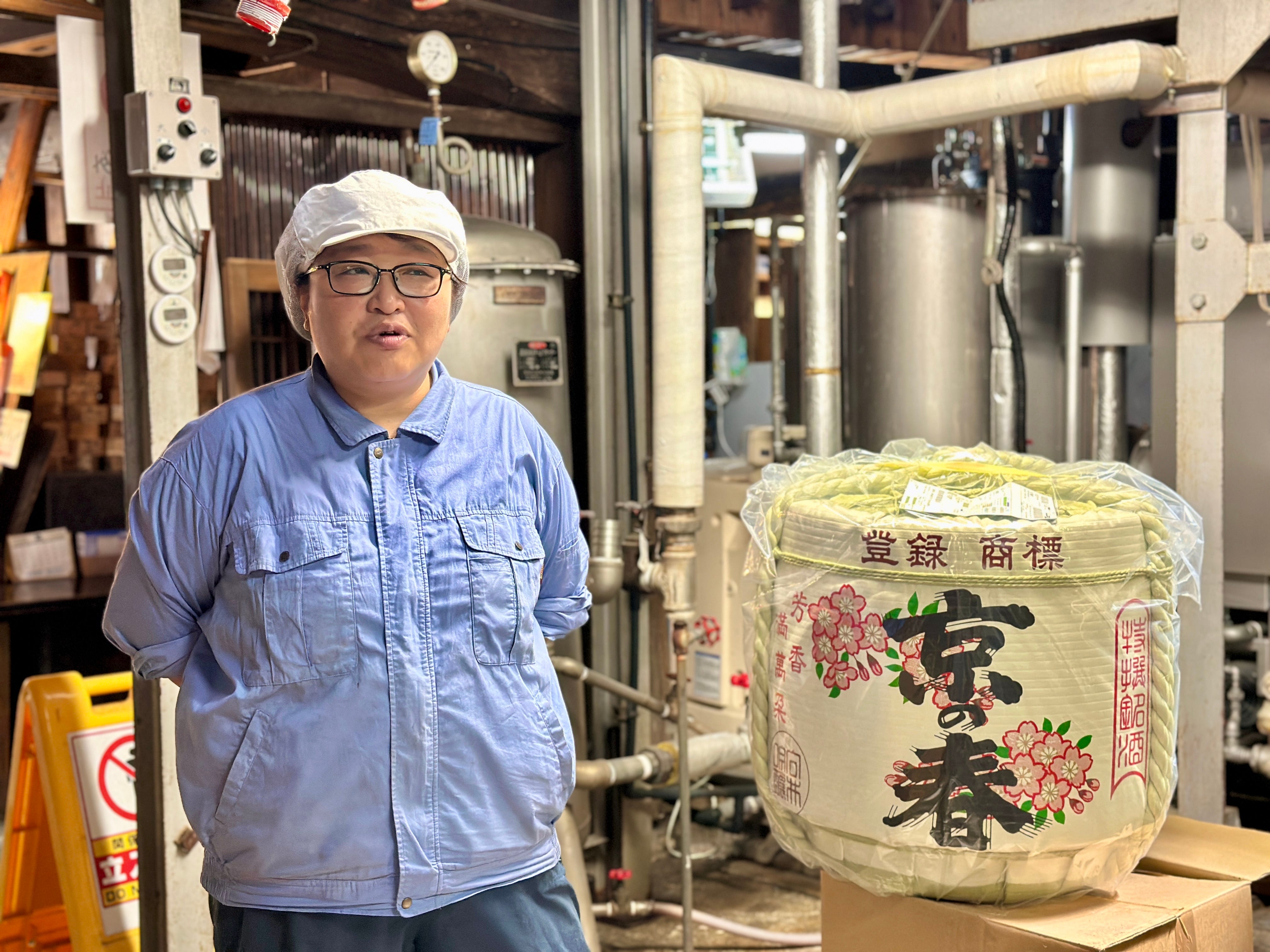
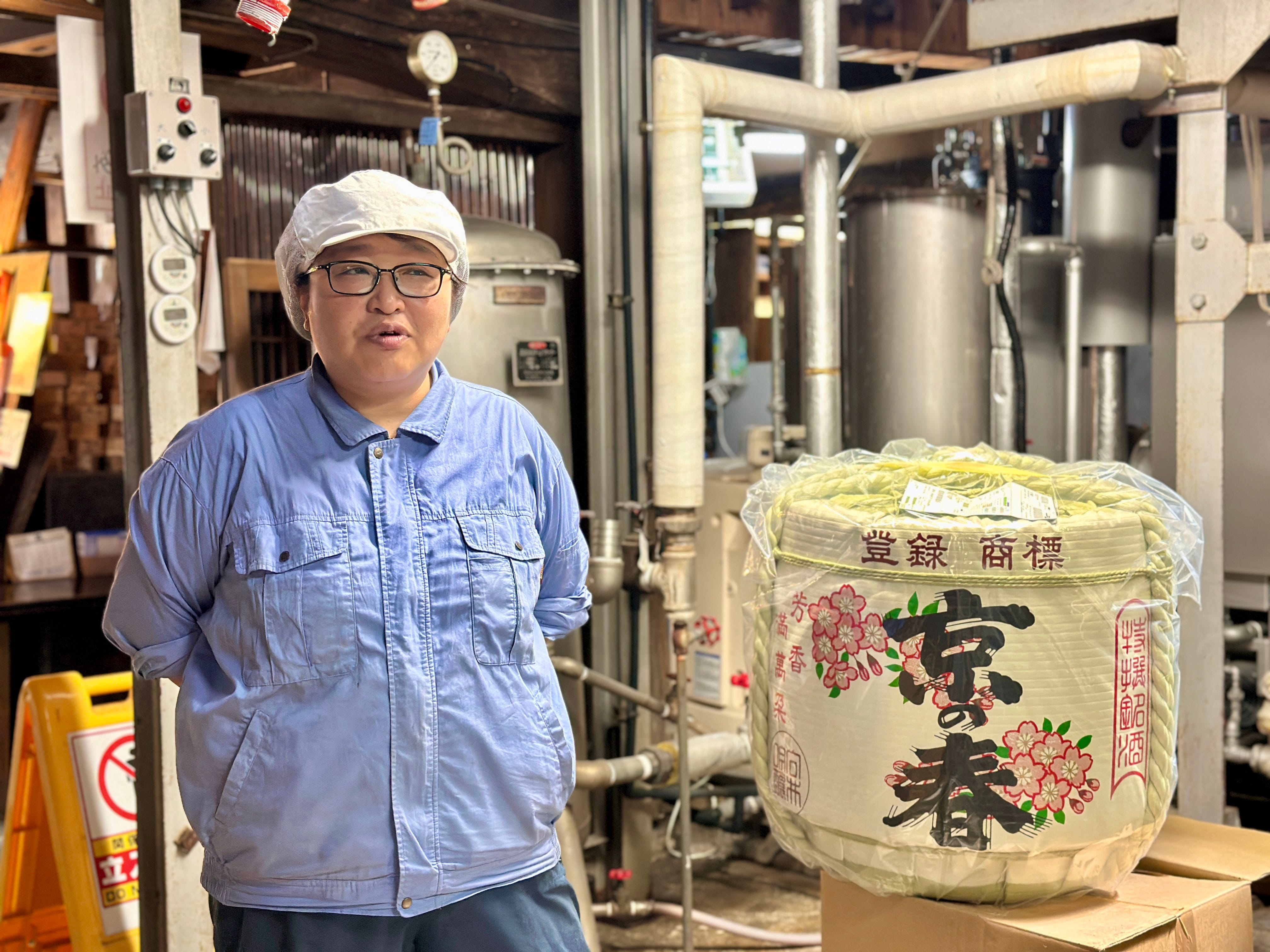
Kuniko Mukai became a toji (master brewer) at just 23 years old. More than 20 years ago, when female toji were still rare, she took over her family’s sake brewery right after graduating from Tokyo University of Agriculture, a prestigious school for sake brewing. Today, her younger brother serves as company president while Kuniko oversees all sake brewing.
“From when I was born, I loved it when the brewery workers came in winter and we all ate meals together. The craftsmen gave me sweets, and I played sitting on their laps,” Kuniko recalls about her childhood. However, she resisted when people called her the successor. When her brother was born 12 years later, she felt happy, thinking “Now I don’t have to be the successor.”
The turning point came when she met Professor Masahisa Takeda at university. He taught Kuniko that “Japan has plenty of delicious sake all over the country. So you must brew sake that is unique.” She conducted innovative research including collecting wild yeast from the air, making sake with red rice, and creating sake with rice roasted like coffee. He advised that “If you balance the five tastes - sweet, dry, umami, sour, and bitter - you can make sake that goes down smoothly without leaving a bitter taste,” leading in her philosophy of sake making.
Starting Alone at 3 AM
However, when Kuniko became toji at 23, she hit a big wall. The workers she had known since birth were friendly when she was just an apprentice, but the moment she became the master brewer, nobody would talk to her. The workers’ attitude was clear - they didn’t accept this inexperienced youngster as their master brewer.
Furthermore, that year the Japanese sake industry was in its worst period, when it lost in sales to shochu (distilled spirits), with hundreds of breweries closing in the year. Likewise, in Mukai Brewery, workers had to change from live-in to commuting arrangements. When they started work at 8 AM, operations continued until 9 PM, which increased complaints from the brewery workers. This was another situation where brewery workers were against her.
Kuniko made a decision. She woke up at 3 AM to set rice in the pot and add water by herself. By the time workers arrived at 8 AM, she had the steamed rice ready. The three-story vertical structure suited working alone. She changed several brewing processes, including the koji-making method which was difficult for one woman to handle, improving overall work efficiency.
“When they saw me working alone to overcome these hardships, after a while they started coming at 6 or 7 AM. Also, an outside master brewer checked our brewing process and helped make improvements. Our work became more efficient and quality improved dramatically. I learned that to get a team to work, I must move first and show my attitude,” Kuniko reflects.
Even now, the brewery maintains systems efficiently that make it easy to work with few people. Currently, six skilled workers can do all the tasks, so whoever comes that day can start working right away - this creates a flexible system. Work in the koji room (where koji mold is cultivated) is especially important, and Kuniko tends to it even at 2 AM. “When I go in at 2 AM and spend 40 minutes mixing it, the koji becomes fluffy. The more I tend to it, the better it gets,” Kuniko says with a smile.
Philosophy: Sake You Can Keep Drinking
Mukai Brewery’s sake-brewing philosophy is clear. “I want to drink a lot myself, so I want sake you can keep drinking. Sake whose sweetness sticks to your tongue or doesn’t go with food is not our style. Sake, even if it has texture, structure, or full of umami, with a clean finish is ideal,” Kuniko explains.
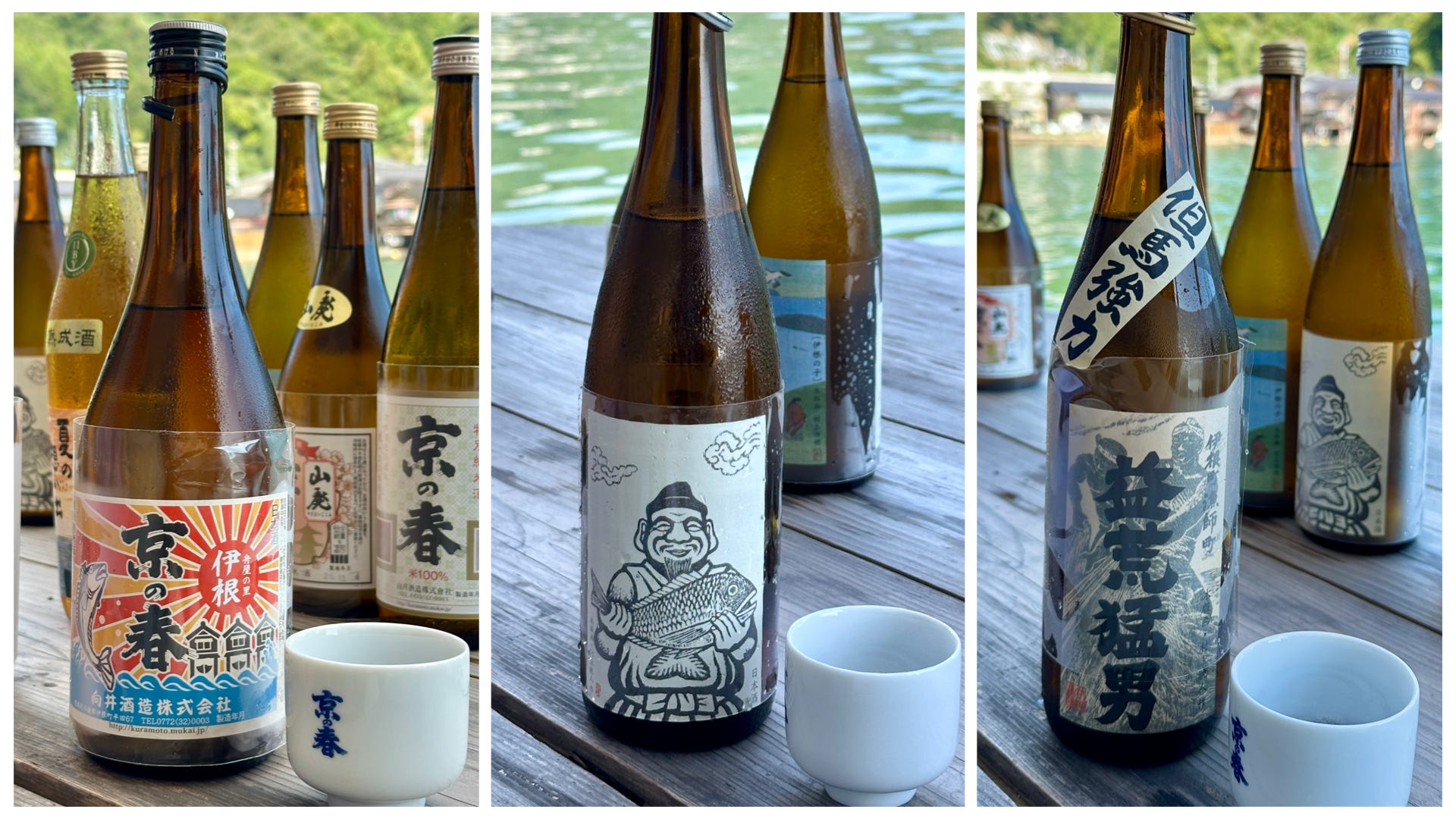
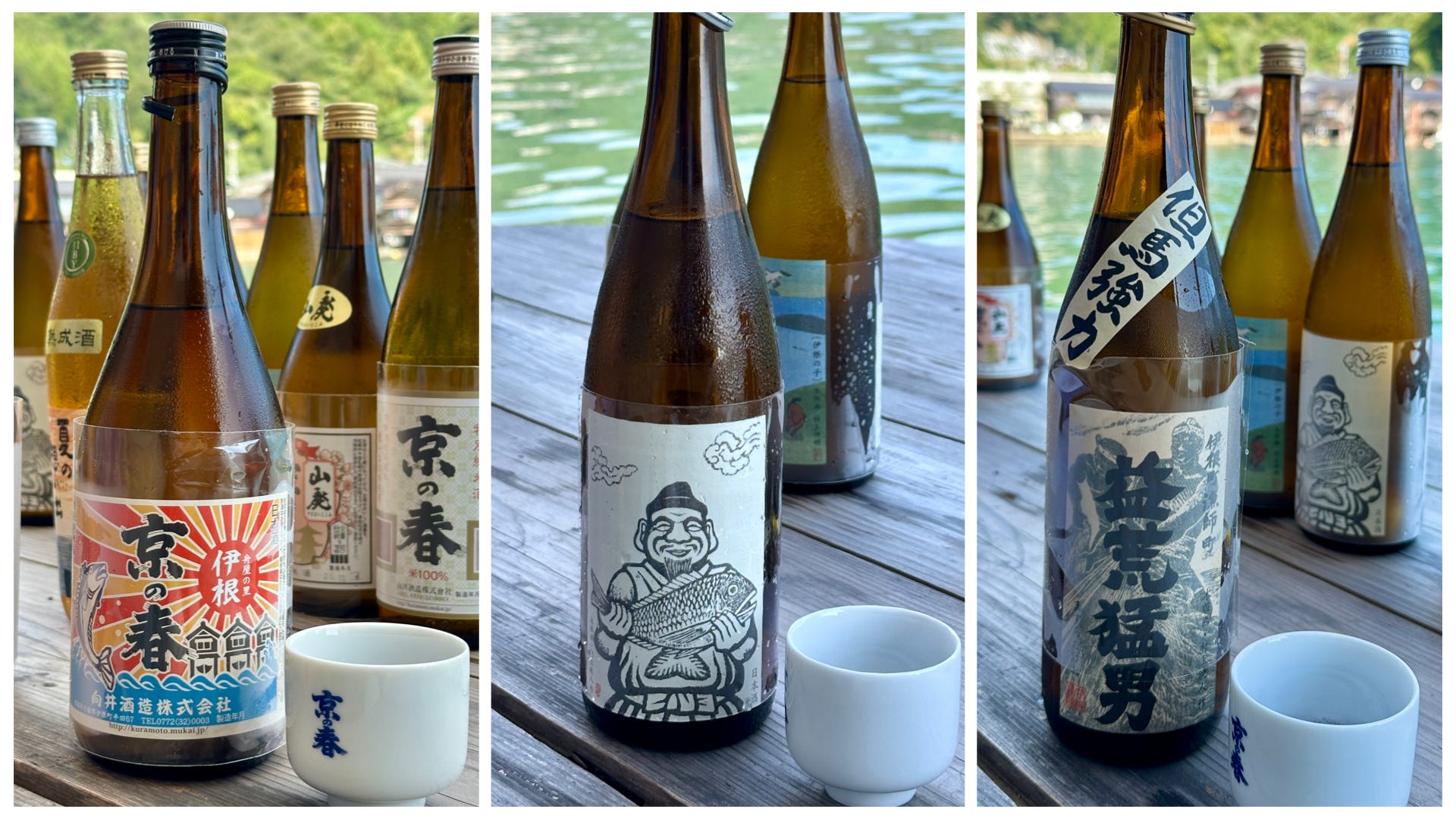
Their standard “Kyo no Haru” perfectly embodies this philosophy. This junmai sake (pure rice sake) uses sokujō brewing (quick fermentation method) with Kyoto-grown rice. A restaurant owner once said, “With just this one bottle, we can serve it from cold to hot.” When you taste it, rich umami spreads in your mouth, but the aftertaste disappears cleanly, inviting the next sip.
“Obessan” (meaning Ebisu, a god of prosperity) uses Omachi rice organically grown in Ine town without pesticides or fertilizer. Omachi rice grown outside Okayama Prefecture is very rare. “Rice without fertilizer has a very pure, refreshing taste,” says Kuniko. While the sake is rich and layered due to the kimoto brewing (traditional starter method), the acidity is relatively restrained so you don’t get tired of drinking it.
Sake made with Koshihikari rice using yamahai brewing (natural lactic acid fermentation) has complex layers like earth and mushrooms in its taste, with abundant umami. Still, it finishes cleanly. All their sake values being “delicious as warmed sake,” showing depth that works at any temperature.
The Red Revolution - Birth of Ine Mankai
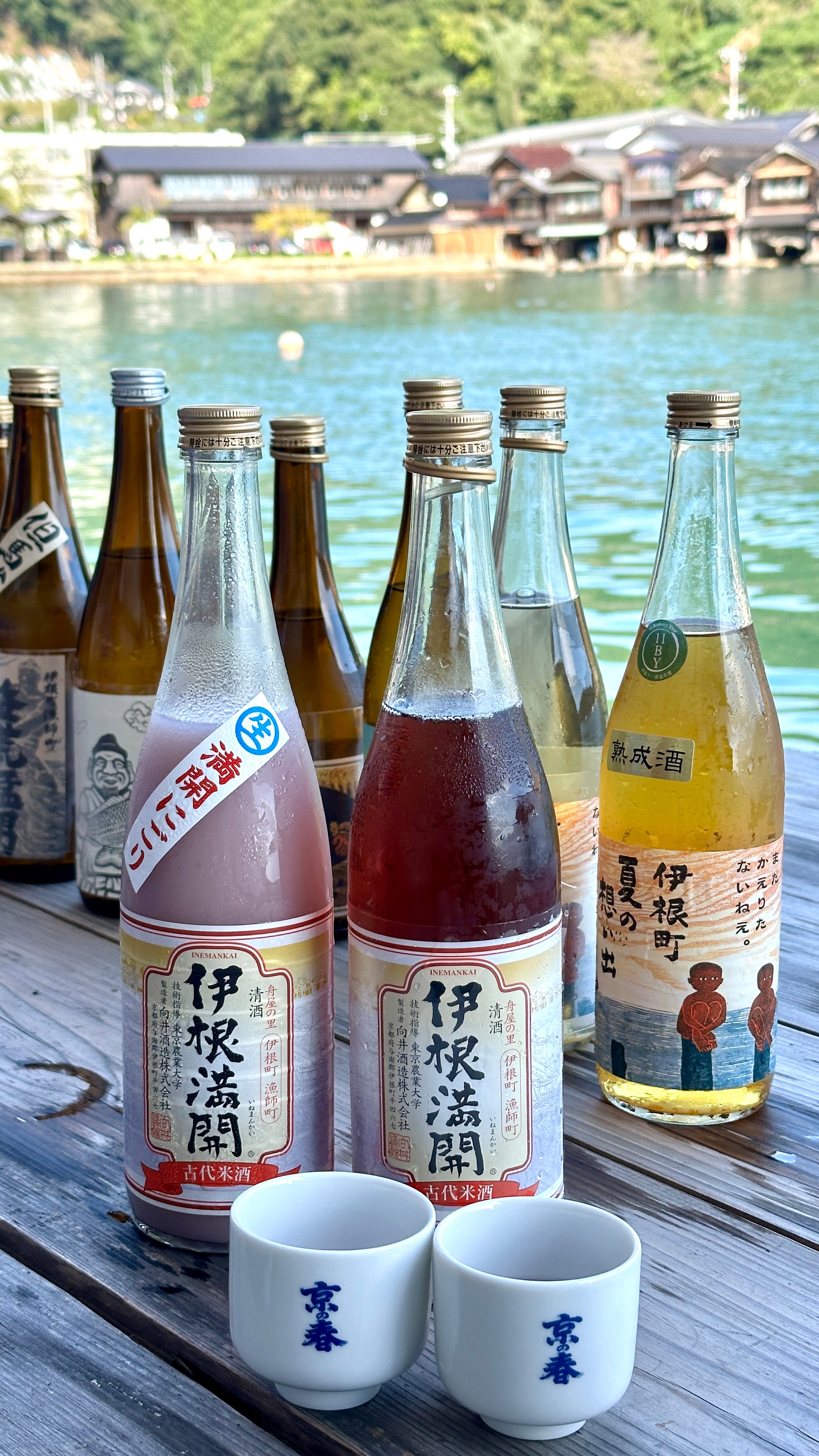
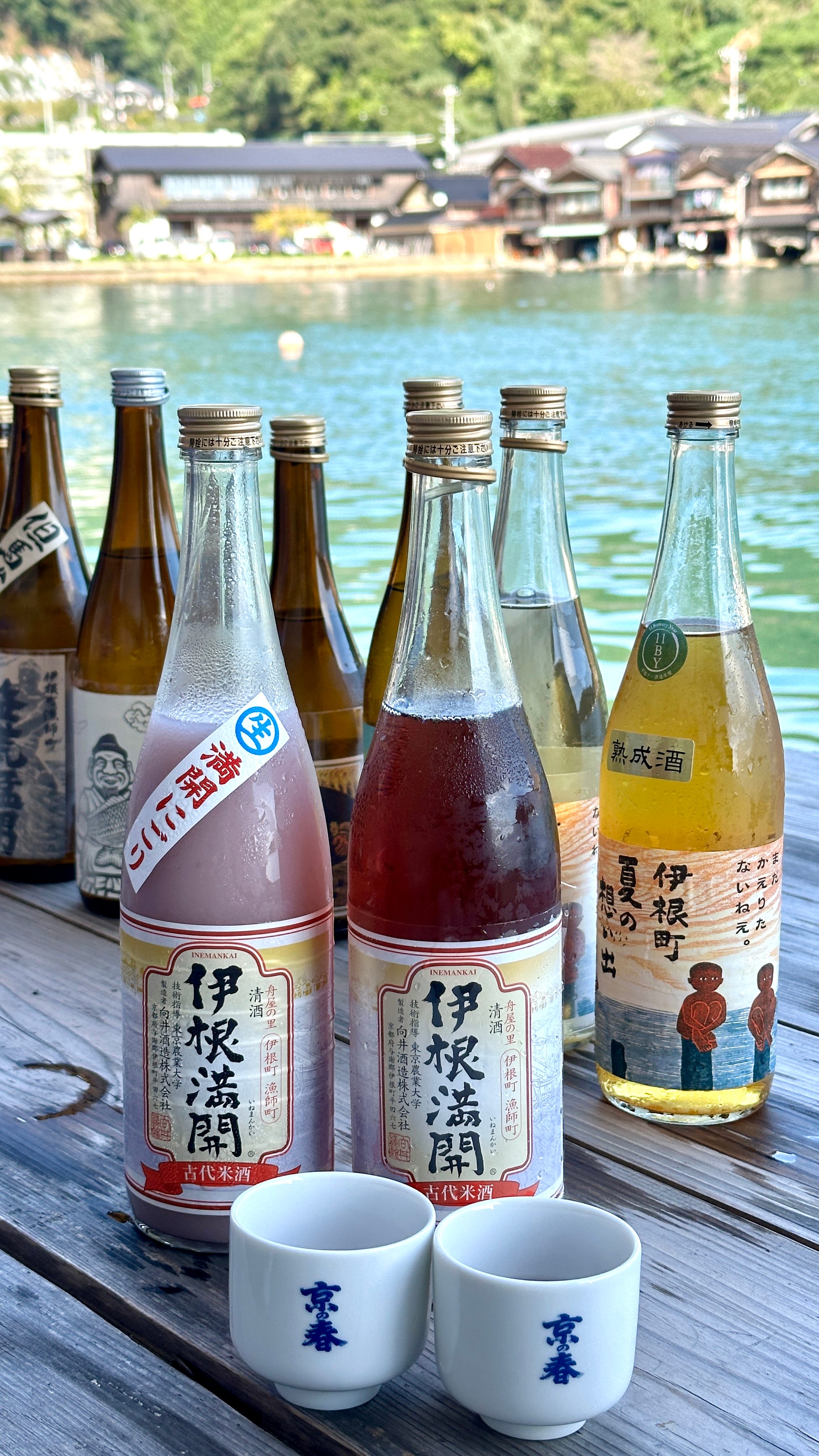
What made Mukai Brewery famous in the sake industry was “Ine Mankai,” made with ancient rice. This bright red sake resulted from research Kuniko started during her university days, inspired by her professor’s advice. The red color comes from ancient black rice, revitalized specifically for sake making. Initially, she asked two local farmers to grow the rice, but they struggled with heat damage from recent global warming that turned the rice brown. Brown rice doesn’t produce a beautiful red color. “Last year the color really didn’t come out. This year, changes in planting methods seem to be moving things in the right direction,” she says about the ongoing struggle.
Ancient rice needs different care to brew. For example, it has “as much oil as wheat and a unique bitterness like chewing on a crayon.” Therefore, they blend it with white rice and add it at the perfect timing during fermentation to balance color and taste. After summer passes, the bitterness becomes rounded and settles like wine tannins. In summer, they make it into nigori sake (cloudy sake), where rice particles create a creamy texture that softens the bitterness. The pink nigori sake is a summer favorite and tastes good even mixed with carbonated water.
Diverse Expression
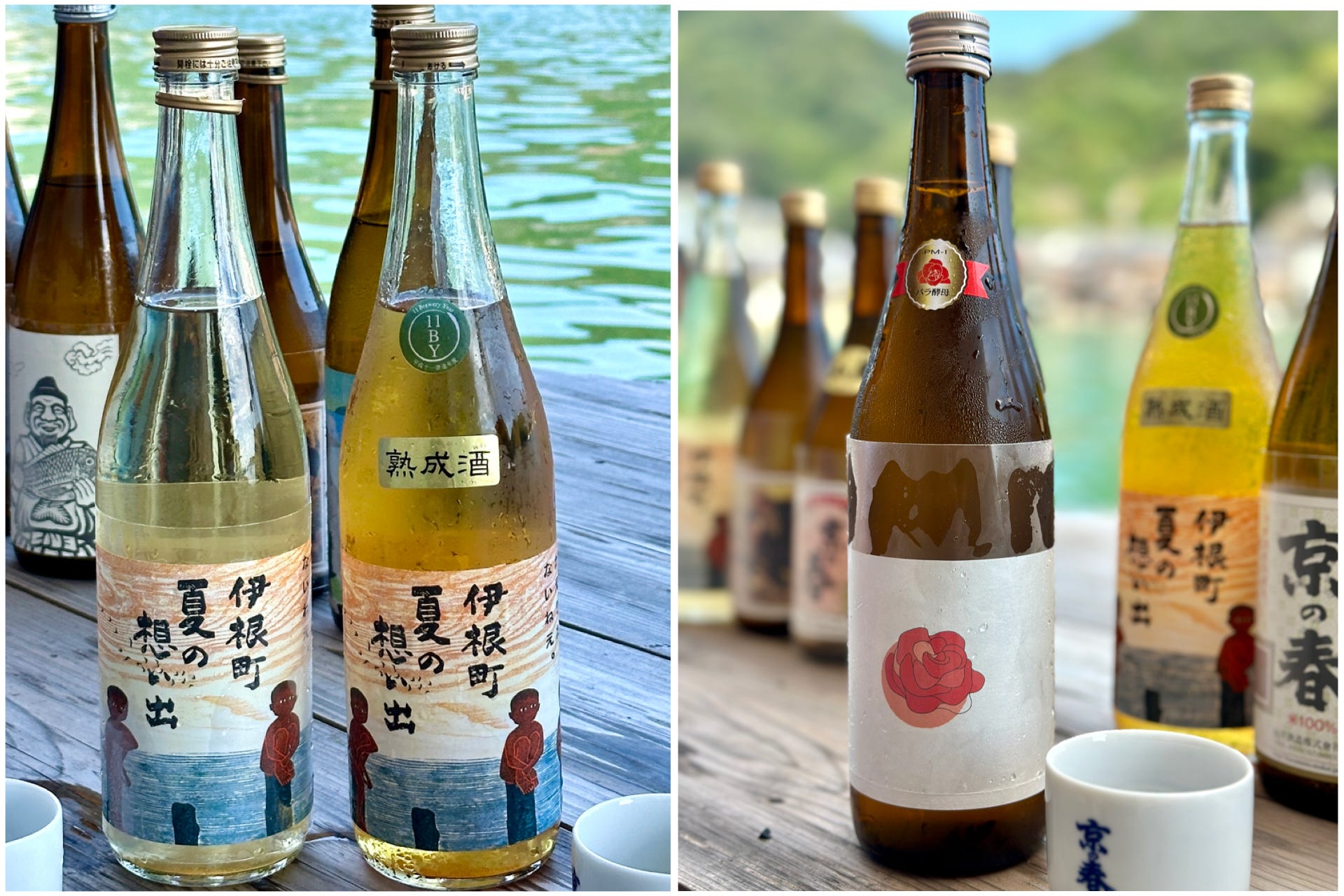
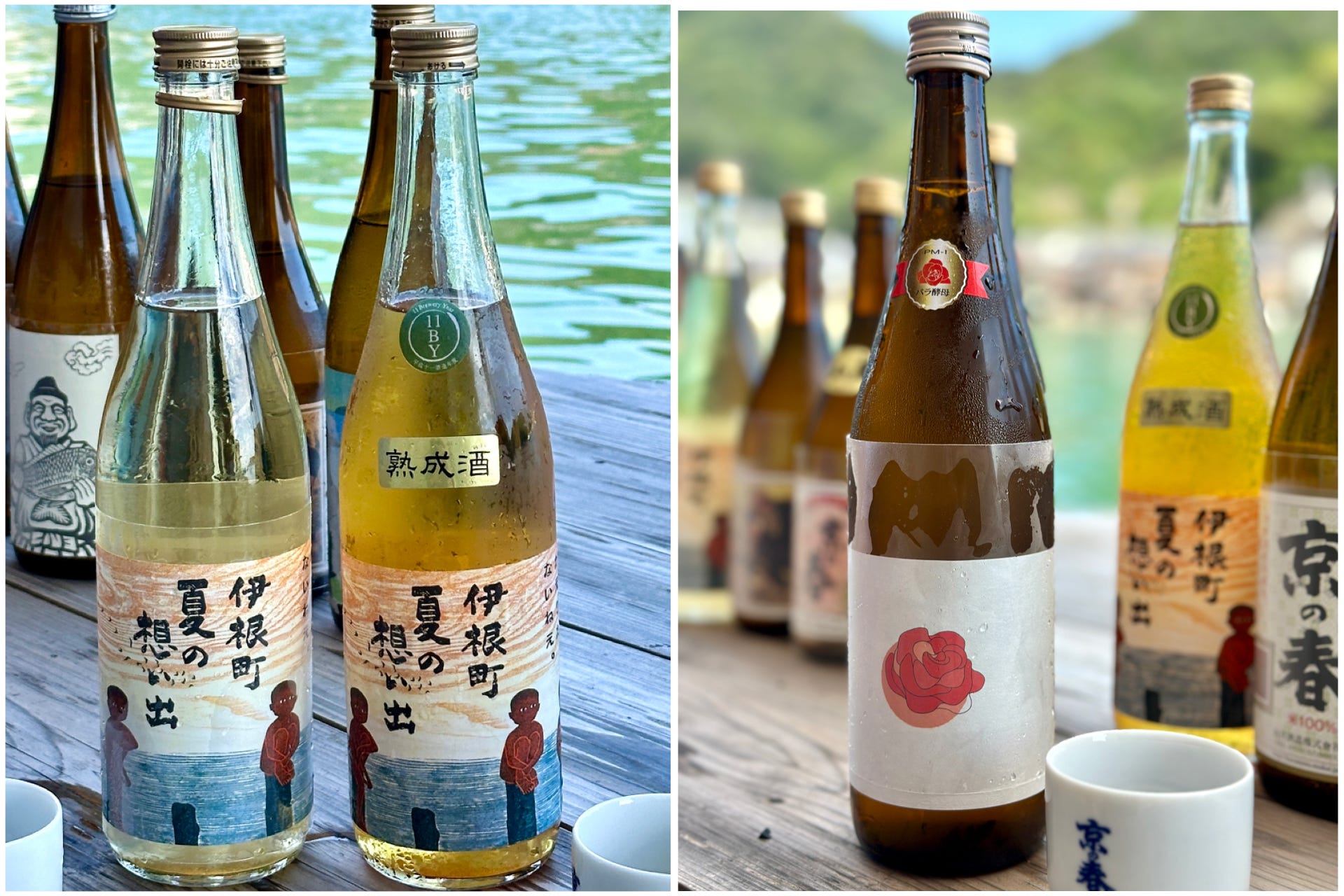
Mukai Brewery’s innovation appears in their product lineup. Japanese sake made with white koji (koji for shochu) shows different characteristics in the final sake style, including with higher acidity. The ‘Inecho Natsu no Omoide(Beautiful memory in summer of Ine town) has citrus aromas like white wine. After aging this for two years, the orange-colored sake releases complex aromas like soy sauce, caramel, and dried mandarin oranges. Michelin-starred restaurants in Australia use it, praising how it pairs with herb dishes.
Princess Michiko is a rose variety with a deep orange color and a gentle fragrance, named after Empress Emeritus Michiko. It became famous when in 1966, the British Royal Family presented these roses to then-Crown Princess Michiko. This sake uses yeast isolated from the flowers of this rose. The result has a slightly more elegant aroma than Mukai’s usual style.
Their newest nama genshu (unpasteurized undiluted sake) is delicate - fermentation runs wild if it exceeds 12-13 degrees Celsius. “It’s really popular but hard to manage, so we sell limited amounts,” says Kuniko.
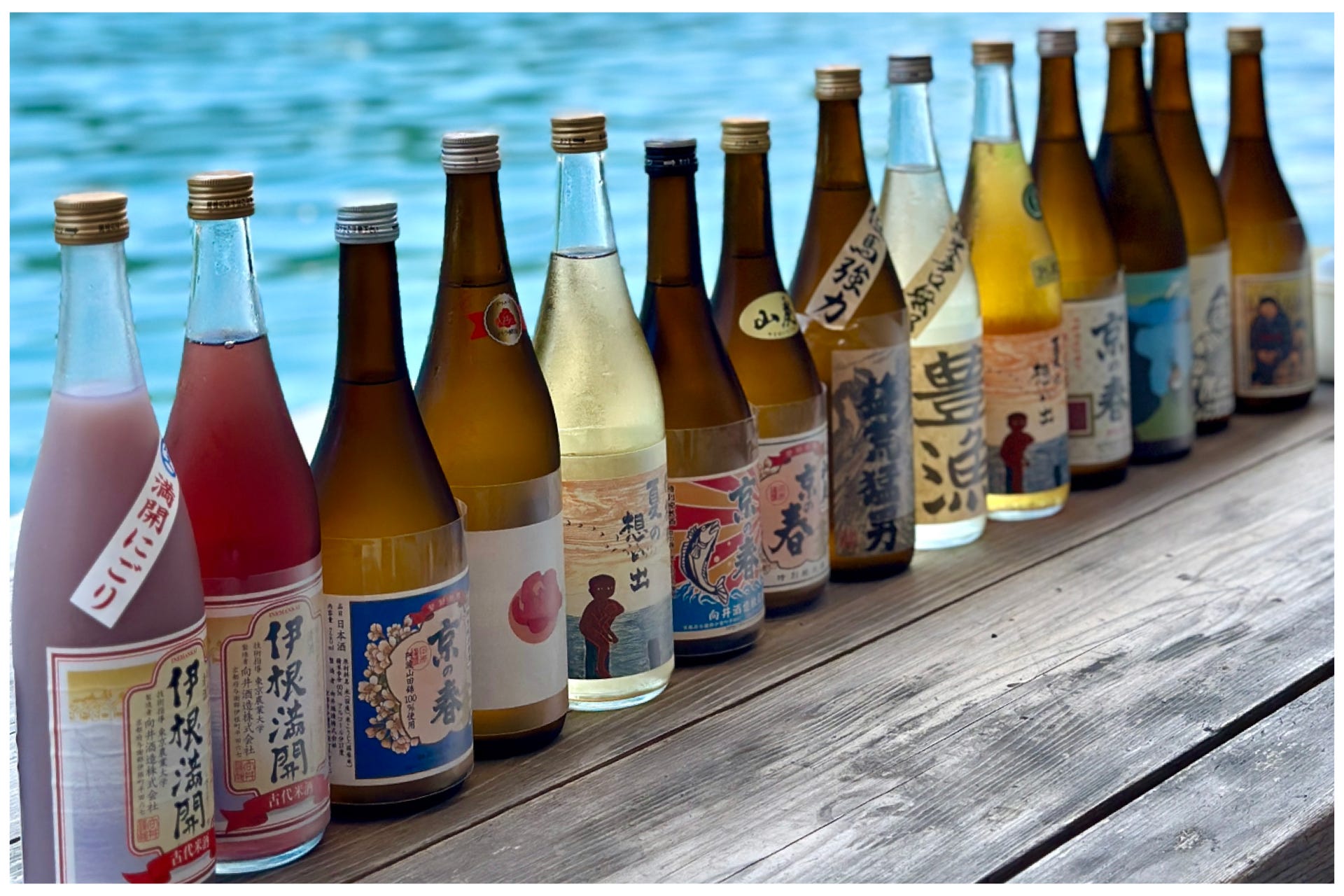
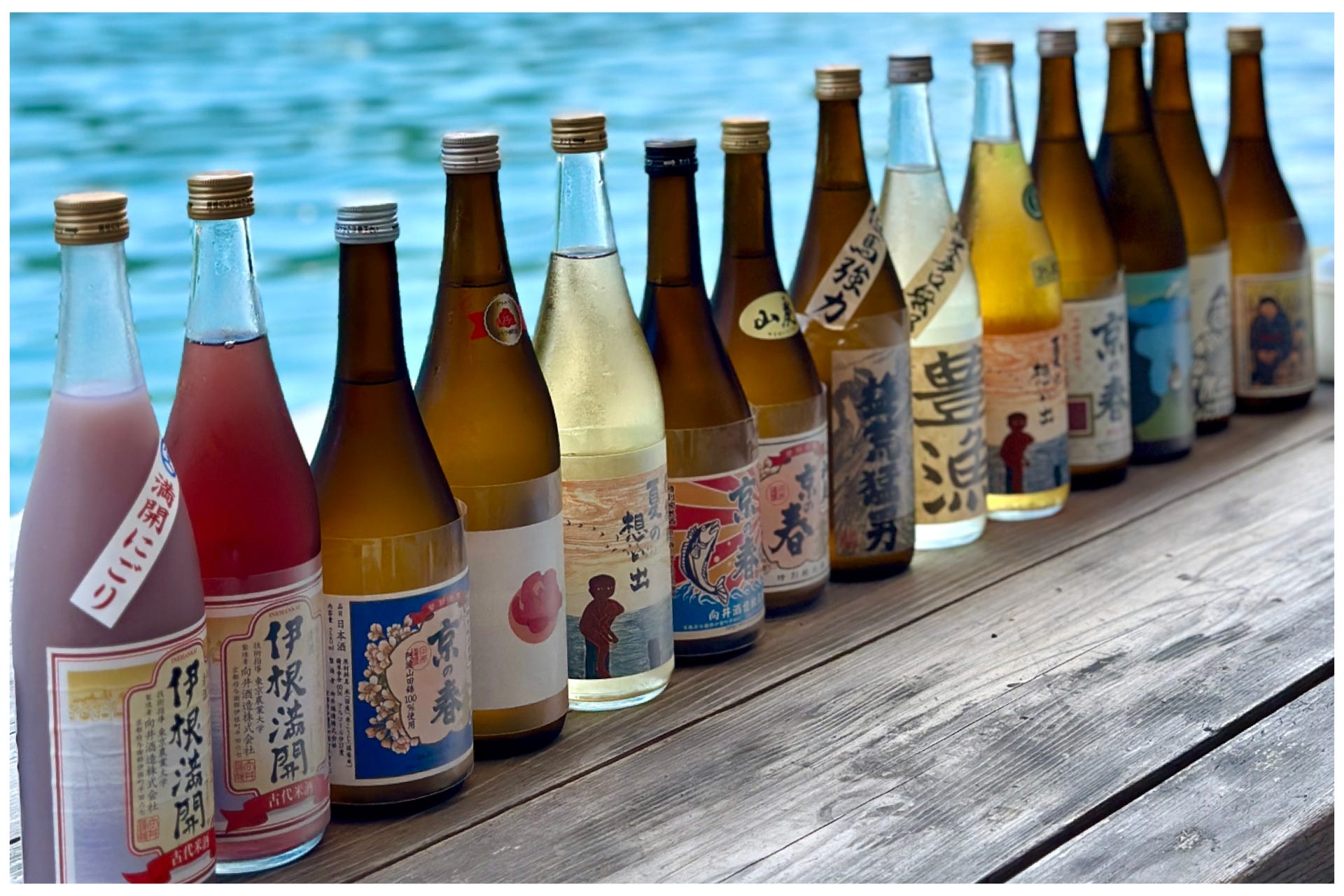
The impressive labels are works by father-and-son woodblock print artists Akihito Murakami and Nobuaki Murakami. Bottles lined up against Ine’s ocean looked like a natural art museum.
Epilogue - A Story Woven by Family
Currently, Kuniko runs the brewery together with her brother. “Luckily, my brother and I aim for the same sake. Without detailed meetings, he lets me make the sake I want to make, saying ‘Whatever you want to make is fine, sister.’” Her younger sister also supported the brewery for seven years. Though she now lives in Tokyo, family bonds remain strong.
The view of Ine Bay from the bottling area, the rows of funaya, and Kuniko’s warm personality - Mukai Brewery’s unique and delicious sake comes from this land and these people. “In the future, I want to create a place where I can drink with customers,” Kuniko shares her dream.
Recently, overseas tourists have increased thanks to Taiwanese bloggers’ introductions. When I visited, I passed several groups of overseas travelers. If you visit Kyoto, definitely extend your trip to this “other Kyoto. Next summer, I want to enjoy Kuniko’s sake together with her again while feeling Ine’s sea breeze watching my kids swimming in the sea.
Where to Find Mukai Brewery Sake
Netherlands: Through Yoigokochi (importer)
Select international markets: Check with specialty sake importers
Thank you to Kuniko Mukai for welcoming this visit, and to Dick from Dutch importer Yoigokochi for making it possible.
酒蔵インタビュー#9: 京都・伊根の海辺で醸す物語 - 向井酒造の女性杜氏を訪ねて
京都と聞けば寺院や観光客で賑わう古都を想像するかもしれない。しかし、京都市内から北へ車で2時間半、電車なら4時間かけて日本海側へ向かうと、まったく異なる京都の顔に出会える。一階が船着場、二階が住居になっている舟屋が立ち並ぶ伊根町 - この入江の町は、ミシュラン・グリーンガイドで二つ星にも選ばれた景勝地だ。ここに、鮮やかな赤い日本酒「伊根満開」で知られる向井酒造がある。
1754年創業、270年の歴史を持つこの蔵は、岩肌と海の間のわずかな土地に建っている。狭小住宅のように縦に伸びる蔵の設計は、そのわずかな土地を効率良く使う工夫がなされている。訪れた日は残暑が残る10月初め、入江特有の地形のおかげで日本海側特有の強風から守られた穏やかな海面はきらきらと輝いていた。瓶詰め機械越しに見える伊根湾の景色は息をのむ美しさで、作業場の窓から海が見える酒蔵など、日本中探してもここだけだろう。
23歳の女性杜氏誕生
向井久仁子さんは、23歳という若さで杜氏となった。20年以上前、女性杜氏がまだ珍しかった時代に、酒造りの名門、東京農業大学を卒業してすぐに実家の酒蔵を継いだ。現在は弟さんが社長を務め、久仁子さんは製造責任者として酒造りを統括している。
「生まれた頃から、冬になったら蔵人のおっちゃんたちが来て、一緒にご飯を食べるのが大好きでした。職人さんに、お菓子をもらい、膝の上に座って遊んでいました」と幼少期を振り返る久仁子さん。しかし後継者と言われることには抵抗があり、12歳下の弟が生まれた時は「これで後継がなくて済む」と喜んだという。
運命の転機は大学での恩師・武田正久教授との出会いだった。「日本中に美味しい酒はたくさんある。だから話題性のある、面白い酒造りをしなければダメだ」という教えを受け、空気中の野生酵母を採取する研究や、赤米を使った酒造り、コーヒーのように焙煎した米での酒造りなど、革新的な研究に取り組んだ。「甘、辛、旨味、酸味、苦味の5つのバランスさえ取れれば、のど越しがひっかかることなく、スッと入るお酒ができる」という教えが、今の酒造りの基礎となっている。
一人で始めた朝3時からの酒造り
しかし、23歳で杜氏になった当初、久仁子さんは大きな壁にぶつかった。生まれた時から知っているおっちゃんたちは、手伝いの時は仲良くしてくれたが、杜氏になった瞬間、誰も口を聞いてくれなくなった。「経験の浅い花たれ小僧が杜氏になるなんて」という空気が蔵を支配していた。
さらに、その年は日本酒が焼酎に売上で抜かされ、年間何百件という蔵が廃業した業界最悪の時期。向井酒造の蔵人も住み込みから通いに変更せざるを得なくなり、朝8時出勤では作業が夜9時まで続く状況で、蔵の雰囲気も良くなかったそうだ。
久仁子さんは決断した。朝3時に起きて、一人で釜に米を張り、水を入れる。蔵人が出勤する8時には、蒸米が上がる状態を作っておく。3階建ての縦長構造は一人で作業するのには向いていたし、女性一人では運ぶのに手間がかかる蓋麹法から、作業効率の良い床麹法に変更するなど、酒造りの工程のいくつかは変えたそうだ。
「一人でやっていることが伝わったのか、しばらくすると頼まなくても6時、7時に来てくれるようになりました。また、外部の杜氏に酒造りの工程を見てもらい改善をしたことで、作業工程が効率化され、品質も圧倒的に向上しました。チームに動いてもらうには、自分が一番に動いて姿勢を見せないとダメだと学びました」と、久仁子さんは振り返る。
今でも少人数で作業しやすい工夫がされており、現在は6人の少数精鋭で酒造りを行っている。「みんな全ての作業ができるので、その日来た人から作業に入ってもらえる」という柔軟な体制。麹室での作業は特に重要で、久仁子さんは夜中2時にも手入れをする。「夜中の2時に入って40分かけて手入れすると、麹がふわふわになる。入った分だけ良くなるんです」と、久仁子さんは笑顔を見せる。
「たくさん飲み続けられる」酒造りの哲学
向井酒造の酒造りの哲学は明確だ。「私がたくさん飲みたいから、ずっと飲み続けられるお酒がいい。舌にベタッと残る酒や、食事と合わせにくいような酒はうちの酒ではない。キレがある酒が理想」と久仁子さんは語る。
定番の「京の春」は、まさにその哲学を体現している。速醸仕込みの純米酒で、京都産の「京の輝き」という加工用米を使用。居酒屋の店主から「これ一本あれば、冷酒も燗も全部いける」と言われたという逸品だ。口に含むとふくよかな旨みが広がるが、後味はすっと消えて、次の一杯を誘う。
「おべっさん」(恵比寿さんのこと)と名付けられた生酛造りの酒は、伊根町産の雄町を無農薬・無肥料で栽培したものを使用。岡山県以外で作られる雄町はとても珍しい。「肥料を使わない米は素朴で、さっぱりとした味わいになる」と久仁子さん。生酛らしい厚みがありながら、酸を抑えてあるため飲み疲れしない。
山廃仕込みのコシヒカリを使った酒は、味わいに土やキノコのような複雑な層があり、旨味が豊富だ。それでも最後はきちんとキレが良い。どの酒も「燗にして美味しい」ことを大切にしており、温度帯を選ばない懐の深さがある。
赤い革命 - 伊根満開の誕生
向井酒造を全国的に有名にしたのは、古代米(赤米)を使った「伊根満開」だ。鮮やかなピンク色のこの酒は、農大時代から研究していた成果。当初は地元の2軒の農家に栽培を依頼していたが、昨今の温暖化による高温障害で米が茶色くなる問題に悩まされた。茶色くなると綺麗な赤にならないそうだ。「去年は本当に色が出なくて、岡山の古代米専門農家から2000キロ送ってもらって何とか色を付けた」という苦労もあった。
古代米は「麦に近いくらい油分が多くて、クレヨンをかじったような」独特の苦味がある。そのため白米とブレンドし、発酵中の絶妙なタイミングで加えることで、色と味のバランスを取っている。夏を越すと、その苦味はワインのタンニンのように丸みを帯びて落ち着く。」 夏場はにごり酒にすることで、米の粒子がクリーミーなテクスチャーを生み、苦味を和らげる工夫をしている。ピンクのにごり酒は夏の人気商品で、炭酸で割っても美味しいそうだ。
多彩な表現
向井酒造の革新性は、その商品ラインナップにも表れている。白麹(焼酎用の麹)を使った酸味の効いた日本酒は、柑橘系の香りでまるで白ワインのよう。それを2年熟成させたオレンジ色の酒からは、醤油やカラメル、乾燥みかんのような複雑な香りが立ち上る。オーストラリアのミシュラン星付きレストランでも採用され、ハーブ料理との相性が評価されている。
プリンセスミチコという花酵母を使った酒は、英国王室から美智子上皇后に贈られたバラから採取した酵母を使用。47都道府県で一蔵ずつ選ばれた特別なプロジェクトで、向井酒造では珍しく香りを重視しながらも、辛口に仕上げてキレを出している。
印象的なラベルは、親子で木版画家である村上暁人氏と村上伸明氏の作品だそうだ。伊根の海を背景に並べたボトルは、まるで自然の美術館のようだった。
エピローグ - 家族で紡ぐ物語
現在、久仁子さんは弟さんと二人三脚で蔵を運営している。「ラッキーなことに、弟と目指す酒が同じ。細かい打ち合わせをしなくても、姉ちゃんが作りたい酒でいいよと任せてもらえる」。妹さんも7年間蔵を支え、今は東京在住だが、家族の絆は強い。
瓶詰め場から見える伊根湾、舟屋が並ぶ町並み、そして久仁子さんの温かい人柄。向井酒造のユニークで美味しい酒は、この土地と人から生まれている。「将来的にはお客さんと一緒に飲める場所を作りたい」という夢を語る久仁子さん。
最近は台湾のブロガーの紹介で外国人観光客も増えているという。私が訪れた日も、何組もの外国人とすれ違った。京都を訪れることがあれば、ぜひこの「もう一つの京都」まで足を延ばしてほしい。来年の夏、私もまた伊根の海風を感じながら、子供たちと一緒に久仁子さんの酒を楽しみたいと思う。
向井酒造の日本酒を味わうには
日本国内:公式サイト取り扱い店一覧参照
オランダ:酔い心地(インポーター)経由
この記事が、新しい日本酒の世界への扉となることを願っています。ぜひ、お友達の日本酒好きにシェアしていただけると嬉しいです。
今回の訪問を受け入れてくださった向井久仁子さん、この機会を実現させてくれたオランダのインポーター酔い心地のディックさんに感謝を。
お読みいただき、ありがとうございます!いいね、コメント、重ね読み、購読でサポートしていただけると嬉しいです。