


This article is also published on Dutch Wine Apprentice, where I regularly contribute wine event reports and producer profiles.
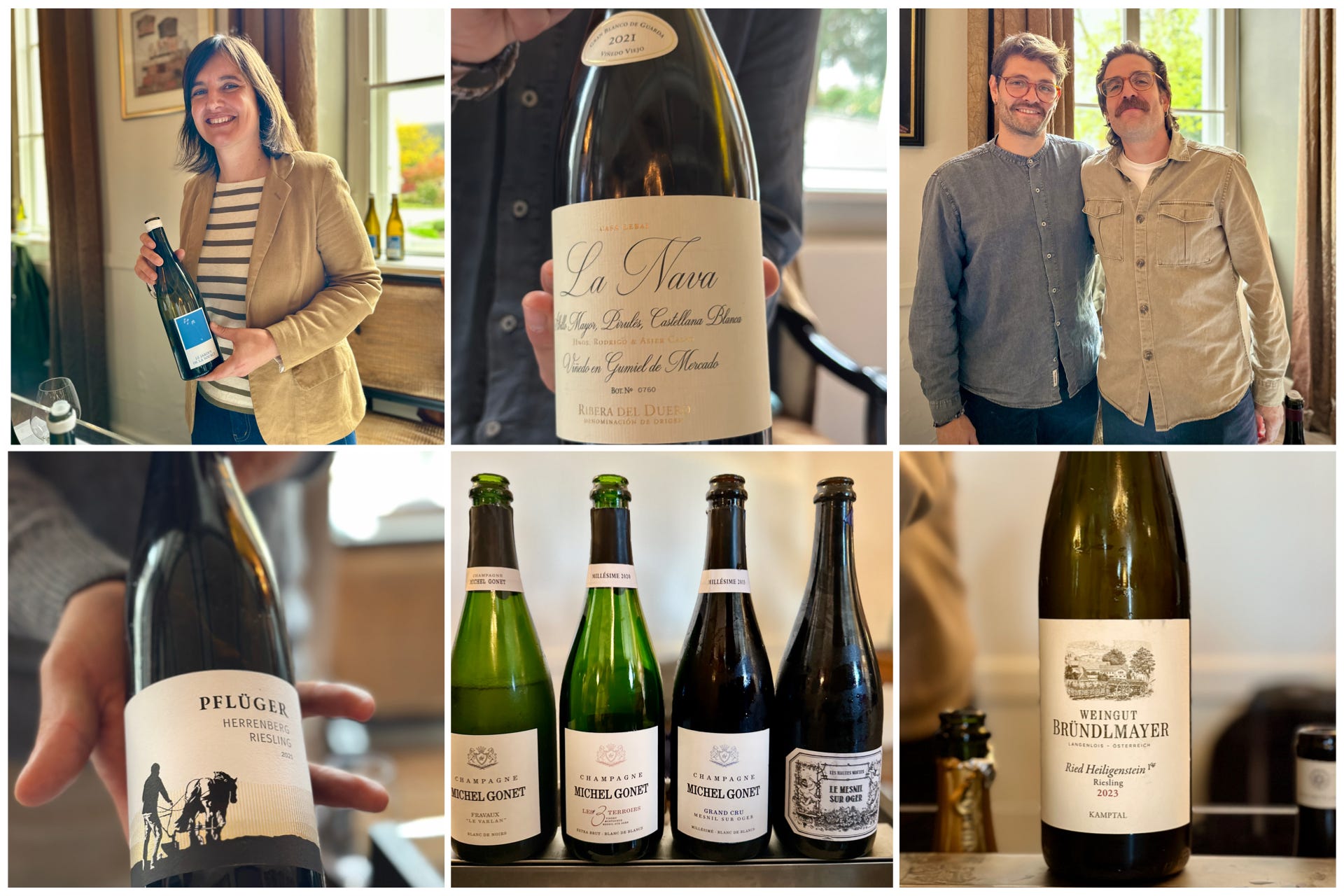
On a bright early November day, two leading Dutch wine importers joined forces to host a portfolio tasting at the stunning Hotel Karel V in Utrecht. Co-organized by Anfors Imperial and Smaragd Wijnen, the event featured numerous winemakers across both portfolios, offering a balanced mix of historic names and rising newcomers.
Instead of a masterclass style where you may spend a long time on a single producer, this setup allowed attendees to move at their own pace—interviewing winemakers and tasting wines in the order they preferred. The selection was more than we expected, particularly with some new discoveries for us.
In this post, I highlight the most memorable producers and wines from the afternoon.
📍 Who should read this article:
Wine enthusiasts interested in terroir-driven European wines
Professionals seeking new producers outside the mainstream
Those curious about natural and biodynamic winemaking approaches
Anyone interested in the stories behind small-production estates
Hunter|McKirdy: Terroir-driven Newcomers in Alsace
Jolene Hunter and Paul McKirdy launched their estate in 2023 after working at Zind-Humbrecht, where Hunter served as Export Director and McKirdy worked as Chef de Cave. The couple farms 3.5 hectares on early Jurassic limestone-marl soils in Zellenberg, with vines averaging over 45 years old.
Tasting their wines reveals salinity, crunchy fruits, solid structure, alcohol maintained in the low 12% range, and a focused finish. The wines bear little resemblance to typical Alsace profiles. Instead, they evoke Jura. This makes sense: the terroir is said to mirror Sud Revermont in Jura. Their choice of Vin de France over AOC Alsace Grand Cru reflects a philosophy of freedom from conventional expectations.
Harvest Philosophy and Winemaking
Hunter shared some of their choices for expressing terroir during the tasting. Harvest timing is determined through extensive sampling, with the team prioritizing optimal fruit expression, acidity, and focus rather than potential alcohol. They maintain rigorous sorting standards, rejecting any botrytis or shriveled berries.
Grapes are pressed gently in wooden basket presses for 8-10 hours—what they call “Champagne pressing.” Fermentation occurs spontaneously in old Burgundian barrels over 10 years old. The estate integrates some biodynamic elements, though it is not certified.
For those curious about biodynamics, here is an intriguing story. Hunter and McKirdy employ extended maceration lasting 29.5 days, described as a “full lunar cycle.” They observe a distinctive tannin evolution: the first two weeks progress normally, the third week shows excessive extraction (”What have I done? Gone way too far, too tannic”), but by the fourth week, tannins soften and fill out.
Tasting Notes:
Samares et Strobiles (Pinot Gris) 2023 | 12.5%
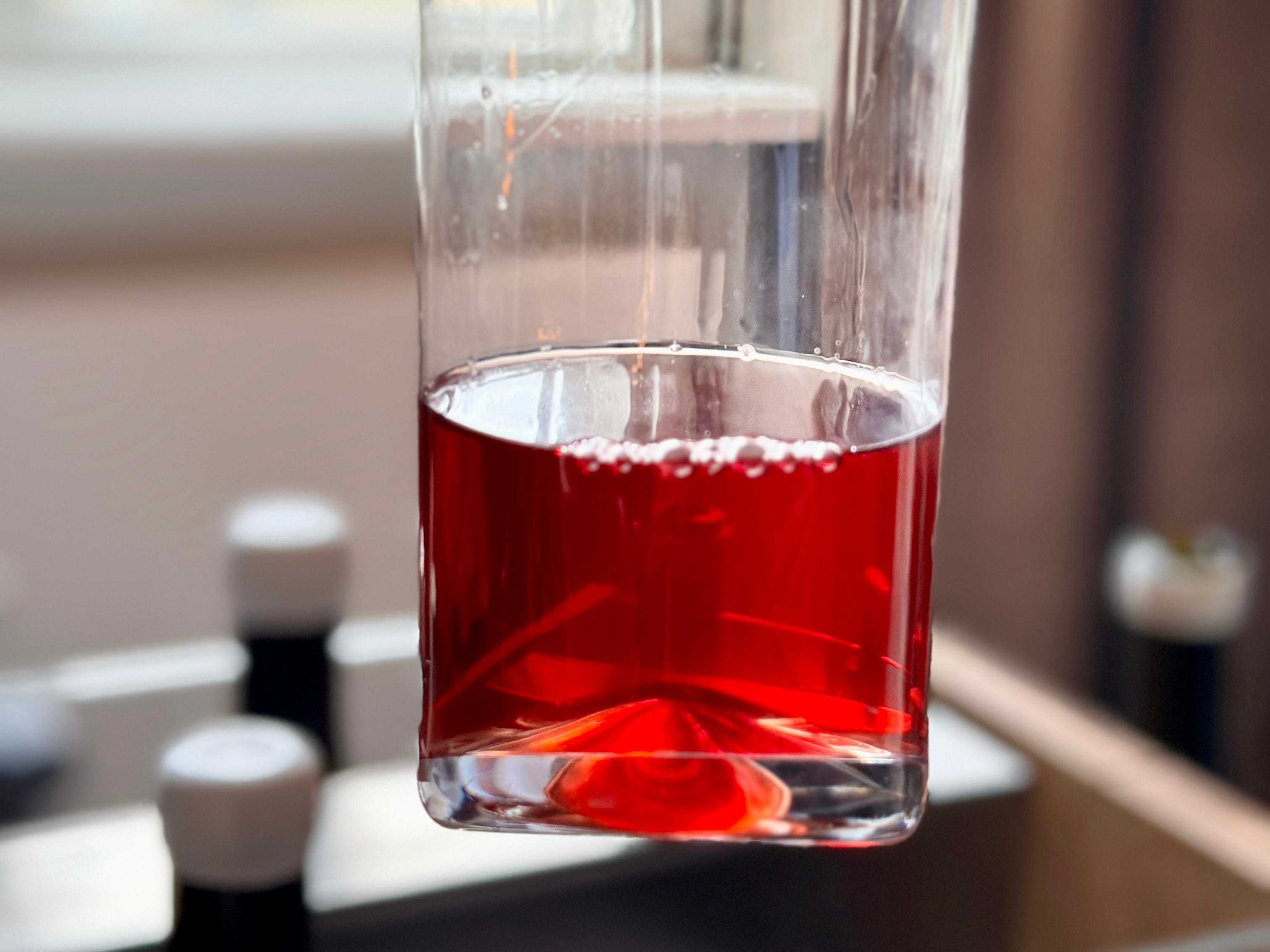
This Pinot Gris is an orange wine in style, with whole bunch fermentation. The color is pale red rather than orange, with tannins served from a decanter. Exciting and playful wine with another level of depth and complexity.
Crunchy red cherry, cranberry, orange peel, undergrowth, leaf, stony minerality. A hint of wood notes accentuates the fruitiness. Juicy acidity with tannins, reminiscent of Pinot Noir from cool climates.
Le Jardin de la Source (Pinot Blanc) 2023 | 12.5%

“It must be hard to imagine Pinot Blanc as the top white cuvée,” Hunter says with a smile, “but for us, it offers structure and possibility and complexity, Pinot Blanc is the most interesting wine.”
Pure aromas of white and yellow flowers, citrus, crushed shell. The medium-bodied palate is linear and austere yet refined and elegant, with a focused finish showing salinity. Aging potential.
Casa Lebai: Recovering Tradition in Ribera del Duero

Brothers Rodrigo and Asier Calvo founded Casa Lebai in 2019 in Gumiel de Mercado, Ribera del Duero. Their family has been connected to wine for generations. Their parents started a winery where both brothers worked as winemakers. But in 2019, they decided to break away and recover the traditional way of making wine in their area. This decision came from a concern about losing heritage. Old underground cellars and stone lagares were being abandoned. For the Calvo brothers, using these historic spaces again was the best way to preserve them.
Historic Infrastructure and Philosophy
Casa Lebai works with three small vineyards. The oldest vines date back to 1936. The estate uses 17th century granite lagares for foot-treading and 15th century underground cellars for aging. These are not decorative choices. The brothers believe these old structures help them make wines that express terroir and variety in a way that modern facilities cannot.
Their philosophy stands apart from typical Ribera del Duero styles. They do not pursue overripe fruit, heavy extraction, or new oak. Instead, they focus on freshness and balance. “Wine is a refreshing liquid,” Asier explained during the tasting. They harvest for phenolic maturation without waiting for the grapes to become overripe. The winemaking is simple: normal alcoholic fermentation, then one year of aging in large old barrels. They deliberately use very big vessels—large foudres rather than barriques—to allow gentle oxidation without adding makeup. “It’s not important for us the time in the oak,” Asier said. “We don’t try to make reserva or crianza. We try to make terroir wines.”
This approach extends to their choice of varieties. One vineyard contains Bobal, which is technically not allowed in Ribera del Duero. But because the vines were planted before 1982, when appellation rules were established, Casa Lebai can legally use them. This creates field blends that reflect the true historical composition of the area. All three wines are made the same way, so we can taste the differences between sites, varieties, and terroir without winemaking interference.
Tasting Notes:
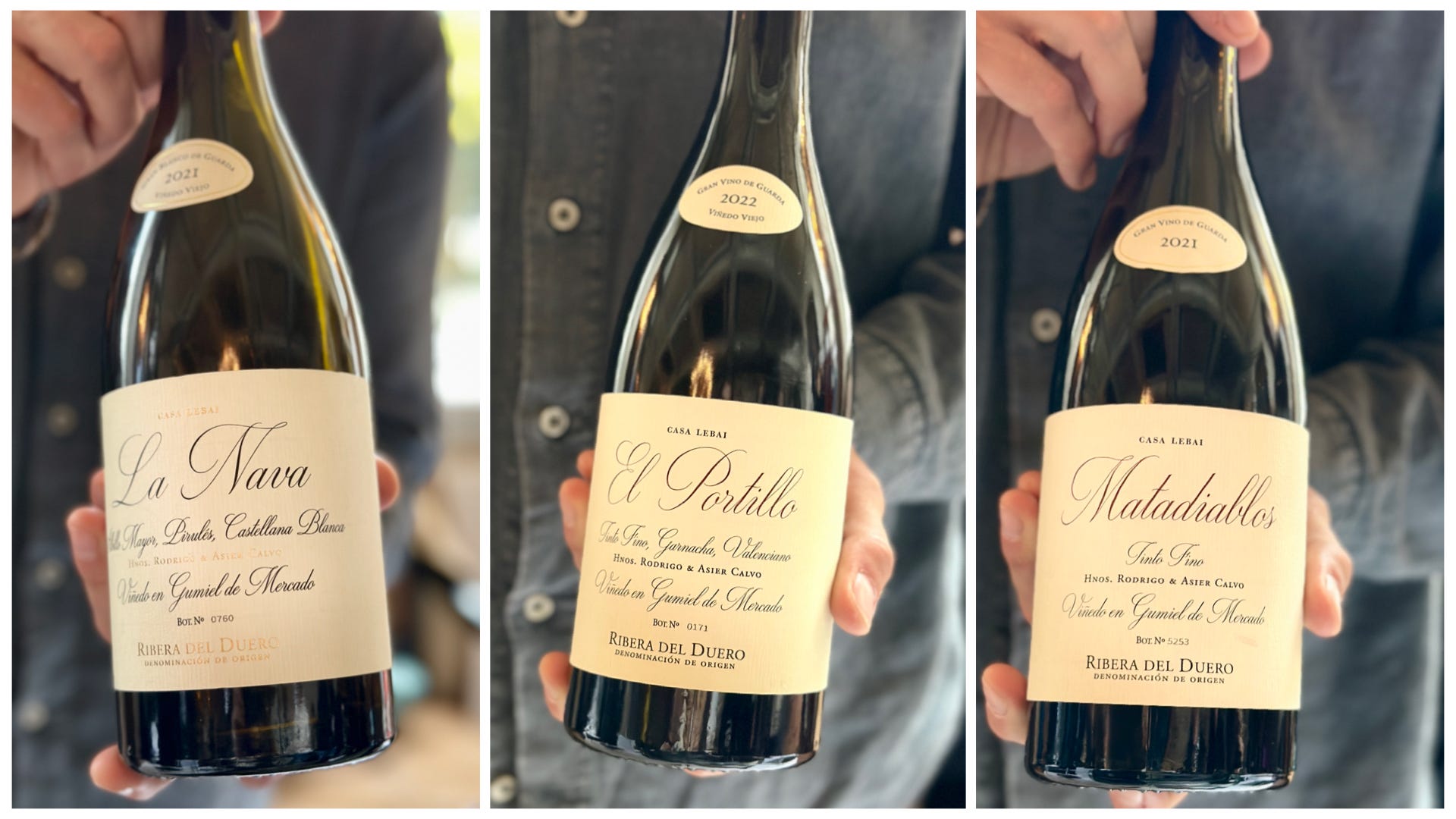
Albillo Mayor “La Nava” 2021
This wine comes from a 1936 vineyard where Albillo Mayor represents 80 to 85 percent of the planting. The rest is Castellana Blanca and Pirulés. Asier called Albillo Mayor “the father variety of Tempranillo,” though he admitted he wasn’t entirely sure about this claim. What struck us was his comment that Albillo Mayor is “really neutral” when young. If you try to make a fresh, primary-style wine with this variety, you will get almost no nose. But if you give it time—aging in barrel and then a year in bottle—it starts to express itself.
The 2021 showed spicy flavors and aged fruit rather than primary fruit notes. There was an oiliness on the palate and a mineral tension. The finish was amazingly long. High refreshing acidity gives it structure and aging potential. Asier said it could age for five to ten years. Even at this young stage, the wine already showed complexity and depth.
Red Blend “El Portillo” 2022
This wine comes from the same 1936 vineyard as the Albillo Mayor. The blend includes Tinto Fino, Garnacha, and Valenciano (the local name for Bobal). Asier explained that Bobal and Garnacha together represent about 15 percent of the blend, with Tempranillo comprising the remaining 85 percent. The wine aged for one year in large barrels.
We found this red to be super refreshing and elegant. It had structure and texture but was not heavy or extracted. The fruit was red and precise. The acidity carried through to a long, clean finish. This wine felt completely different from the typical Ribera del Duero profile. There was neither overripeness nor new oak sweetness. Instead, alive and pure.
100% Tinto Fino “Matadiablos” 2021
The third wine came from a younger vineyard planted in 1997. This one is pure Tinto Fino. Rodrigo warned us that it would be “totally different” from what people expect from Ribera del Duero. He was right. The wine was not borderless, not heavily oaked, not very concentrated. It was refreshing, structured, and textured with a finish that continued to the end. The tannins were present but refined. The acidity kept everything lifted.
Weingut Bründlmayer: Grüner Veltliner Mastery from Austria’s Kamptal
Willi Bründlmayer runs one of Austria’s most respected estates in Langenlois, Kamptal. The estate covers approximately 80 to 90 hectares and has farmed organically since 2015. Grüner Veltliner and Riesling form the core of production, with wines ranging from entry-level regional bottlings to single-vineyard Erste Lage wines from sites like Heiligenstein and Lamm.
Terroir-First Winemaking
The estate’s approach emphasizes terroir transparency. Wines are vinified in stainless steel with whole-cluster pressing, sedimentation without pumping, spontaneous fermentation, and extended lees contact. Oak plays a role only in reserve-style wines, where large old foudres add structure without masking fruit.
Thomas Klinger, Head of Marketing and Sales at Bründlmayer, led us through the tasting. We discussed white pepper aromas in Grüner Veltliner—a characteristic many people associate with the variety. But he was clear: white pepper is one element, not the defining element. “Grüner Veltliner has so much more to offer than just pepper,” he explained. The estate’s focus is on balance, minerality, and the expression of Kamptal’s diverse soils—primary rock, loess, and clay—rather than chasing a single aromatic marker.
Tasting Notes:
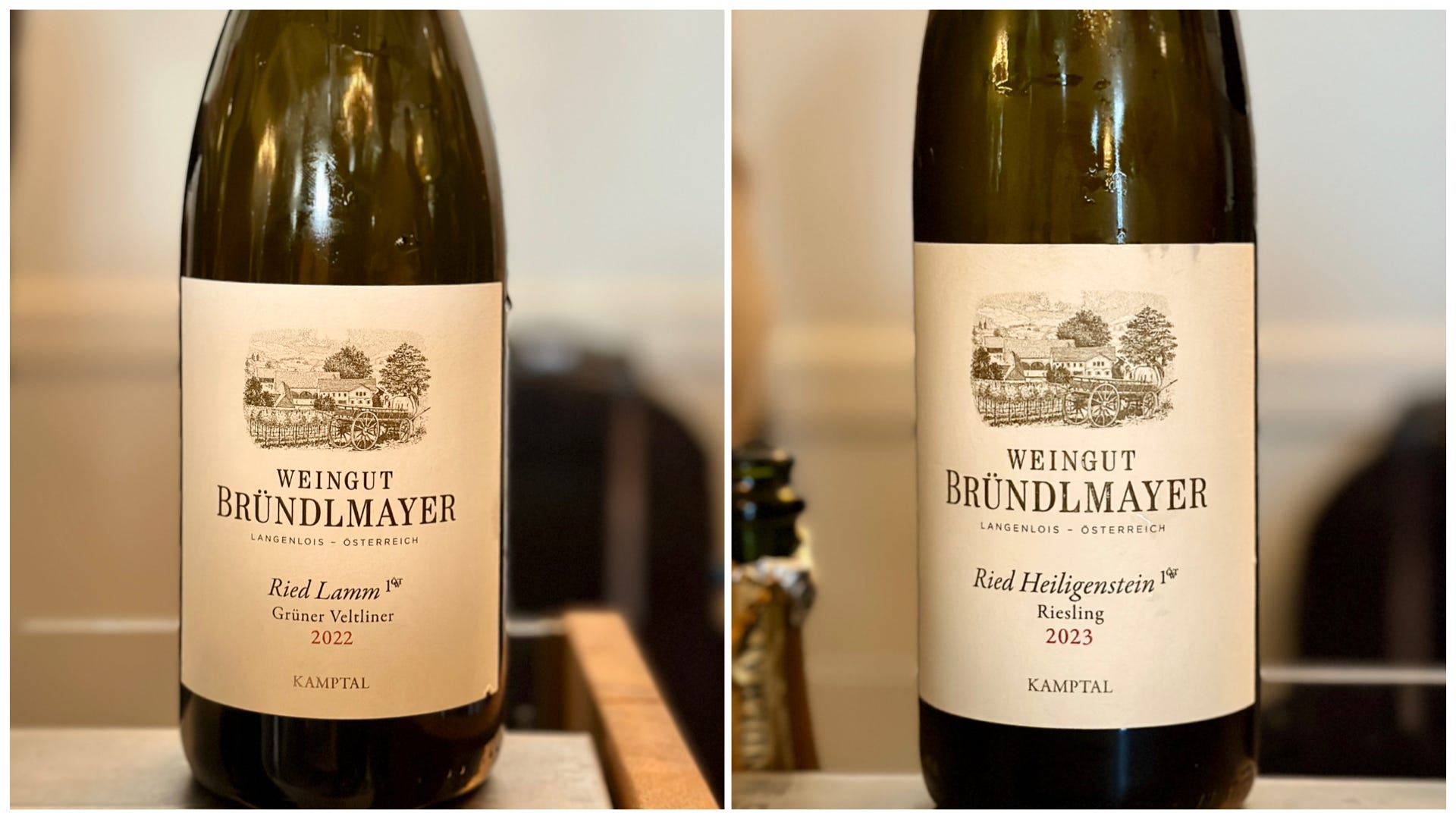
Grüner Veltliner Ried Lamm 1ÖTW 2022
Ried Lamm classified as Erste Lage—First Growth—in the Austrian system. The vineyard lies east of Langenlois on southwest-facing slopes with limestone-rich clay soils. Lamm has been recognized for centuries as one of Central Europe’s finest Grüner Veltliner sites. This is a reserve-style wine, and the must ferments in 300-liter Austrian oak barrels, before maturing in large wooden foudres.
The wine is complex and refined. The nose showed stone fruit, citrus, and white flowers with subtle spice. On the palate, the wine had weight and precision. The wine felt complete and balanced with a long, clean finish. This was Grüner Veltliner with both immediate appeal and the structure to age.
Riesling Ried Heiligenstein 1ÖTW 2023
Heiligenstein is Bründlmayer’s most famous vineyard and one of the great Riesling sites in Austria. The vineyard sits on 250-million-year-old desert sandstone with volcanic components—a soil type unique to this single site. This geology creates wines of remarkable intensity and mineral character. The vineyard is protected as a nature reserve, where the finest fruit ripens high on the slope.
This Riesling showed firm, deep citrus aromas with herbal nuances and hints of peach. The palate was taut and precise with focused acidity. There was nothing superfluous in the structure—just pure Riesling fruit, bright acidity, and mineral tension. The wine felt alive and electric.
Champagne Michel Gonet: Grower Champagne from Le Mesnil-sur-Oger
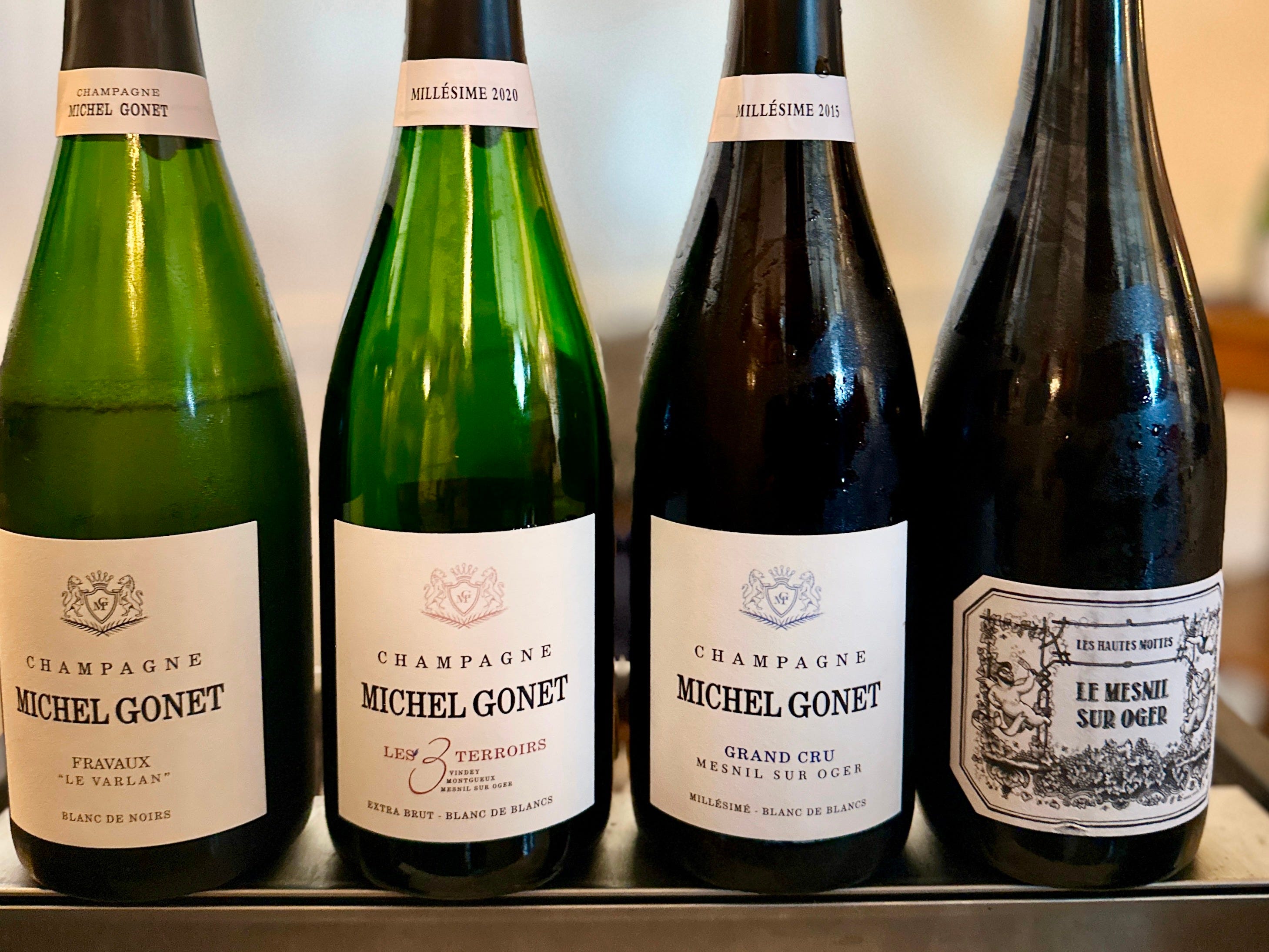
Michel Gonet is a family-run Champagne house based in Le Mesnil-sur-Oger. The estate has been in the family for seven generations, founded in 1802. The estate farms approximately 38 hectares across multiple sites, with 80 percent planted to Chardonnay and 20 percent to Pinot Noir.
Freshness Through Controlled Disgorgement
The estate’s winemaking philosophy centers on terroir expression and freshness. During the tasting, we learned about their unique approach to disgorgement and dosage. Michel Gonet disgorges only one thousand bottles at a time throughout the year. This allows them to adjust dosage levels for each disgorgement based on how the wine has evolved. As the wine spends more time in contact with the lees, it gains richness, requiring less dosage. The goal is to provide the freshest possible Champagne to the market. When consumers choose to enjoy it is their decision. “Our role is to provide you the freshest Champagne possible,” he explained. Once a wine is disgorged, it stops improving and starts transforming. By disgorging small batches continuously, they ensure every bottle reaches customers at peak freshness with precisely calibrated dosage.
Tasting Notes:
Les 3 Terroirs Extra Brut Blanc de Blancs 2020
This wine represents three distinct terroirs in equal parts. One third comes from Le Mesnil-sur-Oger, where the estate holds 14 hectares. Another third comes from Montgueux, in the Aube that the Champagne trade calls “the Montrachet of Champagne,” with silex, limestone, and clay for its soil on the south facing slopes, making powerful wines. The final third comes from Vindey, meaning ‘wine of the god,’ an appellation south of Sézanne known for ripe fruit character. The wine ferments in stainless steel at 12°C and ages five years on lees before receiving 4 grams of dosage.
This Champagne is refined and elegant. The nose showed fresh citrus, apple, peach with subtle tropical, and white floral notes rounded by biscuit, hazelnuts and toast. Long lees aging gives it a creamy texture balanced by refreshing acidity.
Grand Cru Mesnil-sur-Oger Millésime 2015 Blanc de Blancs
This vintage Champagne comes from a single lieu-dit called Les Hautes Mottes in Le Mesnil-sur-Oger, located next to the renowned Les Chétillons parcel. The site sits on pure chalk soils. The wine ferments in stainless steel at 12°C and ages six years on lees before disgorgement with zero dosage.
This wine has more weight and richness than the Les 3 Terroirs. The nose showed ripe citrus, brioche, and toasted almonds. On the palate, the wine had a creamy texture balanced by razor-sharp acidity. The chalky minerality was present throughout. The finish was persistent with layers of fruit, yeast, and mineral notes.
Weingut Pflüger: Altitude-Driven Elegance in the Pfalz
Alexander Pflüger represents the younger generation of a family estate whose history stretches for 200 years in Bad Dürkheim, Pfalz. His father Bernd pioneered organic viticulture in the region starting in the 1980s. In 2008, father and son converted the entire 38-hectare estate to biodynamic practices, achieving Demeter certification.
Biodynamic Philosophy
The estate’s philosophy centers on minimal intervention and allowing terroir to express itself. Alexander avoids fining agents, aromatic yeasts, and enzymes, emphasizing time, patience, and sensitivity instead. The vineyards feature biodiversity with fig trees, cypresses, sandstone walls, and grasses growing between vine rows. The estate produces its own compost, treating the vineyard as a living organism.
Tasting Notes:

Riesling “Fuchsmantel” 2021
Fuchsmantel sits at nearly 300 meters elevation on pure Buntsandstein. “Quite high in altitude, almost 300 meters, which means the season is a bit longer,” Alexander explained. “You always have lower alcohol level, but full concentration, a lot of taste, a lot of aromatics, and a nice acidity.” The red sandstone itself contributes additional acidity, creating wines that are fresh, light, and focused.
The 2021 showed bright citrus and green apple on the nose with subtle herbal notes. The palate was crisp and mineral-driven, with a firm acid spine. Despite the freshness, there was no lack of fruit intensity or texture. The wine felt complete and balanced, with a long, clean finish showing stony minerality.
Riesling “Ungsteiner Herrenberg” 2021
Herrenberg ranks among the most prestigious vineyards in the Mittelhaardt, classified as Grosse Lage—Grand Cru. The vineyard faces southeast on protected slopes, surrounded by old sandstone walls that store heat. Vines planted in the 1980s. Unlike the Buntsandstein found elsewhere, Herrenberg consists of loess-clay with high limestone content, creating wines with both power and minerality.
“Very much exposed to the sun, so always very full-bodied and rich,” Alexander noted. “But 21 has been a colder vintage, so you will have a nice acidity as well.” This tension between the site’s natural power and the vintage’s restraint created something special.
The nose showed ripe stone fruit—peach and apricot—with citrus brightness and floral lift. On the palate, the wine had weight and texture, but the 2021 acidity kept everything lifted and precise. The limestone minerality came through clearly on the finish, which was long and layered. This was Riesling with both immediate appeal and the structure to age for years.
What This Tasting Reveals
What stood out across this tasting was how each producer, in their own way, is moving toward clearer expressions of terroir. Hunter and McKirdy chose Vin de France to step outside appellation rules and let their sites speak more freely. Casa Lebai works with old co-planted vines and historic vessels, using winemaking not to decorate the wine but to reveal what the land offers. Michel Gonet adjusts dosage levels to stay closer to transparent expressions of place. Alexander Pflüger follows biodynamic certification while keeping terroir at the center. Bründlmayer’s wines show strong vineyard character tied directly to Kamptal’s soils.
These are different paths, but they point in the same direction. In an era where marketing often overshadows substance, these producers remind us that wine’s true value lies in its connection to place. Their wines are excitingly beautiful—not because of what has been added, but because of what has been preserved.
How to obtain these wines in the Netherlands:
The wines featured in this tasting are available through Anfors Imperial and Smaragd Wijnen in the Netherlands. Both importers focus on terroir-driven, small-production estates and offer delivery throughout the country.
I would like to thank all the producers for sharing inspiring stories and the team of Anfors Imperial and Smaragd Wijnen for inviting us to this memorable tasting.