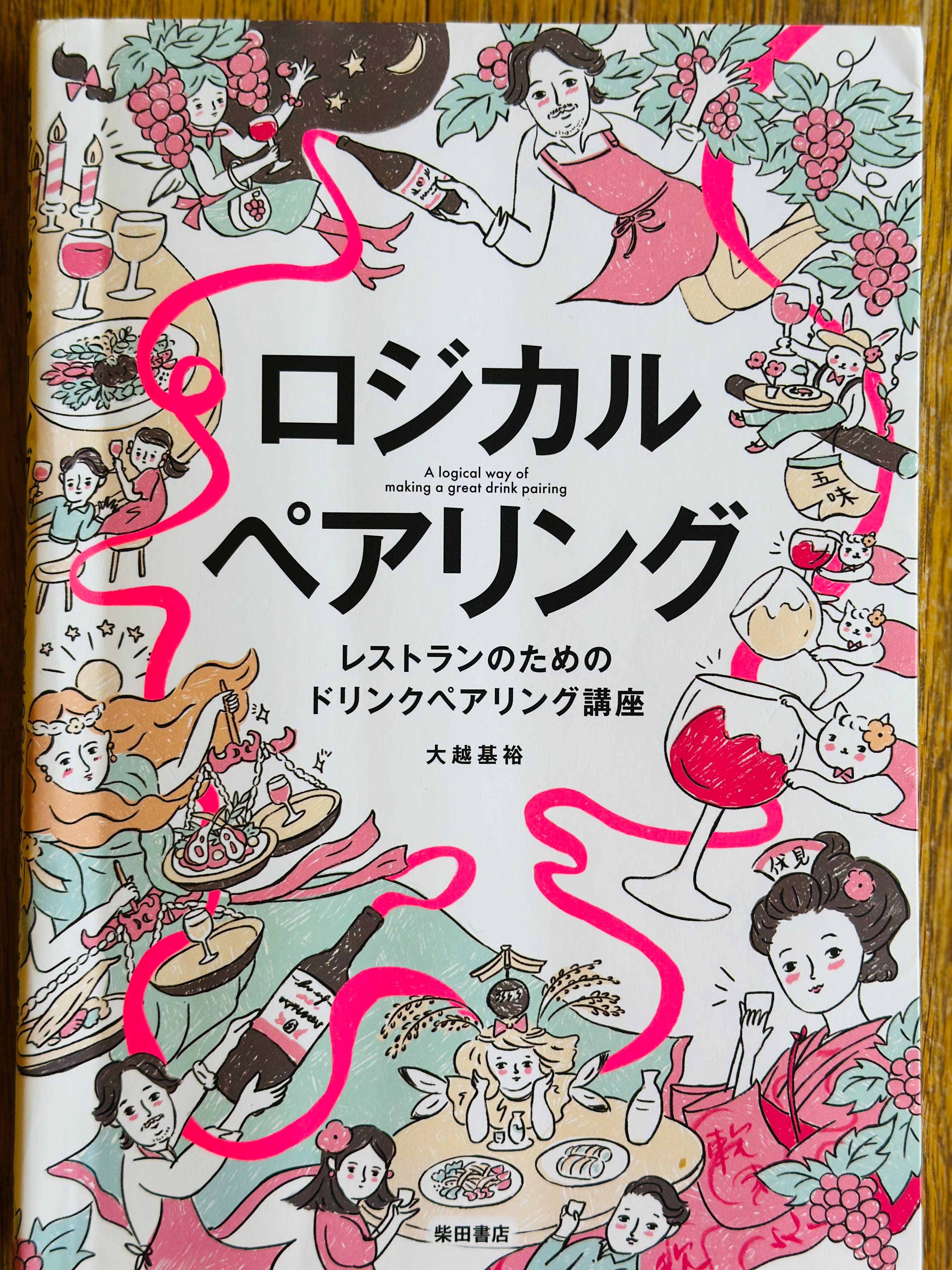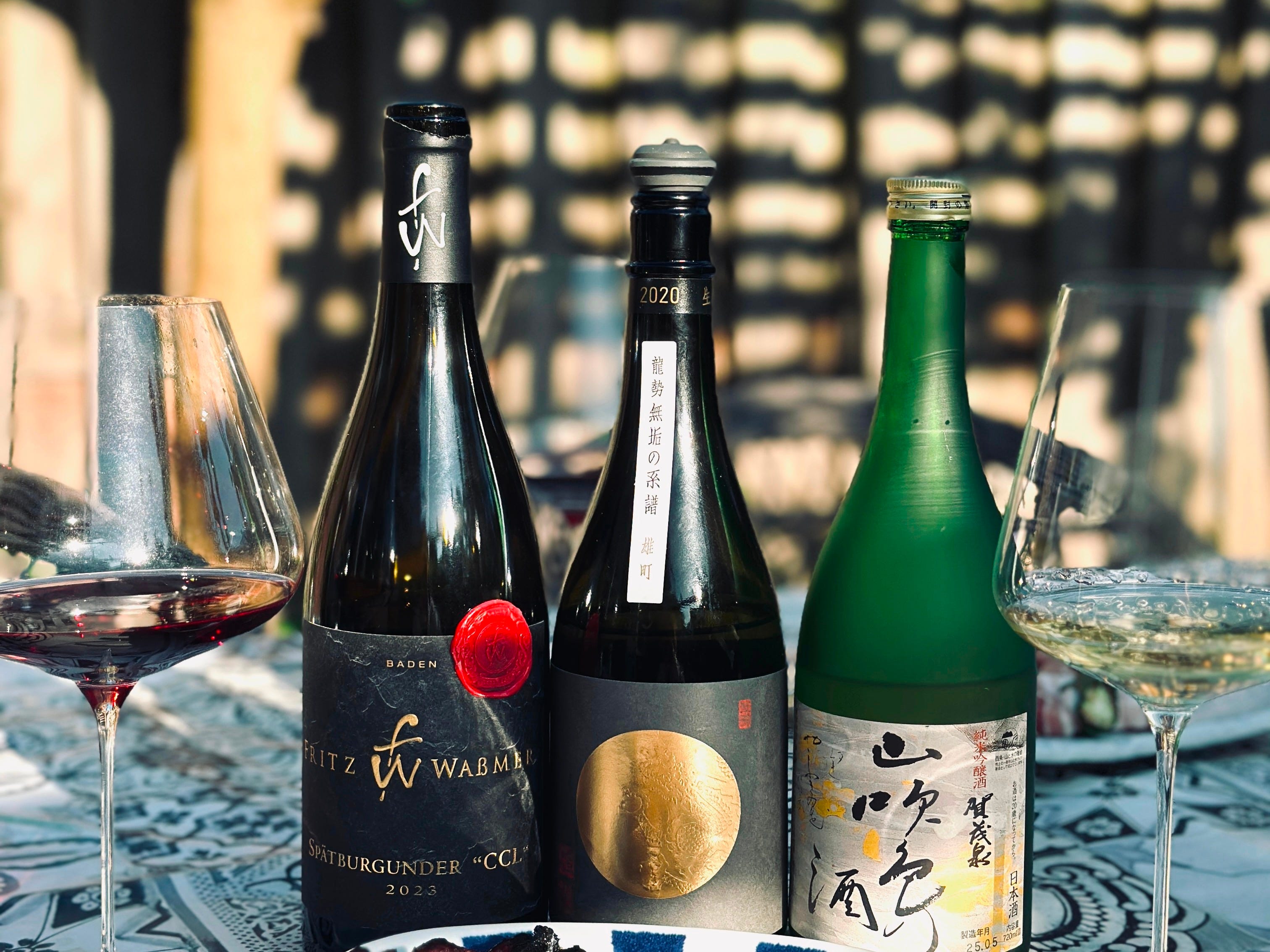
I like to read recipes and pairing books. Logical Pairing (2023) by Motohiro Ogoshi is one of the few I keep going back to.
It is a Japanese-language book aimed at general readers, and anyone with drinks at home can use the way of thinking straight away, not only with wine, but also with sake, shochu, cocktails, and even non-alcoholic drinks. It is not a book to explain one dish with one drink, but to give us principles and clues to apply across multiple cases. So, after reading it, I found myself running small experiments on my own dinner table even more enjoyable, putting a wine and a sake next to the same dish just to see which direction I liked better.
That is what I want to pass on in this article. Introducing some of his principles and three small clues that I apply for wine and sake pairing at my table, which you can try at home this weekend.
Who Is the Author?
Ogoshi-san is one of the most respected voices in the Horeca industry in Japan today. He started in the drinks world as a bartender, trained as a sommelier in France, and worked at the celebrated Ginza L’ecrin as head sommelier in between studying viticulture and winemaking in France.
Today he runs two modern Vietnamese restaurants in Tokyo. He consults on pairing for restaurants ranging from three-Michelin-star establishments to casual ones, judges wine and sake at the IWC, and works with airlines on their drinks programmes.
This range of experience gives him an unusually wide coverage. I have only briefly crossed paths with him, but I admire him and read this book often. His way of moving fluidly between wine and sake also matches how I like to set my own table.
My Angle: Wine and Sake on the Same Table
I genuinely like having both on the same table. There is a practical reason. Sake tends to be sweeter, more umami-driven, and a bit higher in alcohol than most wines. A full sake-only pairing through a long meal can feel heavy, especially without the cleansing acidity wine usually brings. Wine, in turn, sometimes struggles with the umami-heavy ingredients that are everywhere in Japanese cooking, where sake fits more naturally.
That said, I am not really complaining about either. I just like both, and I want to keep finding the most delicious pairing for what is on the plate.
So the question I find interesting is not ‘which is better’, wine or sake. It is: for this dish tonight, which direction do I feel like going? Preparing both simply increases the options and expands the horizon. Particularly with one interesting tool that sake gives you and wine usually does not: temperature. Chilled, room temperature, lukewarm, hot. Same bottle, very different drink, and that alone makes pairing more interesting.
The Book in One Page
This book builds some frameworks around a number of pairing ideas. One of the basic ideas is that pairing can be approached through five themes (these are my own interpretation, not a direct translation from the book).
Echo — match a flavour between the dish and the drink. Particularly acidity, sweetness, salinity, and umami.
Contrast — balance a dominant taste with its opposite.
Complete — add what the dish is missing with the drink, often acidity.
Resonance — match aromatic families.
Texture — match weight, temperature, mouthfeel.
He applies it to wine, sake, orange wine, cocktails, non-alcoholic drinks, and more, and shows where each direction takes you. It made me realise that wine pairing logic and sake pairing logic are not two different worlds.
Three Clues from the Book I Keep Coming Back To
All five tools are worth your time, but the three below are the ones I reach for most often at home, the ones where wine knowledge translates most cleanly into sake thinking. Pick a dish you cook often. Open one wine and one sake. Try the same bite with each, and see which version you want to come back to.
Clue 1 — Match the Weight (richer dish edition)
One of the principles I reach for first is matching weight: aligning the weight of the food and the drink. The “weight” of a drink is close to “body”, which might be familiar for people who study wine, so the knowledge you already have becomes a useful hint for thinking about sake.
Think of a roast chicken with butter and herbs, or any roasted, slightly fatty Western dish (a pork chop, a confit, a creamy gratin). A heavier dish needs a drink with comparable body, otherwise the drink disappears under the food. You might pair it with an oaked Chardonnay with lees ageing, or a Rhône white such as a Viognier or a Southern Rhône white blend. The idea is to match the weight and a touch of richness.
You could try the same strategy for sake too, with fuller-bodied styles with higher umami such as a junmai (less polished, with more rice character), or kimoto or yamahai (*1), ideally at room temperature or gently warmed (around 40°C). Warmth amplifies the sweetness and umami of sake, which is exactly what the dish is asking for.
On the other hand, a light, dry sake such as “tanrei karakuchi”, or an elegant, sophisticated daiginjo, will often lose to those rich dishes as there is not enough body to stand up. The book makes this point clearly, and it matches my own experience.
(*1) Kimoto and yamahai: traditional fermentation methods that produce sake with higher acidity and deeper umami than modern styles.
Clue 2 — Add What the Dish Is Missing (acidity)
Another principle I find useful is to add what the dish lacks, most often acidity. Wine drinkers know this instinctively. A fatty fish wants a squeeze of lemon, or the lemony lift of a Chablis or Sancerre. The same logic applies here: instead of squeezing lemon on the plate, you pour a similar character into the glass.
Reaching for sake where you would normally reach for wine is a fun way to expand the horizon.
For instance, think of a piece of rich cheese, ideally something soft, runny, and umami-heavy, such as Mont d’Or in winter. A washed-rind cheese works too. Or a creamy mushroom soup. Rich, umami-loaded food often wants acidity to lift it. In wine direction, you might pair it with a Vin Jaune, or a regular Savagnin from the Jura. The acidity cuts the richness, and the umami-rich, sometimes oxidative character meets the dish on its own terms.
You could try the same strategy for sake too, with kimoto and yamahai that have real acid presence. One real advantage of sake here is that you can adjust its temperature, while wine has a much narrower range. Warm it gently, and the umami opens up further while still keeping enough acidity to lift the dish. Warm sake with a runny cheese is one of my favourite winter combinations, and it surprises every guest I serve it to.
Try both, and see which one makes you reach for the next bite faster.
Clue 3 — Match the Aromas
A third principle I love is matching aromatic families. This is where things get geeky, but in a fun way.
Take “sotolon”, an aroma compound that carries notes of fenugreek, curry, and maple syrup. It develops in oxidative wines such as dry Oloroso Sherry and Vin Jaune, and it is also found in aged sake. So when a dish suits one of these wines, an aged sake (koshu) often works on the same logic. Try it with aged Comté: the classic Jura partner for Vin Jaune turns out to work wonderfully with aged sake too.
Another example in the book is the link between caproic acid in food and sake. Many fragrant junmai daiginjo are rich in ethyl caproate, the compound responsible for the green-apple aroma you find in modern aromatic sake. Beef contains caproic acid, the related fatty acid. That shared chemistry is why a chilled junmai daiginjo, with cold roast beef and a touch of wasabi, feels so harmonious. You will enjoy that the green-apple lift in the sake meets the richness of the meat, and the wasabi bridges the two with a crisp note on top.
I am still learning in this area, but whenever the chemical components of food and sake are clear, you have one more tool for pairing.
Why This Book Is Worth It
Pairing books often try to give you the answer. Logical Pairing gives you the framework, then steps back and lets you make the choice. That is why I find myself returning to it.
For me, the most outstanding thing about Ogoshi-san’s approach is that he does not pick sides. Wine, sake, shochu, non-alcoholic, French, Vietnamese, washoku. The same logic applies. Once you have the toolkit, your dinner table becomes a place to experiment rather than a place to get the answer right.
I will be honest, I keep wishing this book existed in English for expanding sake culture.
If you read Japanese, the book is published by Shibata Shoten and easy to find. If you don’t, well, I keep hoping someone translates it. In the meantime, I will share my own attempts here and on my Instagram.
Open a wine. Open a sake. Cook something you love. Pour both. See which direction makes you smile.
Logical Pairing (『ロジカルペアリング』, Shibata Shoten, 2023) by Motohiro Ogoshi.